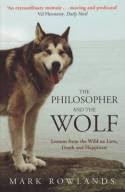
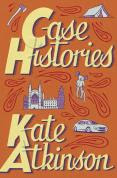
Saturday, 7 March 2009

Not such cold comfort

A dog’s capacity for sleep is a wondrous thing.

Kaos’s sleep glass is not just half full but brimming over and slopping into a snoozy treacly puddle on the table top. He sleeps for, what, twenty hours of every twenty four? Or appears to, sometimes occupying that half-way fugue state at a point between full consciousness and sense-less oblivion. When he dreams, his legs twitch and his eyes roll as he chases hapless rabbits or misdirected cats. Perhaps his dream net casts further back to his wolverine ancestors and he hunts with his pack, full of cunning guile on an endless plain full of wildebeest or cow-eyed deer. Maybe he’s stationed at the door to a Stone Age cave, permitted wood fire warmth and scraps and bones in return for his protection of the tribe. Who am I to know where a dog’s dreams take him?

When I open my eyes this morning, he is precisely where he was when I closed them, curled up in a ball next to the radiator. That no warmth is emanating from the cold steel panel because I’d switched the central heating off over night simply underlines the force of habit. In his mind, the radiator is a place of warmth and comfort and safety, somewhere to prop his back and stretch his tummy, close enough to me to feel part of the pack but near the bedroom door just in case.

If the heating were to remain off until autumn trails in once again with her misty dew drop fingers and the returning blast of fog horns from container vessels sounding warnings and seeking refuge out in the treacherous shipping lanes, my guess is he’d still sleep there. Such is the power of security and comfort. And habits, once learned, take a long time to break. Sometimes weeks. Sometimes months. Sometimes years.

One of my favourite books when I was very young was called “The Bunny Fluffs’ Moving Day”. It is a Ladybird Book and was originally published in 1948. It’s a wonderful adventure, told in pictures and verse, of the scrapes and escapades that befall the Bunny Fluff family as they move from one house to another. There’s falling into rivers, unexpected mishaps with umbrellas, some lost-getting and stuff-strewing and wrong-doing along the way. I loved the story, made my mother read it to me repeatedly, re-lived every twist and turn afresh with the Bunny Fluff twins each time I heard it. In between times, I’d look through the pictures, hearing my mother’s voice in my head telling me the story in my pre-reading days. The little hard backed book eventually fell apart in spite of the liberal application of brittle 1970s sellotape, but not before I could read the words for myself.

I’ve got my own Bunny Fluffs’ Moving Day later on today. One of my sister’s friends has kindly offered to meet me at the barn with his van so that I can pack up the last of my remaining items. A fridge, a freezer, my mattress. And the dog’s bed.

If it all goes well, I think I’ll order a copy of the book from an online auction site when I get home. I also think that the dog and I may sleep more soundly tonight.

Friday, 6 March 2009

The art of bathing

I was born a water baby and remain one still, albeit a 40 year old version with more hair and wrinkles in different places.

One of my earliest memories is of clinging onto the green and cream polyester straps of my mother’s 1970s swimming costume, porpoise like and blinking on her back as she pushed through the water with a hearty breast stroke. I loved it when she’d launch us from the edge of the pool, bow wave rippling around us and sending the splashing wake crashing over me. At some point I graduated to fluorescent orange arm bands. That they pinched my upper arms and rubbed the sides of my little girl chest was a small exchange for buoyancy. I was captivated by my floating and thrilled when allowed to venture into the forbidden deep end. The mass of the body of water bore me up and I kicked my legs, exalting in their dangling freedom at what seemed like miles above the bottom of the pool.

My father bought me a tiny snorkel and mask when he started learning to scuba dive in the mid-70s. I’d watch them training in the diving pit at the open air swimming baths, peering through the chlorine and trailing my hands through the stream of bubbles as their compressed air rose to the surface in search of its own freedom. My mother sat at the kitchen table throughout the endlessly long hot summer of 1976, patiently and nimbly gluing together the pieces of his wet suit ordered in kit form. I sat on my chair reading the Beano and watched her work, nose full of the heady smell of viscous neoprene gum. When my father died two years later, my mother passed his kit onto the diving club so we didn’t have to see the pale blue aqua lung he left behind in the conservatory. It was, in any event, too big for a nine year old.

Swimming lessons at school followed, full of obsession with rubber verruca socks and communal showers and the sticky feeling of scratchy uniform on not-quite-properly-dry skin. My black nylon costume gaped at the legs when on the beige tiled pool side and my long hair would never quite fit into the swimming cap the way that it did for the neater girls. But in the water I was at one, in my element, whilst they fussed with their hair clips and clung to the side.

Swimming club came next, twice a week on Tuesday and Thursday evenings. I learnt how to breathe properly in front crawl, slowly perfecting the real time-and-motion that is uni-lateral or bi-lateral breathing in the heartbeat space created by your own wave rhythm. I bought a pair of black tinted goggles that made the water look like the Mediterranean does on postcards (minus the parasols) and my first Speedo costume with red white and blue stripes. My endurance grew with my body and at 13 I took on the local 10,000 metre record challenge. My mother threw me glucose sweets from the side as I ploughed up and down the lanes, abiding to the rules of not touching the sides to turn.

Around this time, a few of us started to be coached by Bill Ludgrove whose daughter had swum in the Olympics. I’d get off the school bus and run to my Gran’s house for tomato soup and crackers with cheese before returning to the pool. My already fair hair was bleached almost white by immersion in chlorine six days a week and the tips of my finger nails glowed. Bill was tough on us, made us swim a mile or more just for warm up, scold us for cruising or for resting. We became super fast and super strong, and we had a lot of fun. I was surprised, in spite of never having run before in my life or having any more exalted footwear than a pair of black plimsolls, that I came second in the cross country race at school.

My adolescence had been dawning for quite some time when I was asked if I wanted to learn how to be a lifeguard. It was a thrilling moment, a water baby’s rite of passage to the sophisticated world of rope coiling, chin towing and resuscitation techniques. I spent the three seasons from 1982 as a volunteer lifeguard on the beach at Sheerness, leaping onto my blue racing bicycle early on Saturday and Sunday mornings and peddling furiously down to the hut. We patrolled up and down the promenade, small groups of teenagers in the universal red and yellow uniform watching out for holidaymakers in trouble in the cold and dark sea. I rescued a boy once, grabbed his flailing arms where he’d been pushed in high spirits off the jetty and hauled him back up to the air.

My pale skin turned golden at being outside for all those months and had a constant salty sheen. Occasionally, the coast guards would come by for a cup of tea, drawing up on the promenade in their Land Rovers with the hugely powerful ribs towed behind. We lifeguards did a joint sea safety demonstration with them each summer. They’d scramble the bright yellow air-sea rescue helicopter for us, the pilot holding just above the water and whipping up the waves to hysteria with the down-draft from the rotors. Afterwards we’d sit on the steps outside the hut and eat burgers with fried onions and tomato sauce and listen to Relax on somebody’s radio.

But those long summer days couldn’t last and at 16 I started sixth form at a school some distance from home. Homework and records and friends and boys took the place of swimming club and I gradually drifted away like a renegade inflatable on an irresistible sea current. When my daughter was born a few years later I took her swimming at the Victoria baths in Portsmouth where I was a university student, enjoying our mother time in between lectures and nursery and library visits. The toddler would leap from the side into my arms, laughing and throwing her head back in delight as she crashed into the water.

I started learning to scuba dive about a year ago fired up with inspiration from the ‘try dives’ I’d had on my first visit to Egypt. Diving is as far removed from swimming as can be whilst still getting wet and my biggest challenge was learning how to slow down. Strapping on a pair of fins after all those years of pool training was like fixing an outboard motor to my legs and turning the throttle up to max. But diving is the art of slow personified and I try consciously to control my unconscious long-ago-learned speed. When it was time for my first open water dive in a lake last summer, my instructor was one of the founder members of the local diving club. I think he was quite lost for words when he realised that he’d also taken my father for his first open water dive more than three decades earlier.

I ran myself a bath this morning. It’s the first one I’ve had in nearly two months; I never felt quite at home enough during my stay back at the barn to do more than shower. I lay there in the perfectly hot water, eyes closed, just the tip of my nose poking up like a snorkel. The dog stuck his head over the side of the bath and snuffled up some bubbles that made him sneeze. I towelled off and readied myself for the day as the water glugged away down the plug hole. It was a very good feeling for a 40 year old water baby.

Thursday, 5 March 2009

Not my bag?

Five cherry stones lay at the bottom of the winter white glazed bowl amid the dregs of single cream that had evaded the attentions of my spoon in spite of my best efforts.

When the new chef had arrived full of divine menu ideas a couple of months back, I’d ordered the brownie served as he decided, topped with cooked cherries and cherry sauce. It was everything a woman would want from a dessert: oven fresh warm, hypnotically chocolately, mysteriously firm but simultaneously soft and meltingly moist, and in a slab about the size of a broadsheet newspaper sudoku puzzle. But my tastebuds had refused to score it a perfect ten. Nine and a half, maybe? I knew, like an evolutionary pudding scientist a hair’s breadth from uncovering the secret of the perfect crème brulee, what the missing link was. So I ordered it this time with cream. The miniature white jug of heaven. Hallelujah.

I’d arranged to meet Liz for lunch thanks to the fortuitous happenstance of having to drop off a big box of vegetable seeds to one of our projects nearby. It was the first time I’d seen her since we came back from Egypt two weeks ago and we caught up on our news over ham, egg and chips and a pot of tea at her local pub, The Ship. But puddings demand one’s full sensory attentions in the way that savouries rarely do, and we’d lapsed into companionable reverie at our sunny table by the window.

I looked again at the cherry stones in my bowl. What was that old playground rhyme? Tinker, tailor, soldier, sailor, rich man, poor man, beggar man, thief. Five stones. Hmm, that’d mean… Rich man. That’s an intriguing thought, finding a rich man. But rich in what way? Generous in spirit? Rich in life experience? Giving with time and attention? Fluent with emotion? Intellectually accomplished? Open hearted? Kind in disposition? Gregarious by nature? Quietly confident? Rib-hurtingly, floor rollingly, eye streamingly funny? Should I be in the mood to be looking, just a few of those attributes would be wonderful to find. Rich in wealth or material possessions concerns me little, and less and less so as I get older.

At the table next to ours, three men and two women sat making quiet conversation. They were uniformly dressed in smart black outfits and I wondered if they were taking a sup of courage before going to a funeral. As I watched, they stood up, fastening coats and jackets as they made to go. The tallest of the men led the way, picking up a white handbag from the wooden table top as he passed. His four companions laughed as he swung it to and fro between his finger tips, elbow bent at a right angle in a masculine interpretation of how a woman might carry such an exotic item. One of the group caught my eye and smiled, calling out “he’s got the matching frock, you know!” as they processed, laughing and pantomime-like, to the pub door.

I smiled as they left and arranged the five cherry stones inside my bowl with my spoon. Liz finished her treacle sponge and custard and we ordered some more tea.

Wednesday, 4 March 2009

Luck. Fate. Or something

I knew she was going to say it. The same way you know the squalling fuchsia-clad toddler next to you on the beach when you’re trying to read your book is going to drop her ice cream in the sand. The same way you know the cute-looking West Highland Terrier in the park is going to morph into a whirling dervish the moment he claps his eyeballs on your dog. The same way that you just know your mum is thinking I told you so, even if she doesn’t actually say it out loud.

I clench my brain in anticipation.
“What will be, will be”.
There’s she’s said it now. Unclench. Relax. Oh no, hold on, she’s going for a repeater with a side order of meaningful straight-mouthed slow nodding.
“What will be, will be”.
Ok, coast clear? Phew. Stop screwing up your face and think of your wrinkles. Calm. Look out of the window and pretend to be studying the birds. Distract her quickly, before she goes for the hat-trick.
“Is that an owl over there?”
“Where? In the tree?”
She shoots, she scores.
Done. I think that’s today’s quota. Phew again.

To be fair – for like the road to hell, it is always kindly meant - it’s not so much the mode of delivery but the message. Fate. The idea that what happens to us is pre-ordained, that the paths of our lives follow a determined stone-carved invisible route on an invisible map that we don’t possess and never even get to peep over somebody else’s shoulder at.

The difficulty with a concept like fate is that’s it’s also impossible to disprove. Event A has happened so I take action B as a result. I think I’m determining my own outcome by choosing B, when in fact the B-road was what was pre-selected for me all along. I just didn’t know it. But what if I’d chosen C? Well, then that would mean that C was what I was always going to do… And so on and so on and into a spiralling pit of swirling existential angst in which you can never really actually choose anything at all with your free-will because it’s already been set out for you and packed up in your metaphysical lunch box along with your day’s supply of slightly stale ham and tomato sandwiches wrapped in foil.

All of which is a bit irritating because we like to think that we’re the ones in charge. So maybe my problem with this expression of the concept of fate is actually more a problem with my big ego not wanting to be told what to do and where to go by an invisible map? Maybe. Or maybe the issue is I think that we do determine our own luck to some extent, at least over many areas of our lives if not all of them. The old psychological battleground of nature versus nurture tells us, surprise surprise, that both have an influence on shaping us in a myriad of ways. Not nature. Not nurture. But both of them, working together. It would be illogical, given that premise, that we cannot but help to shape our own destiny – even if we do not control every element of it entirely. Surely sitting back and doing nothing only ensures that nothing happens?

Or maybe what will be, will be – but only if we help to make it so. Blame reading George Orwell at too tender an age.


An aside: I visited the grave of George Orwell two or three years back. He’s buried in Sutton Courtenay in Oxfordshire. It’s a pretty enough if unremarkable village with a couple of pubs to lure weary walkers away from their route along the Thames path and into the inns for a restorative pint of ale and a cheese sandwich. The grave is a small plain stone carved with his given names - Eric Arthur Blair – and his dates of arrival upon and departure from the human shuffle board: born June 25th 1903; died January 21st 1950.

Tuesday, 3 March 2009

Mad driving

I stuck my head out of the window and waved until my arms ached and my mother and little sister became specks on the platform. The early April day was gentle, the train warm, but there was no way I was going to risk another passenger pinching my black suede bikers’ jacket with its swanky red sateen lining from the overhead luggage rack. No way. No way Jose. I slumped down on the mottled blue velour seat, propping my pointy-toed boots on the edge of the bench opposite, and slid a cassette into my knock-off Walkman.

The red-lipsticked woman on the other side of the carriage crinkled her forehead and stared disapprovingly at my feet on the seat. I paid her no attention. After all, she was at least 30 and so old she was practically dead, and what did she know? I shut my eyes and settled back to listen to another play-through of Bauhaus’s Greatest Hits Volume 1 (1979-1983) that I’d taped carefully from the vinyl on my second hand stereo deck last night. Just my stupid luck that I’d been born a bit too late to have been old enough to go and see them play live at that last gig in Paris before they split.

It was 1986, I was 17 and a third, I was on the way to Scotland for two weeks, I was on my own, I had a rucksack full of tapes and books and pens and stripy tights, and everything in my world was a rockin’ and a rollin’ just mighty fine. Mighty fine and dandy, thank you, ma’m.

It was dark by the time I reached Dunfermline and I was starving. I had been to Uncle George’s house before, hundreds of years ago when I was about 12 or something, but I still had to ask the bus conductor where to get off.
“Where does that lovely accent come from, my bonnie lassie?” he smiled, in reply to my question.
Bonnie lassie? Couldn’t he see my black suede jacket, my black silk shirt, my black leggings, my backcombed hair? That’s the trouble with old people, no sense of cool. “Er, Kent?”. Derrr.

I was vaguely aware of Uncle George’s two grandsons staring at me from the other side of the table as I ate my pie and chips. They hadn’t taken their eyes off me from the moment I’d arrived and they watched me now, buttering a slice of white bread, arranging my chips inside it, folding it in half and taking a great big bite. They copied at once, grabbing slices from the bread bag, smearing them with margarine and stuffing them with tomato sauce-smothered chips. Mouths agape for the first bite, an almighty roar came from the kitchen door that stopped the little boys dead.
“What do you think you’re doing?” bellowed Uncle George, whisky tumbler in hand, “I already told you. No. Chip. Sandwiches.”.
The boys’ heads sank to the table top along with the forbidden treats as Uncle George glowered ferociously through slightly pink slightly out of focus eyes. I was puzzled. Surely everyone knew that these were called chip butties?

The next morning, Uncle George made me two boiled eggs and introduced me to his car. I couldn’t wait to learn to drive and his old green Morris Marina surely was my key to the gateway of the kingdom of highway freedom. We started off, heading for an industrial estate on the outskirts of town. After an eternity of listening to him blethering on about, oh I dunno, biting points and clutches and mirrors and blah blah blah blah blah, he pulled over and got out of the car.
“Go on then, Katy Jane, your turn”


It stalled immediately of course. And the next time. And the time after that. Accelerator, clutch, foot brake, handbrake, steering wheel, mirrors, indicators, how on earth were you supposed to do this stuff, like, all at the same time? I mean, if even really, really old people like Uncle George and Aunty Betty in Birkenhead could drive a car, it couldn’t be that difficult, could it?

By the end of our first lesson, my palms were sweaty and Uncle George and I were hardly speaking to each other. I had (finally) managed to move the car away from the kerb, force it into second gear and fly down the middle of the road. I daringly moved my eyes away from the windscreen just for a nanosecond. Fifteen miles an hour. It felt like I was flying. We changed seats again and drove back to his house in silence. I think I heard him open a bottle in the kitchen during the hissing prelude to the tape through my headphones.

We established a routine over the next two weeks. Two boiled eggs, two cups of tea, two hours driving and a stop at the local Co-op on the way home to buy some pies and a bottle and a newspaper. He sometimes went out in the afternoons and left me in the house on my own. I turned his stereo up loud and sang along to The Cure or David Bowie or Depeche Mode and phoned my friends at home from his white telephone in the hallway. In the evenings, we sat and watched the telly, me reading or doodling in my jotter, him drinking whisky until he fell asleep with the half-full glass in his hand and the newspaper open in his lap. A couple of times, he went upstairs to the bathroom and came back down playing a full sized accordion.

By the time the fortnight had passed and it was time to say goodbye, I think we’d reached a mutual understanding of non-comprehension but a level of liking all the same. He let me drive all the way to the station up and down Dunfermline’s hills without wincing once. I gave him some toffees that I’d bought on my day out in Edinburgh. The box had a picture of the castle and a piper in a kilt on it. I’d bought some more headphones in Edinburgh too, the very cool brand new ones that fitted right into your ears. I wedged them in as the train pulled out and settled back to enjoy a melodic journey back down south.


My mother sent Uncle George some money for the phone bill a few weeks after I got home. I did pass my driving test, with thanks to a knitting needle and a couple of bricks, the following year. But perhaps that’s a story for another day.

Monday, 2 March 2009

Dog-gone

I never think I’m one for the grand dramatic gesture.

In my mind, yes, I’m the older guy at the end of Independence Day, seeking to find peace and redemption through the sacrifice of his human bullet into the under-belly of the invading mother ship; or maybe I’m Superman, dashing and Bryl-creamed and saving the world one cape full at a time. But in real life, you’ll much more likely find me right there on the railway station in Brief Encounter, eyes brim full of unspoken passion and unrequited yearning as the train trundles forever away into the distance in a whoosh of steam.

I’m very far from being a superhero cartoon character or a silver space-suited cowboy in a sci-fi western. I’m really not all that poutingly unobtainably glamorous in black and white either, truth be told. My not-very-grand-at-all gestures are human-sized even if my horizons are broad; I’ve never been inclined towards door-slamming or crockery hurling, after-hours brawling or running street battles.

Which is why I kind of surprised myself today by slinging my bags (and the dog) into the back of the car and moving out of the barn.

There are a couple of old and well-used phrases that are often called upon to describe this moment: reaching the end of one’s tether and the straw that broke the camel’s back are two that have bubbled up. I hadn’t even been aware that the thought of moving out was so close to the surface of my consciousness. Quite the opposite – I’d come back from Egypt a couple of weeks ago determined to make sharing the site with my ex work, even if that was likely to take some getting used to and be tough going in the interim. But it seems that it didn’t after all take much scratching of the surface to let the moving out decision erupt like a geyser and be activated in a few moments. Just one falling-out too many. Perhaps the concepts captured recently in Malcolm Gladwell’s excellent books, Tipping Point and Blink, more closely approach the truth?

I was back at my little house by the seaside with a couple of bags full of clothes, books and food before my brain had time to blink twice. The dog clambered down the steps and flopped onto the carpet behind my swivel chair as if he’d never been on anything more than a walk chasing waves along the beach. I envy the dog his gift to live completely in the here and now, his joy in the fiendishly simple and almost impossible ability to just ‘be’. I wish I could capture it in a butterfly net and swallow it whole.

I spent a welcome couple of hours this evening enjoying spaghetti Bolognese and home made bread with my three year old niece, my sister and her husband. We watched cartoons on the television and ate chocolate bars, drank tea and Diet Coke, and talked of this and that. I am relieved I’ve acted on my misgivings whilst there was still time not to finish tying up the moving threads.

I thought that we could make sharing the space work. It turns out I was wrong. At least I tried.

Sunday, 1 March 2009

Not a team game

The cat has green eyes, black fur and great balance. I watched it walk around the perimeter of the garden fence on its small ball-like paws before jumping the 6 feet drop into the back yard. I’d bought a tin of tuna at the corner shop to have with my lunch time noodles, but the fish was mushy and cheap and unappetising and I scraped it off my plate onto the ground outside for the benefit of some passing creature. This cat’s just won the jackpot.

I’ve spent today over at my little house by the seaside writing the handouts for the presentation I have to give at my interview tomorrow morning. My desk top computer’s still here and – so my reasoning went – I’d have 8 uninterrupted hours to do my research and print out the presentation before returning to the barn for an early night.

Well I have done it and the handouts are adequate if not inspired. But I’ve found myself easily distracted today, flittering miasma-like around the internet reading this and that and catching up from a rare day spent entirely away from the computer yesterday. My mind’s not finding the focus it needs to and I’m hoping that I can fall back on my old interview team mate, adrenaline, to give me the sass I’ll need to shine tomorrow.

In search of further distraction and chocolate, I walked back round to the shop. Loud good-natured cheers were coming from one of the high street pubs and I guess that means there’s a Big Match on. A large man in pale jeans and a rugby shirt walked past me and towards the roaring, swinging two unopened bottles of vodka and a litre-sized one of JD. Soon his voice and booze will join those of his team mates in the pub as they cheer and jeer and wince and scream at the TV set. Win or lose, no doubt hours of bar-side analysis and armchair tactics will follow the final whistle. I don’t much care for football or rugby but this afternoon I am a little envious of their camaraderie.

The cat finished the tuna and scrambled back up the fence and away to the next destination on his dance card. I switched the desk lamp on and went over my notes again. The tea and chocolate are very welcome.

War carrots

My mother had already celebrated her 10th birthday by the time sugar came off the ration in 1953. Bruised, battered and nearly bankrupted by two World Wars in quick succession, Britain’s wounds were by then slowly starting to heal (in thanks partly to the Marshall Aid Plan from the USA).

But my ten year old mother was appropriately childishly oblivious to this. All that mattered was that the lids to the magical jars of toffees, bon bons, liquorice allsorts, dolly mixtures, aniseed balls and barley sugars were hurled to the four winds and that their contents could pour forth, unceasing and cornucopia like, to be crunched, munched and chewed as long as there were hours in the day.

A few years earlier, Pathe news reels had captured the scenes of celebration outside Buckingham Palace and Trafalgar Square on VE Day. Tens of thousands of exhausted soldiers, airmen, marines, submariners and sailors thronged the streets and threw their arms around each other and the glamorously coiffed women in smart shift dresses that had joined the party. And now, eight years on, the streets throbbed to the sounds of hundreds of pairs of tiny feet stampeding to their local grocery shop, captivated by this early 1950s sugar rush.

My mother waited as patiently as impatience would allow in the queue in the sweet shop, holding her own mother’s hand and eyeing up the rows of jars on the shelf. It seemed as if each transaction took an eternity, and she fidgeted and squirmed as one by one children slipped past proudly bearing paper bags full of delights. Entire civilisations had been born and faded into oblivion in the time it took to be her turn, or so it seemed. When the moment came, voice squeezed to a reed by excitement, my mother made her request. Flying saucers, gob stoppers, midget gems, pink sugar mice, sherbet and lemon drops tipped onto the scales and were scooped into tiny paper bags, each swung expertly between the nimble fingers of the shopkeeper to ensure not one drop of sweetness fell to the floor.

Giddy with delight and salivating with anticipation, my mother turned and walked to the door of the shop grasping the treasure to her heart. “Wait a minute" called the shopkeeper to my mother’s retreating back, "you haven’t paid yet". The shopkeeper winked at my grandmother, sharing a conspiratorial adult smile above the head of my mother, now struck dumb and gaping in shock. For all of her ten years, the little girl had watched her mother as she exchanged ration coupons for meat, sugar, eggs; that she still had to pay for her goodies now that the sweet ration was as dead as the Wicked Witch of the West had never crossed her mind.

A couple of nights ago, I was urgently hungry and in need of convenience food. I put a shop-made shepherd’s pie in the oven and found two small tins of carrots in the cupboard to go with it. But a can opener was nowhere to be seen so I opened the tins with a sharp kitchen knife. I laughed out loud to myself and the dog as I did this, and sent my sister a text message to reassure her that no blood had been spilled. “Tinned carrots?” my sister replied a little later, “there’s not a war on you know!”

Like the distinctive taste of coffee from a Thermos flask or how a curry tastes so much better the day after it’s been made, I like tinned carrots. They’re not the same as fresh ones – which I love too – but they have a strange texture all their own and a wonderful bright orange colour that I think nature never intended.


Bananas followed sugar off the ration in 1954. Britain finished repaying the USA for the Marshall Aid plan a few years ago. My mother still loves sweeties. And I think she still likes tinned carrots too.


Tin of carrots opened with a knife. I've now bought a can opener.

Friday, 27 February 2009

In between days

Years ago when I was a student studying psychology, we spent a few weeks examining the nature of constructs. It seems to be one of the ways in which our minds capture and box concepts of things up for us, labelled carefully in our best handwriting so that we can recognise them again later. This means we can, for instance, identify the table-ness of a uniquely unfamiliar one as long as it has a flat surface, say; the number of legs it has or the fact it is small enough for only a singular ant to sit at is quite irrelevant to our concept.

Being the smart machines they are, our brains don’t just reserve this ability for the real stuff we can touch but apply this boxing and labelling approach to more abstract areas of the world around us. Emotions, relationships, obligations, altruism, ambition – you name it, your mind’s got a construct for it. And because we love to label things so much, because it’s one of our addictions, our minds will stretch and stretch our established definition to accommodate the new criteria we’ve stumbled across. Call it economy of mental storage if you like (or laziness if you’re being blunt) but we do generally seem to prefer to adapt an existing concept rather than go to the bother of constructing a whole new different one.

Which is fine for the most part.

Except when it’s not.

The first thing that sent my brain into a whirl of construct burrowing this morning was the weather. Being English of course, the weather is always a topic of conversation. Being weather, it’s equally always there to be talked about. It’s a confusing picture right now: sunny one moment, dull and grey the next; mild in a way but bone gnawing cold round the next corner; buds starting to appear on the trees but prone any morning to be nipped off by the frost. Not hard winter but not yet spring, it’s kind of in between somewhere, a seasonal transition. Nearly-but-not-quite-spring-but-not-really-still-winter-either is pretty useless as a definition and doesn’t really cut the construct mustard. Not least as that’s possibly the clumsiest label you’ll come across.

The second thing to jump on the construct bandwagon was thinking about the nature of relationships. Not romantic ones necessarily (a topic on which I am just about as far from being an expert as it is possible to get) but friendships. I’ve always taken a kind of archery target-shaped mentality towards the nature of friendships. In the central gold circle, the inner ring if you like, are your very best friends and closest family members, the people that you feel comfortable and safe with, in whom you confide, upon on whose shoulder you cry, whose triumphs and disasters you feel as keenly as if they were your own. Experience has shown me that friends of this type are pretty much immune to the vagaries of proximity or frequency of meeting; when the bond is this strong, it is almost immune from severance.

The next circle out might contain good friends and perhaps a few colleagues, those with whom you share and do some things but always with an awareness of an invisible line of familiarity and level of engagement that shouldn’t be crossed. Beyond that lie acquaintances, most workmates and perhaps some distant rarely seen relatives that you have a fondness for but not to the extent that you’ll make extreme efforts to meet up with or see them. There may be some ebb and flow, some exchange of places in this zone, and people may be promoted or relegated through the passage of time and circumstance. Outside the three circles is the white square around the target. As an arrow shot here won’t count in an archery tournament, folk who reside here don’t usually place much burden upon the consciousness.

But what about the friends that I haven’t actually met in real life at all? I guess my essentially stone age brain is attempting to grapple with the huge significance of friends that one makes through the ether, via websites and blogs and e-mails and such. We may not yet have met (and in most cases probably never will) but these friends touch my life and enrich it just as surely as if we’d spent the afternoon sitting next to the fire in a country pub drinking warm ale and talking toffee.

Which seems a very good motivation to create a new construct on an in-betweeny Friday afternoon.


‘In Between Days’ is a song from the 1985 album “The Head on the Door” by The Cure. It’s one of my all time favourites.

Thursday, 26 February 2009

Food music

Sue unplugged the portable radio, forcing the bent telescopic aerial to retract with a little more emphasis than was strictly necessary. The black and white bankers’ box had slowly filled with stuff throughout the morning as she went about the business of decanting her desk. I watched her as she balanced up the probability of being able to squeeze this last item in, decided against it, jammed the lid on the box and plonked the radio down hard on top.

“You won’t miss this, will you?” she asked me, gesturing at the small silver stereo now resting quietly at a jaunty angle. I didn’t really know what to say. It’s not that I dislike music – far from it – but I was probably a student avoiding essay deadlines the last time I listened to it regularly while working. When singing along in my car, out for the evening or at a gig, yes, absolutely, and the louder the better. But when I’m working, lyrics zap my concentration away and I flounder even to put one word in front of another.

Quite why Sue had left it to her last day in the office to ask me whether I liked music on or not was probably down to her (accurate) assessment that I didn’t. And in the spirit of never asking a question to which you don’t actually want to hear the answer, she’d not asked throughout the entire six months that we’d sat opposite one another. And now she had asked, I wasn’t going to answer anyway. Instead, I parried it with the deflective counter strike of enquiring if she’d decided yet where she wanted to go for lunch.

I’d never been to the Fruiterers’ Arms before. Located out in the sticks a few miles from the office, Rodmersham is home to a scattering of attractive houses and a fenced off village pond filled with green water. The unmistakable aroma of damp wafted out as we pushed the pub door open, something the presence of an impressive open fire hadn’t quite managed to disguise. We chose a table next to the hearth and sipped our drinks as we pondered over the menu and placed our orders. Aside from an elderly couple supping soup at the bar and two women at the table adjacent to ours, the three of us were the sole customers.

A thin shelf up above head height ran all the way round the walls, providing an exhibition place for hundreds of china plates decorated with patterns and hunting scenes. Spindly mock mahogany tables and chairs grew on top of the dark brown carpet that seamlessly hugged the floor in all directions. In the background, the same song played over and over again, almost hypnotic in its repetition. I was sitting facing the window and some movement in the road outside made me look up from our conversation. A small crowd of perhaps twenty people were peering in. Seconds later, the door opened. A column of grey haired men and women dressed in green and red anoraks and walking boots filed across the room, some carrying walking sticks or staffs.

The food when it came was roasting hot and delicious. Having something of a wolf-like appetite, I ordered a sultana pudding with custard to follow. I couldn’t help but overhear the barmaid explaining the pub’s discount system to the hiking group, now sitting de-sticked and de-anoraked and enjoying half pints of real ale at most of the remaining tables.

It’s always strange when you leave a job. You realise that you might never again walk into what was your office and sit at your desk or see some of the people whom you sat within feet of and passed eight or so hours with every day. You always promise that you'll keep in touch, that you'll pop back to see how things are going. You never do. I helped Sue carry the bankers’ box down to her car and put it in the boot. She placed the portable radio snugly against it. We hugged each other goodbye and I wished her well for her new job that starts on Monday.

Wednesday, 25 February 2009

Sticky toffee


Quiet as the tomb here at the barn tonight, except for occasional blood-curdling screams from rabbits being eaten by foxes and the sound of my tooth enamel dissolving after an onslaught of treacle toffees.

I saw this advertisement poster at London Bridge Station today, and it really made me laugh. Hugh Grant's never going to be allowed to forget that night is he? I make no apologies for the photo being wonky either.

Cold calling

The man sat with his back to the window painting a picture of the Dalai Lama from a photograph on his laptop screen. I stood outside the studio shop front, staring in, the eyes in the face in the portrait gazing back, slightly through and over my head to the other side of the road. The artist sat between us, insulated from the traffic and the cold by toughened glass and his concentration.

The wind zipped funnel like down the wide street, whipping my body heat away through my suit, and I thought longingly of the winter coat that I’d hung to dry last night over the Rayburn in the kitchen at the barn. The directions had suggested that the walk from London Bridge Station would take 5 minutes. Quarter of an hour in and my feet were tingling with cold numbness from the pavement through the soles of my court shoes. My fingers were a delicate shade of mottled whitish purple blue by the time I spotted building number 241.

In this part of London, the streets are not so much paved with gold as littered with flyers advertising language schools and credit card sized handouts giving details of how to make cheap phone calls home to loved ones left behind in exotically named places. Lanky male students in leather jackets and over-long jeans stand around in groups smoking, slouchingly engaging in animated conversations in languages I do not recognise.

I took shelter from the cold in a fortuitously placed Starbucks and regained feeling in my extremities over a bucket of Americano (milk, lots of sugar). The tall paper cup had a plastic lid on top with a hole in it. I’ve often seen sharp city types supping their drinks through these whilst walking briskly and with mesmerised determination as if summoned by the Morlochs from the Time Machine. I don’t trust them not to tip scalding coffee down my front; the lids are a bit dodgy too, so I took mine off and put it on the table.

The drinks in these places are supernaturally hot. It took a full 25 minutes to reach the dregs of ultra sugared coffee at the bottom, a unit of time I shall henceforth think of as a Starbuck. I haven’t worn a watch since I was 18, one consequence of which being that I’m pretty accurate at guessing. Admittedly this gets thrown out a bit when I’m in a different time zone, but at home here I’m usually there or thereabouts. This is good enough on most occasions but not when you’ve got a job interview, so I got my mobile out of my handbag for reassurance.

There had been a short young guy in a smart grey suit ahead of me in the coffee queue when I came in, and I recognised him when he returned ten minutes later because he’d ordered the same drink as me. Even from my table by the window I could hear him complaining in a whiny voice about how the assistant must have put the lid on his cup incorrectly and now it was all down his jacket. He paused for breath, and then continued saying, as if to seal the deal, that he had to give a presentation in a minute and now the coffee had ruined his suit. It’s a shame as it turned out that he hadn’t paused sooner, as the young woman towards whom he’d directed his tirade clearly hadn’t understood a word. She summoned her three colleagues over as he repeated his complaint. Finally comprehending, a statuesque blonde took the cup from his hand and replaced the plastic lid with a new one before giving it back to him. Which may or may not have been what Mr Suit expected.

In between Starbucks and number 241 stands an ornately porticoed handsomely proportioned building with white arched windows and a glossy iron set of railings. I stood looking up at it while smoking a last pre-interview cigarette. Empty, abandoned and disused, it was once a post office, the holes in the stone facade where the mail slots were now bolted over with metal sheets. It occurred to me (not for the first time) how cavalier we are sometimes with our old buildings, and I was sad to see this one closed and inaccessible to be used or enjoyed by anyone.

After the interview, I retraced my steps to the station. A young man with a knotty beard and rainbow striped jumper handed me an international calls discount card valid for countries where I know no-one. I dropped it in the rubbish bin outside a pub and went and caught my train.


I took this photo on London Bridge Station. The sign's made up of little light bulbs.

Monday, 23 February 2009

The answer is 42, give or take

Big questions come in all sizes. Puzzling over whether to have French mustard with your chicken ‘n’ chips ‘n’ salad, say, can sometimes cause you to temporarily stop and ponderously scratch your chin just as much as thinking about if there is life after death.

The big question I took away to Egypt with me was should I make the move back to the barn a permanent one. The trial period of living here had gone well - much better than I expected in fact - and I had more or less made up my mind to say yes before I even set foot on the plane. But I still held the decision pending, wanting to have the opportunity of time and distance (both physical and metaphorical) to reflect. After all, 18 months and a whole lot of trauma on from the break up, opting to move back to live separately and independently from but alongside and under the same roofs as the ex was not something to be decided on the toss of a coin.

Whilst in Egypt, I didn’t think about it much at all or not consciously anyway. I was content to let my mind-scape scene shifters shuffle about in the background doing their thing and to present me with their recommendation when it was ready. A bit like the giant monolithic mega-computer, Deep Thought, in the Hitch Hikers’ Guide to the Galaxy, except hopefully more usefully conclusive than the answer 42.

And the micro-chaps in white mini boiler suits that tunnel through my neurons and synapses and buff up my grey matter didn’t let me down. I have my answer, and the answer is yes. All I need to do now is sort out the practical stuff to make it so.

I left work early this afternoon and drove over to my little house by the seaside to pick up my post. The approach road to the island is a wide black dual carriageway. It cuts across the salt flats like a fat string of liquorice before soaring up and over the elegantly curved bridge that spans the strip of water that separates the island from the mainland. The marshes are covered with tufts of coarse grasses upon which benevolent cows and sheep graze sleepily and eke out a sufficient if meagre diet. There are numerous informal lakes and ditches that come and go with the rain, home to tens of thousands of wading and water dwelling birds. That this landscape is as rare and precious as the rainforests probably escapes their notice as they feed and breed and squabble and groom.

I spotted something as I joined this main road. A bright red metallic helium balloon was bobbing up and down at the edge of one of the fields. It was heart-shaped, perhaps a Valentine gift from a shiny-eyed lover or an escapee from a birthday celebration. Its string must have slipped through someone’s fingers in a moment of clumsiness and was now snagged in the rough hedge. Perhaps whoever it was had watched the balloon float up out of reach until it disappeared away into the sky. Maybe they’d stood on tip toe or jumped up and down in an attempt to save it and bring it back to earth. But helium is lighter than air and so the balloon had no choice but to rise up and away and out of their grasp forever.

There was nothing in my mail box as it turned out, except for an appeal from the RSPCA and a catalogue of clothes for women of a certain age that my mum must have ordered. I added them to the recycling pile and picked up some clean bed sheets and my vacuum cleaner before driving back to the barn. My little house by the seaside is starting to feel less like my home now as my stuff gradually migrates. By the end of next month, I’ll have moved out completely; later on, someone else will move in and make it their place. For them and for me, I hope it’s the right decision.

Sunday, 22 February 2009

A trivial wind

Sometimes it seems that the sole function of the brain is as a repository of trivia. Those little sliced-and-diced snippets that are individually interesting but that amount, en masse, to a personal landfill site in a head-shaped capsule.

The recollection of these factoids is like the nugget dispensed from one of those mesmerising penny-a-go sweet machines that dazzle small children (and we more suggestible adults) with their mechanical mystery and promise of good things to come. You can’t help but drop a coin into the impossibly fiddly slot before cranking the stiff metal handle two thirds of the way round amid the sound of ominous grinding of cogs and gears. But much like the recall of trivia, you’re never quite sure what’s going to roll out of the slot at the bottom and rather hope it’s going to be bubble gum and not a dead mouse.

Today’s allocation of useless fact was from my untidy brain filing cabinet drawer of geography (ice age section). Specifically, how the path of the River Thames came to be in its current (more-or-less west to east) orientation as a result of being re-located by a glacial ice sheet. Before that chilly intervention, it apparently ran north to south; I guess it sort of pivoted through 90 degrees like a clock hand changing its mind about moving into the next day and dropping back from midnight to nine pm.

All of which was, I felt, an unnecessarily detailed intrusion into my morning contemplation of the view from my bedroom window at the barn. To be slightly fair to my brain, I can see the Thames from here, off to my left beyond the hedgerows and the trees and the electricity pylons that march in single rank across the acres of fields that lie between here and the water. On an unusually clear sunny day, I can also see the River Medway to the right if I stand on tip toe and peer squinty eyed. A couple of miles further down, the two huge rivers collide, lingering for a while in an estuary before surging on and taking their place in the forbidding and dark North Sea.

The wind was blowing hard from the west and the Thames today as well. The ex and I struggled two or three times to get a fire going in the old Rayburn in the kitchen. The wind was having none of it, forcing the smoke back down the flue into the barn and filling the rooms with a fug of charred wood. The fumes were eye-wateringly acrid, forcing us to open up the doors and windows to vent the place and let in some breathable air. Luckily, it’s still mild today and the temperature inside remained bearable in spite of the lack of heating.

Rather like a glamorous woman who has overdone it with her scent (only far less alluring), the smell of wood smoke clings to one’s garments when this happens and infuses the fibres with its distinctive aroma. Most of the time I am completely oblivious to this. I was today. Until I got in the car with my ex’s nephew who crinkled up his nose and asked if we’d been having a bonfire. Which I suppose we had, in a way.

New shoots

My life-long companion insomnia visited me last night and I woke up early feeling rattled. So I took the dog for a long walk, at least as much for my benefit as his.

A beautiful morning, no-one around except the pigeons wheeling away from the bird scarers in the fields and four horses munching lazily on a pile of hay. The sky was brightest spring blue, the first waking shoots of the crops starting to push through the earth towards the light. The hazy optical illusion of the mud and the baby crops is as if the whole landscape was of brown taffeta shot through with brilliant green.

For many years, I realise now, I operated chiefly from the logical reasoning side of my brain. The process of pulling the pieces of my psyche back together in the wake of the break up with D has resulted in my brain re-wiring itself it seems. The result is that I am now primarily driven (and sometimes buffeted) by emotion rather than reason. If these emotional antennae are new to the world like the tender crop shoots, they are equally sensitive to climate.

My feeling is that something has happened; some subtle shift in dynamic has taken place. I don’t know what it is or why – perhaps it is the re-opening of my heart which I acknowledged in Egypt? In any event and whatever it is, it is, I think, the source of my rattled feeling. I also know that I just have to roll with it, let time reveal it when the moment is right. For someone who had always been governed by logic, always sought practical solutions, that’s a big ask.

I find myself driving to a quiet place, a location that held great significance for me in a long-ago relationship. I haven’t been here for many years but I find it unchanged.

A strange thing happens to me in places with strong emotional attachments. I always have the most compelling feeling that if I just looked quickly enough I’d catch a glimpse of the ‘me’ that occupied that space or place in the past. I’m not sure what I’d say to the younger version of myself if I had the chance. Keep believing in time travel and understand that the palette containing shades of grey is the most colourful and surprising in the spectrum, perhaps?

I sit in the car, eating jelly beans and smoking and looking at the magnificent view until the rattle subsides.

Friday, 20 February 2009

Friday faffing

Q: What do you call a lorry with wheels of treacle and a cargo of sloths driven by a somnambulant?

A: The vehicle that’s always in front of me when I’m late.


Which does make me ponder the question as to whether:

a) There’s a conspiracy among the timely to make the tardy even later than they expected to be, which is exercised by precision dispatch of lumbering behemoths onto the municipal highway to positions just ahead of the pants-seat wannabe time traveller

or

b) There are plenty of slow-moving vehicles around all the time and you just notice them more pointedly when you’re late

Being of a somewhat tardy disposition, I’ve wasted enough time - and smoked too many cigarettes - in this situation over the years to actually think about it. Naturally, conspiracy theory gets my vote. Otherwise I’d be forced into a personal purgatory of having to take more responsibility for my own actions and habits; primarily the conscious reduction of essential faffing time (with a side order of forethought).

The goody two shoes smug always-on-timers really pulled a coup de grace today though, for which I am forced to admit a small degree of admiration. No sooner had I escaped being stuck behind an almost backwards-moving Polish juggernaut than up popped a fork-lift truck to trap me once more. To be straight on the issue, it didn’t actually pop up out of the road surface like a highly detailed 3-D animated metallic character from an origami manual. But it did slip cat-like and cunning from an industrial park road before I could exercise avoidance manoeuvres, which is similar (if less creative) in reality.

When one is in this situation it is pointless getting worked up over it, for that way lies steering-wheel thumping, excessive engine revving and inappropriate horn / swear word usage. No. Fundamentally you have to accept that the real reason you’re late is because of your own incompetence and / or over-optimistic journey time estimation. In any event, time that has passed can never be recaptured no matter how many red lights you jump.

However, today the conspiracy spheres had aligned themselves in such a way as to allow me to witness a wonderful event. I was moving at about 0.5mph and idly gazing out of the passenger window of the car. Being pushed along the pavement towards me was a wheelbarrow with a three seater settee balanced on top. The steering of the barrow was in the hands of a most joyous-looking man who was chatting in highly animated conversation with his wife and three children. They were clearly delighted at their find, and rightly so; the pavement emporium is strewn with gifts of this sort if you have eyes for a bargain. Looking back at them as they passed by, I saw that there was also a large fluffy sheepskin rug atop the sofa.

When I eventually arrived at the pub where I was joining my colleagues for a pre-emptive goodbye-to-the-nearly-departed-from-the-organisation lunch, everybody else had already ordered their food. I flicked through the menu and then squinted up at the specials board before confirming my choice. There, chalked on the blackboard, was the offer of the most surprising menu item I’ve ever seen: Oven Baked Loin of God.

On reflection, it might have said cod. But I ordered chicken and chips to be on the safe side. I didn’t want to add yet another string to the bow of the journey saboteurs.

Thursday, 19 February 2009

Plane sight

I doubt that “Beverley Hills Chihuahua” would have been my film of choice. But then in-flight movie selection was always a mysterious art.

Lacking headphones, I could only guess at the plot. It had lots of talking dogs in it (including a German shepherd, the double of Kaos) and was the second film on the trot on the aeroplane to feature crumbling Aztec ruins. I think I grasped the gist.

Strangely, I was sitting in the same seat on the way home as I did on the outbound trip – seat 32D. It was one of those fabulous ones by the emergency exits; so long as the monkey monster thing from the Twilight Zone doesn’t come along and wrench the door open, there’s plenty of leg room. My silent children’s film watching was only interrupted by being whacked on the elbow by the finely-turned bottom of a rather rotund air stewardess as she busied herself in the cabin. I thought she resembled Victoria Wood – but in appearance only, not demeanour. Thus I also thought it best to keep that observation to myself

Goodbye Egypt & thanks for a great time

We checked out of the hotel after breakfast, settling up via the convoluted route of currency converted from Egyptian pounds via Euros to US Dollars. A new influx of arrivals had come in last night and most of them – it seemed – were queuing at the dive centre.

The dive centre is set apart from the hotel at the top of the strip of sand that runs between the grounds and the bay. It has a central dome, smooth rendered and indistinguishable from the many others around from outside. But standing inside looking up is like being in a cool bread oven. The bricks of the dome are unplastered and exposed and set in palest pink lime mortar. At the pinnacle of the dome, a perfect circle is open to the desert sky; when it rains, if it ever does here, it must fall inside too.

I slid my crate of borrowed gear under the hatch in the wooden counter on the ground at the base of the heart of the dome. When I paid I was presented with a “Coraya Divers” membership card and a fan of multi-coloured car stickers. I’m going to send one to Rhona - along with the book I bought her at the airport - to be a little piece of Egypt in the middle of Lancaster.

We made our way to the beach and set up our accustomed enclave next to the sea. The four of us spent our last few hours in Egypt in companionable quietness, exchanging only a few words now and then on our regular refreshment trips to the beach-side cafe. I’ve been concentrating on absorbing in minute detail how the heat of the sun feels on my skin as I lie here. It will be many months before I feel that again and I wish I could bottle the sensation for uncorking on the cold and dreary remnants of the winter days that wait for me at home.

Liz and I took one last stroll down the jetty. As we walked, I described to her the fish I’d seen when snorkelling yesterday. I was especially struck by the parrot fish I’d seen grazing on the reef and was telling her about it when one swam into view in the shallow water above the coral under the jetty. As if he’d known we’d wanted him to appear, he stayed in our sight for several minutes, even turning on his side momentarily so Liz could get a proper look at his spectrum of colours.

She and I also took to reflecting on ourselves and what might happen next to us. At a personal level, I know that I’m in a different place emotionally than this time last year when I first visited Egypt. The emotional tsunami that still gripped me at that time has passed; now only a few small waves remain. I think I’ve just about closed that chapter; a few intimate insights I’ve had here give me encouragement that a new one is starting to open. If I do come here again, not only will I be able to claim my very welcome Coraya Divers discount but – with luck and an open heart – I’ll be reading from the lines of that as yet unwritten script. That is a most encouraging souvenir to take home from a wonderful holiday in Egypt.

Tuesday, 17 February 2009

Float like an Egyptian

Back into the Red Sea today - this time snorkelling on the house reef. The on-shore breeze was strong, whipping the water in the bay into white horses and sending spume crashing over the jetty. Maybe not ideal snorkelling conditions, but this is our last full day and I want to see the fishes again before we leave.

At about 100 yards out into the bay, the wooden jetty splits in two. Straight ahead is the disembarkation point for divers and the three motor boats that ferry scuba trips to off-shore sites. The L-shaped spur to the left is for snorkellers and leads to a canopied pontoon that in turn gives way to an iron staircase and ladder that drop directly into the water and onto the reef.

The fish cluster around as if at the edge of an infinite ornamental lake and I am not disappointed. Shoals of white fish with luminous eyes look to be swimming upside down and are everywhere just beneath the surface. Further down the face of the reef a huge parrot fish is grazing, his rainbow colours flashing in the sunlight. At the very bottom two stone fish skulk invisibly on the white sand. In between, a hundred thousand fish of all colours and shapes and sizes swarm and wriggle and dance, chasing each other or feeding in companionable oblivion.

The snorkelling zone is roughly marked out by a string of buoys and slime-covered ropes that bob up and down in the waves. The current is driving on-shore and swimming against it is both exhausting and pointless. Holding onto the marker ropes gives me a fantastic view of the reef life below, and I float there ebbing and flowing as the water rises and falls. The stillness of the perpetual motion of ocean and creatures and plants allows my brain to snuff out one by one its constant threads of internal chatter and narration. Eventually all that is left is my body floating in the sea and just the one direct feed from eye to brain. Complete sensory immersion; I think this must be what meditation is like.

An hour or so later, Liz meets me as I'm walking back along the jetty, flippers and mask in hand. She fetches some coffee while I change out of my wet suit and the four of us sit on the beach drinking our drinks as the sun starts to go down. We head into the hotel's health centre and spend a quiet hour in the spa pool and steam room. By the time we come out, the sky is blazing red and the call to prayer drifts to us, carried on the breeze from the other side of the bay.

Fly like an Egyptian

We watched a magnificent sea eagle hunting above the bay this morning.

It was joined by two or three smaller kestrel-like raptors, taking it in turns to dive down into the sea before soaring up again and circling, searching, eating. There are other more familar birds here too - the ubiquitous sparrows and doves of course, but also - surprisingly to me - pied wagtails going about their business in much the same way as they do 2,500 miles away at home.