Showing posts with label birds. Show all posts

Friday, 26 June 2009

The heartbreaking persistence of nature

Perfect sultry day, air thick as honey. A day for lying on the grass folded in the arms of a lover. For stroking damp hair from a sweated forehead. For cool crisp white wine and soft summer fruits dipped in sugar. For watching leavening clouds growing dense as charcoal. For laughing as slow swollen rain drops explode on the skin and running for cover under newspaper umbrellas. For ice creams, choc ices, kiss-me-quick hats and long cotton skirts. For barefooted footsteps, flip flops and wriggling scarlet varnished toes in the sand.

A crow stands on a chimney pot, king of all he surveys. Ragged jet wings and glistening beak full of discarded sandwich crusts. He feeds his young as tenderly as the gentlest cow nuzzles her calf, then arches his wings and leaps into the air in an act of faith as old as time. To us earth-stuck creatures, who can gaze only with envious eyes as he soars and swoops with a natural grace, his flight is a miracle.


In the high street, engines grind and rumble as cars and lorries inch their way towards the end of the work week. Office workers run lunch time errands, hair slick with sweat and make-up melting on burning cheeks. Music seeps through open windows, snatches of conversation, of badly tuned radios and exotic languages. Pigeons squabble over market remains on the edge of the pavement. Fresh black graffiti on the face of a white painted building, mismatched curtains hang limp at its dusty windows. A man chews his nails as his van waits to turn at the lights, his mind fixed on the long cold beer and the quick hot kiss to welcome him home.

Sunset on the beach and the hazy mist of night time heat blurs an invisible line between sea and sky. Herring gulls strut and peck on the shingle bank picking out oysters and winkling crabs. It is quite quite still; even the incoming ocean raises barely a ripple in the storm heavy air. Swifts chase overhead darting on the trails of hazy insects and the bulging vapours of mesmeric midges. Oystercatchers call to each other from the hem of the tide among the driftwood and the bladder wrack. The pink orange sun erupts through a rift in the clouds, its colour staining the sky as it starts its final descent. A giant blazing disc dropped with infinite slowness into a timeless slot machine by unseen hands.

We make our way back through the gathering twilight. The dogs have spent their effervescence and trot contentedly side by side, chewing sticks and stopping to sniff at the promenade news. The gulls are still fishing out of sight in the darkness, still calling to one another, still prising open shells. Groups of boys show off tricks on skateboards and bicycles, the nearby girls pretend not to notice as they talk and giggle just a little too loudly over cans of flat Coke. We say goodbye to our beach walking companions, then home once more in the quiet still evening. A moth scuttles up the window pane and the dog snores his contentment from the cave of his bed.
A night at the end of a perfect summer day.


Picture: Surf City Sally's Sea Shell Emporium by Richard Cardona http://www.richardcardona.com/blog.html

Sunday, 21 June 2009

Flying solo

A couple of weeks ago, Guardian columnist Charlie Brooker wrote a piece about pets. Or rather, the deliberate choice he's made of not having a pet. His decision was based not on a dislike of animals, nor on the costs of looking after them, nor on the concerns about allergies that some people have, nor even on worries about leaving an animal alone at home during the working day. No, Charlie's reasons for not having a pet were more philosophical: because animals have short life spans and they die too soon.

It's an interesting viewpoint and one that I understand. Like most pet owners, I sometimes have to pull myself up short at dwelling too much or too often on the morbid thought that it's more likely than not that my own companion animal will die before I do. Charlie acknowledged this opposite number in his article too: that pet owners feel that the joy an animal brings into one's life far outweighs the grief at its passing. I've always had animals and I'd concur with that wholeheartedly.

It's something that Mark Rowlands touches on in his book The Philosopher and the Wolf. In essence, that we humans are alone (as far as we know) among all other living things on earth in that we have an awareness and foresight of our own mortality. This is the price we pay for our human kind of intelligence, the devil's bargain if you like, like Dr Faustus. At some point in evolution, our species traded its delicate bloom of immortal ignorance for the abilities that we posses and that make us what we are: language, invention, adaptability, abstract thought and so on. But the price we pay, if not with our actual Faustian souls, is a high one. We live out our lives against the backdrop of the ticking of the clock, the beat of the metronome, the pulse of our hearts in the sure and certain knowledge that one day there will only be a deafening silence. We don't know when that one day is precisely, but we do know, with every day that passes, that it's one day closer.

The other animals, unburdened with the knowledge of their own demise, are free to just live and be and take each day as they find it. We are rarely content to just be. Instead, we rush and push and strive like a swimmer against the current, looking to acquire, to develop, to achieve, to be better than we are in whatever way our personal paths and circumstances dictate, be it wealth or status or possessions or even spiritual enlightenment. This behaviour is in and of our nature and is perhaps not wholly because we have an awareness that our time is limited, but I'm sure that is a (sometimes subconscious) contributing factor. Or another way of putting it, maybe, is that all of us living things are time travellers, but it's only we humans that know it.

It was finding my injured seagull on the beach last night that put this back at the forefront of my mind. I managed to feed him a few shrimps and water using a spoon, and by this morning he was much perkier than he had been when I'd found him - as judged by the rate at which he tried to peck and bite me anyway. But he still couldn't stand or spread his wings and I was concerned, after speaking to the vet, that he might be in pain and that by keeping him alive I might be causing him suffering - I have no idea how to tell if a bird is in pain when it has no obvious wounds. I had, I knew, interfered in a well-intentioned but nevertheless perhaps inappropriate and clumsy human way to change the course of natural events.

So in the end I made the very difficult decision of taking him to the vet. Wildlife is notoriously difficult to rehabilitate, and I am fairly sure that the journey in the car with me will have been his last. But, terribly sad though I was to do this, I did at least have the slightly reassuring knowledge that of the two of us travelling through time in my little car today, I was the only one aware of it.

Ignorance is like a delicate fruit: touch it and the bloom is gone - Oscar Wilde

Charlie Brooker's article: http://www.guardian.co.uk/commentisfree/2009/jun/15/charlie-brooker-pets-death

Saturday, 20 June 2009

Solstice, sonnets, singing and seagulls

The morning sun on the eve of the solstice blazed dazzling fresh through the curtains long before the dog or I had even properly opened our eyes.

The summer solstice has of course been celebrated by people of many beliefs for as long as anyone knows. For example, the oldest of the ancient Druid stones at Stonehenge were placed there nearly 5,000 years ago: as the sun rises on 21st June, it shines directly on the Heel Stone. It is also the only day in the year when people are allowed to go right into the stone circle to commune and mingle and celebrate the dawn of summer with the spirits of their long-ago ancestors.Tomorrow, for one glorious day, the sun will appear to stand still: its path north (or south) comes to a stop before reversing its direction. So today also marks the penultimate day before the days reach their longest and turn to track the long descent into the mean cold light of winter.

But as I'm not heading off to welcome the coming of summer at Avebury or Stonehenge this year, what better way to celebrate than by enjoying a day of fabulous talents a bit closer to home.

I'd been invited by my friend, Maria McCarthy, to an event of words and music on the theme of All You Need is Love. Maria's a writer and poet and her work has been broadcast on the BBC as well as included in several anthologies and a couple of her own publications. Maria read out some of her own wonderfully evocative poetry and prose as well as from the works of others, interspersed with great folk music - played on acoustic guitar - and singing from her husband Bob Carling. There was an open mic session afterwards for poets too, and it was extremely moving to hear so many different voices and poems from people of all ages. The event was the first of its kind at the delightfully welcoming and cosy Teynham Library: I'm sure its success will mean it'll be the first of many.

I met up with my mother again later in the afternoon to look at an exhibition of crafts and art in Trinity Church here in Sheerness. The pieces on show had been made by people right across the age spectrum and included everything from paintings, photographs and lace making to clay models, tapestries, quilting and beautiful silk trinket boxes. And if the crafts were delightful, then the cream teas in the church hall next door were divine.

By the time it was the evening hour for for walking the dog, I didn't really think the day had much more in store other than a quiet stroll along the prom and perhaps meeting up with a couple of Kaos's canine chums. And we did indeed bump into Chris (and his brindle Staffordshire Bull Terrier, George) and Stewart (with his exuberant little white dog, Buddy), our regular walking companions. But by then I'd managed to acquire an injured herring gull which I was also carrying in the crook of my arm.

I wonder what the two policemen on patrol thought as we three humans, three dogs and a seagull walked past them?


***


Ancient legend has it that a rose picked on Midsummer's Eve (23rd June) will keep fresh until Christmas. At midnight on Midsummer's Eve, young women should scatter rose petals and say

Rose leave, rose leaves,
Rose leaves I strew
He that will love me
Come after me now

Their true love will then visit the next day


***


Maria McCarthy's website is at http://www.medwaymaria.co.uk/


Friday, 19 June 2009

The dog's breakfast

There’s nothing like a dead mouse to get one’s blood flowing in the morning. So I've felt guilty for the rest of the day that Kaos and I inadvertently interrupted a kestrel’s breakfast on the promenade. My fault, watching the terns as I was and leaving the dog to snuffle at the end of his long lead, the extent of which took him nose to talons with the raptor, who – perhaps unsurprisingly – flew off in a huff. Leaving behind a small grey carcase with dishevelled hair, sticky-out teeth and a rather startled expression.

Much like me (in so many more ways than one), the late mouse, it would seem, was not a morning creature either.

Most days, I claw my way to consciousness through the delicious thick air of slumber by means of multiple snooze button pauses on the alarm. Each time you press it, a delicate ten minute slice of warm treacly reprieve is served. But the alarm is remorseless and will continue trilling (I've found) for well over an hour. Some particularly Frankenstein-esque mornings it really does feel as if a big jolting zap of electricity is the only thing that will haul me out of bed. But lacking jump leads, I tend instead to rely on the good old fashioned remedy of what (thanks to Gimme Gimme Gimme) is known as a full English breakfast: a cup of tea and a fag.

Today though, perhaps because it is Friday (that most succulent of days) or perhaps because I'd gone to bed early-ish for once, I actually woke up before the alarm. A quick pull on of clothes and slooshing of the teeth later and Kaos and I were striding along the beach quite alone in the sunshine with the seabirds and the hungry kestrel. Blissful. Which is not precisely the description I'd apply to my next task of the day - the putting together of a huge spreadsheet.

Still, as I was working at home, I rewarded myself for finishing it with a Snickers bar and a cup of tea in the garden. And the hope that the kestrel had gone back for his breakfast mouse.


Picture of rescued kestrel chicks from the BBC

Tuesday, 16 June 2009

Rocks and pebbles

My parents gave me a stone tumbler when I was about seven or eight years old. A thick cylinder of orangey-brown plastic with removable white caps at either end, it was maybe a little larger in diameter than a piece of drain pipe and sat on top of a small bronze coloured motor. The stone tumbler would magically turn my handful of dirty sharp pebbles into gleaming polished gems. Irresistible.

I selected my first stones with care: purples and mauves and pink glass-veined quartz, mysterious dark brown pieces and some that were as inky and as timeless as the night sky. Added fine charcoal grey grit. Poured in some water. Switched on the electricity to make the fan belt driven motor run. And waited. And waited. And waited. The little stone tumbler ran hour after hour, day after day after day. I kept stopping it, of course, to see how the gems were doing. Were they done yet? Was my little plastic tube now full of sparkling jewels?

No matter how often I looked, there never seemed to be any difference. One day, after looking for signs of progress and - of course - finding none, I must have forgotten to switch the motor back on. Perhaps I was just impatient. Or maybe I'd decided, in my seven or eight year old way, that it must somehow be a trick like the man behind the curtain in the Wizard of Oz, for I never did turn it on again.

More than three decades on, my little stone tumbler popped back into my mind today after some fascinating comments from Fram and Roo that followed a book review that I wrote a few days ago. Specifically, it got me to thinking about if we change with age - and if so, how those changes manifest themselves.

So some personal reflections on change as a by-product of age:

I no longer burn to have the answer, only the answers that I need to the questions I choose to ask. I select the questions I want to ask with great care. I will have fresh questions to ask for as long as I have a heartbeat. I believe that, when it comes to others, a person will reveal as much (or as little) of him- or herself as they choose to at any given moment. Pushing, prodding, prying for a premature revelation achieves no more than backing a lion into a corner: he or she can now move only one way, and the outcome will be good for neither of us.

I sat by a large pond in a sunny quadrangle today. Golden carp wriggled and splashed within the deep green water. On the grass, three baby coots followed the neatly picked steps of their elegant red-beaked mother as she pecked and foraged for insects and sandwich crumbs. For carp and coots alike, this pond, this quad, is their whole universe. They were born here, will live, breed, nurture, grow old and die here.

To look at the quad as a prison, though, is to look with wrong eyes: from the outside. From the inside, this is their world, their home, their life and their refuge. It is our paradoxical, unique human tragedy that we are rarely satisfied with our own quadrangle, however beautiful, bountious or peaceful it may be. We shin up the walls and peep out of the compound. Exotic equals good, we think, familiar equals bad, or dull at the very least. We cannot help ourselves. It is as much in our restless, relentless genes as to roll and thunder and crash with foam is the way of the ocean. This is not to imply that ambition or the desire for change, for self-improvement, are bad things. Far from it. Rather to say that the rest we take at the end of the day is as valid and as vital as the labours constrained within it. This, in particular, took me a very long time to learn.

A tiny money spider has been exploring the back of my hand as I've been writing. My hand, my arm, the hem of my skirt, are temporarily part of his world; and he is part of mine. For some of us, the concept of home is as clearly defined as the four walls of the quad are to the carp and the coots: any elsewhere is alien. For others of us, the walls of our quad encompass the four corners of the earth. One view is not better than another. Just different.

There is no doubt that age continues to knock the rough edges off me just as the relentless oceans polish the sharpest of granites to smooth round pebbles. The same way that my stone tumbler would have done if I had had the patience to let it.

Thursday, 28 May 2009

Seasonal seaside

For most of the year Kaos and I have the beach to ourselves.

Actually, that’s not strictly true. The beach teems with bird life all year round: three types of gull (black headed, lesser black backed, herring); common terns (or sea swallows as they’re sometimes known on account of their long white tail feathers and dazzling aerobatic displays); two different kinds of plover (ringed plover and little ringed plover); little egrets, small bright white members of the heron family; shiny clever crows; and the universal feral pigeons. And my personal favourites, the wonderful oystercatchers. Beautiful comical birds, all black and white and with long thin orange pipe-like beaks and matching eyes, they look a little like elongated puffins as they pick and wade among the winkles and the oysters lying on the hem of the tide. Their call is one of the most life-affirming sounds you will hear, a cheery piping A-peep! A-peep! as they chatter to each other or fly overhead.

The stretch of the beach where you’ll spot most of this bird crowd is nearly always deserted, save for the occasional dog walker and solitary fisherman. Dog owners on the whole are a friendly type, usually calling out a greeting or raising a hand in distant acknowledgement, but the anglers, like the gulls, pay no heed to human presence. I guess that fishing is not a sport that attracts the gregarious kind.

But for around three months, from now through to about September, we – the dog walkers, the fishermen, the birds – are joined by the summer beach goers. The instant barbequers; the pushchairs with grubby faced toddlers; the younger teenagers turning tricks on the skateboard ramp whilst the older ones rev up their cars in the car park; the families skimming stones into the water and collecting bucketfuls of shells; the romantic couples strolling arm in arm eating chips. A few days ago, a smiling laughing family wearing saris and smart suits stopped Kaos and me to take our photograph as we walked along the promenade.

It’s not just the number of human visitors that rises in the summer either. Lured by plentiful seaside insects in the warmer months, the regular cast of birds is joined by elegant mute swans, swooping swallows, pied wagtails, starlings, sparrows, and several species of ducks and geese. If you’re very lucky you’ll occasionally see a kestrel overhead, intuitively drawn from his arable hunting grounds a few miles away, hovering and diving and searching for rich pickings among the startled pigeons. You might catch the flash of a turquoise kingfisher darting along the banks of the fresh water culvert that runs parallel to the sea. Or, if you’re eagle-eyed, see a huge glossy cormorant diving and fishing out among the waves. When he’s finished, he’ll perch on the gantry that juts out from the docks and spread his wings to dry. With his wings wide in the dazzling golden light of summer, he looks just like the standard from Imperial Rome. My bird book says he shouldn’t be in this part of the country, shouldn’t be anywhere near this beach. He obviously hadn’t read the book.

There is plenty of room for all of us on the beach, of course. There’s a part of me that wishes that more people would come out and enjoy it even when the weather’s cold and dark and wet. But there's a little secret part of me too that loves having the beach all to myself. Just me, the dog, and a thousand thousand birds.


Photo of a foxglove in my little back garden, taken this afternoon on my mobile phone

Monday, 25 May 2009

The joy of unexpected consequences

A world in which we knew all of the consequences of our actions before we took them would be a dull one indeed. So whilst I’d admit that it’s vital to know that, say, the dentist is only going to give you a filling and not a full set of falsies or that the road you live in will still be in the same place you left it when you get back after a holiday or day’s work, it’s the little spontaneous details that add the sweet spoonful of interest to life. The unexpected invitation to an event, the al fresco beer and swimming session on the beach, the e-mail from a long-lost school friend, the impromptu conversation with an amusing stranger on a train – these are the kinds of things that taste so delicious simply because we didn’t know they were coming.

But because life generally likes to find a balance in all things, if we relish these small joyful surprises we may only do so in the full and certain knowledge that we must simultaneously accept the presence of their opposite numbers: the unpredicted little bad things that parachute in to prick our personal bubbles of happiness. Waking up with the raging toothache, pulling out a filing whilst eating a treacle toffee, getting a speeding ticket because we weren’t paying attention to the speed limit changing, our train being cancelled, falling asleep in the cinema just as the film gets going, that sort of thing.

If there really is some kind of cosmic see saw at work, then we accept that for all we prefer to be at the up-in-the-air-legs-dangling-look-at-me end, we have to take our turn being the one with the unglamorous bump on the behind as it hits the ground. Up is only possible because of down. Spending our life riding only the middle of the see saw at its pivotal point of equilibrium is no fun at all simply because nothing unexpected – good or bad – ever happens. So, much as we may wish from time to time for life to be all plain sailing and calm untroubled seas, what’s the point if we can never enjoy the adrenaline rush of riding the swell of a huge wave or crashing laughing and soaked into the sand?

I’ve been thinking about this a lot recently as part of considering the nature of happiness. Happiness is a difficult construct to define; ask a hundred people what happiness is and I’d bet you’d get a hundred answers. All of them would be quite correct for the individual concerned, but not necessarily for the other 99. As we have no one core hypothesis of what happiness is then it’s quite natural that we should each see it in our own way. I’d also say that happiness is positively more than the absence of sadness, its opposite number in the great song and dance routine of life. Whether it is possible to experience the pinnacles of great joy without ever experiencing the depths of great distress is unclear; to some extent, I feel that if you accept the possibility of the one then you also accept the potential for the other.

So back then to my own little unexpected consequences that set me off on this meandering thought train. When I was renovating my tiny garden a couple of months back, I deliberately chose plants and flowers that would attract wildlife. Coaxed on by a warm and wet spring, the plants are growing as I look at them and the insects and birds are coming too. Except… I hadn’t really thought through precisely what insects might come, or in what quantity. And so I have become (or the blackthorn tree in the garden has, anyway) home to a huge small creeping army of brightly coloured hairy caterpillars. A little investigation has shown that these are the larvae of the Lackey Moth – so called because the striped colours resemble the livery lace worn by Victorian servants (or lackeys). There will be a spectacular fly past when these babies spread their wings come July or August. But for now, there are huge swathes of twitching caterpillars in and around the canopies of nest-web that they’ve spun in the branches of the tree outside my front window. Which is by the day growing more and more full of the birds that nest there too and feed on these bugs and others that are now coming to the garden.


Cosmic balance? Unexpected creepy crawly consequence? Or just nature doing its thing? I’m not sure and it doesn’t really matter in a way, but it has given me (and the birds) lots of food for thought.


Photos:

Top: Lackey Moth caterpillars by Steve Bennett
Middle: Adult Lackey Moth by Nick Greatorex-Davies
Bottom: A gathering of Lackey Moth caterpillars (like those on my tree) by Nicholas Harrison

Sunday, 24 May 2009

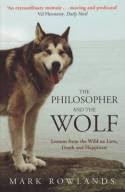
Book review: The Philosopher and the Wolf

During the course of our lives, if we are lucky – or unlucky depending on your own view – we will undergo a number of life-changing experiences. That the details of these experiences and their impact on us are unique to us and us only is not in dispute. What is curious about these personally seismic events, though, is the strange phenomenon that we are only able to recognise the full implications of such experiences long after they have happened; when we have shaken the dust from our allegorical feet and thrown a backwards glance over our metaphorical shoulder.

As it is with all of us, so it was for Mark Rowlands. When he picked up that local newspaper on a hot summer day in Alabama and decided, on impulse, to buy a six week old wolf cub, I’m pretty sure that he had no concept that the consequences of his actions were going to change the rest of his life. His only worry was whether he had enough money in his bank account to pay for it. And so begins a remarkable story of how this young British professor of philosophy came to share the next eleven years with Brenin the wolf.

At one level, The Philosopher and The Wolf is a highly amusing and deeply moving memoir of the life and times of one man and his wolf. As both grow and mature and change - jobs, homes, continents, girlfriends - they provide, for each other, the only constants in each other’s lives. We watch Brenin as he grows from fluffy cub into 150lb adult; we observe his training and his interactions with dogs and other people; we prowl with the wolf as he hunts rabbits and chases birds as much as we see his human companion hunt jobs and chase girls.

If The Philosopher and the Wolf were just a memoir of a man’s life with a wolf, it would still be a great book. But what raises it to brilliance is what it shows us about what it is to be human. Or as Mark Rowlands describes it, the “certain thoughts that can only emerge in the space between a wolf and a man”. The philosopher holds a mirror up to himself and sees the reflection of the avaricious, deceitful ape standing beside the raw and honourable furry embodiment of the natural world. The author does not try to dodge the unflattering bullets of this comparison and never strays into the territory of anthropomorphism; indeed, I believe Mark would regard that as an unforgivable and insulting betrayal to the fundamental nature of what Brenin is. So the book is also uncomfortable at times in what it tells us about what we are; our own, very human, nature does not always look good in this glaring spotlight that misses no detail of our defects.

It is a rare book that keeps me compelled to keep on reading until the dawn chorus reminds me that it’s morning. Rarer still, perhaps, is a book on philosophy that delights, entertains, amuses and educates in such a way. If this book’s grand theme is that of evolution and how we came to be what we are, it is also a road map of one man’s personal evolution from what he was then and how he became what he is now. All the lessons that Mark learned about love, death and happiness were taught to him by his wolf, and I don’t mind admitting that I was in tears for most of the last quarter of the book. Ultimately, this book has moved me beyond measure; reading it really has been a life changing experience.

If you are examining any of the big questions in your own life, if you are looking to take a peep around the curtains at the machinery that lies behind why we act as we do, if you have a deep and non-sentimental regard for nature and creatures, this book could change your life too.


The Philosopher and the Wolf: Lessons from the Wild on Love, Death and Happiness is published by Granta (2009)


Mark Rowlands is now professor of philosophy at the University of Miami. His website is
www.markrowlandsauthor.com

Thursday, 21 May 2009

The half year review

It's almost six months since my fortieth birthday, so it seemed appropriate to sit and rest a while and observe the vista from atop the early gentle foothills of middle age. Or middle youth. Or Middle Earth. Or whatever we like to call this large expanse of green and beige crimplene that lies in front of us when our twenties and thirties are left behind.

Some observations then from the watch tower half a year in to the second act:

Watching the birds, thinking, monitoring the progress of the new plants in my little garden, revelling in the natural world more joyfully with each day that passes - and the continued enjoyment of my constant companion nicotine - seem to have replaced in my mind the space previously occupied by preoccupations of a more earthy kind. Whether that is to do with being 40 or with being single for nearly two years or a combination of both is a moot point. This doesn't concern me; I know that if the setting and the situation and the person were right, the old Eve would reassert herself. What I do wonder, though, is whether she can happily coexist with these other natural pleasures.

Having a complete absence of concern relating to what some might call status is by no means a new arrival on my shores but is more pronounced now in its presence. I care not for work, but I don't loathe it either, and perhaps on my better days have attained a Swiss-like neutrality about the whole concept. Work - and the workplace - are funny strange chimeras, occupying so much time and space in the emotions of those in their thrall that they can drive out almost everything else. And I do feel ok about saying that because I've been there myself in the past and like all reformed addicts can see the effects quite plainly in others whilst they remain oblivious. This is probably enhanced by observing the red teeth and claws of others and feeling overwhelmingly free by comparison. A delightful feeling, as is - at last - having mastered the art of relaxation.

Thinking about what I might do next has also been much on my mind recently, the next in my terms being the immediate future and the slightly more distant afterwards when the barn has sold and I'm free of those financial obligations. I am planning - this long bank holiday weekend in fact - to apply for a place on a part-time MA course at a local university. If I'm lucky enough to be offered a place, then two years of part-time study lies ahead with all of the excitement and learning that would offer. Quite by chance, that two years of study would conclude at the exact same moment as the contract for my current job ends. It might also - fingers crossed - include the time period during which the barn sells. So my landscape two years from now could look significantly different.

On the family front, it's nearing the end of the first academic year that Roo has been at university and the first time that I've lived completely on my own - ever - as an adult. In some ways, Roo turning twenty last month was more significant than me turning 40 and I think, not for the first time, about how time really does fly. Tempus fugit. Yes indeed, with bells and whistles on.

I also seem to have inadvertently performed major brain surgery on my computer this evening. Serves me right for following the primrose path of procrastination and random meanderings when I should be working on those assessments.

Photo of an Arctic Tern chick taken last year on the Farne Islands, Northumberland.

Thursday, 14 May 2009

The sandwich tray of Fate

I’ve never been one to turn up my nose at the accidental largesse that Dame Fortune strews in the haphazard pathway of my life. Indeed, I’d go as far as to say it is my honour-bound duty to make the most of Fate’s fickle bounty when I stumble upon it. For what else is a weed but a wildflower in the wrong place?

And so it was that the ethereal warps and wefts from which the tapestry of life is woven did conspire, at just the very moment when I was feeling late afternoon hungry, to procure for me a tray of abandoned sandwiches. Like the streamers and ten-penny blow horns littering the pavement in the bow wave of the carnival parade, the guests had sated their lunch time appetites and departed leaving behind piles of untouched food and dull-looking documents in their wake.

There is in my experience a strange primeval cloud that descends upon the modern brain in moments such as this, an urge so strong and so instinctive that it blots out in a micro-second ten thousand years of civilisation. And in that flicker of intuitive logic does the Stone Age cave man, skin deep within us all, cast off his modern cares and clothing and stride forward in his primitive glory. Would that ancient straggle-haired ancestor have paused for more than a heartbeat before consuming the food he found by chance in front of him? No. And nor did I.

A couple of dainty triangles of chicken and pesto on tomato bread and a mug of tea later and I could feel the rumbles dying away like yesterday’s echoes. But there were still piles of sandwiches left and it seemed criminal, to my inner cave woman self, to leave them there to be trodden by flies and thrown away in the bin. And so, with deft application of kitchen towels and a pristine plastic bag, I secreted the rest of the tray away to bring home for later.

The dog and I dined well tonight, sharing our supper of chicken and tuna and egg standing in the kitchen. I’ll throw the crusts that I removed (and the water cress he delicately rejected) out for the birds in the morning. The dog’s fast asleep at my feet now, just as his own ancestors would once have been in a Stone Age dwelling not so far removed in essence from the house we share. Neither of us will need to go hunting with Fate again, for a few more hours at least.
***
I’m off to visit Roo at Lancaster for a long weekend, setting off tomorrow morning and returning late on Sunday night. Can’t wait to see her, and my mother’s coming with me as well on her first trip to Roo’s university. We’re staying in some guest accommodation on campus – the first time I’ve done that in, oh gosh, a long time.

***

Luckily, Kaos is quite a lean dog so his scoffing of the sandwiches this evening doesn’t really qualify as a dieting disaster - unlike some of the animals in this little gallery from today’s newspaper. George the hedgehog (that’s his picture up there, next to a regular-size friend) was "placed on a crash diet after he weighed in at 2.2kg - four times the weight of a normal hedgehog. Staff at the Wildlife Aid animal sanctuary placed him on a strictly-controlled cat food diet."

http://www.guardian.co.uk/lifeandstyle/gallery/2009/may/13/overweight-pets-animals

Wednesday, 6 May 2009

Sort of a top hat day

Having a bit of an inverse Irving Berlin day today involving the forced replacement of emotional seepage with a stiff upper lip.

That’s the trouble when you’ve allowed your right brain to gain the upper hand: emotional leaks and tremblesome lips. No such problem with the trusty logical left side, domain of practicality and good old British reserve. So how does one prevent a quiver from becoming a river, a little cloud of gloom from becoming a thunderhead of doom?

Step into the sunshine and take full advantage of a day working at home to spend an hour lying in a joyful red reclining chair in the bright breezy garden. Watch the wet washing billowing and flapping on the line in a most satisfactory way. Shut your eyes and observe the little pin pricks of light shining through your lids. Trace the trails of the tiny black dots as they dance and wander across the inside of the thin closed membrane. Listen to the sounds of the wings of the sparrows as they land on the bird feeder. Whirring? Purring? Laugh at their pickiness as they reject and drop discarded seeds with disdainful beaks. Pluck out some moult hairs from the dog’s haunches whilst he snores. Throw the beach-found blue rubber ball when he grumbles at you for doing so. Make a cup of tea in your favourite bone china mug with the pictures of bees on it. Smoke a few cigarettes and remember that although it’s your last pack of duty frees you haven’t paid full price for 20 since February. Pinch out a few baby weeds and hope they’re not the seedlings you’ve been nurturing. Return to the desk with a bowlful of muesli topped with yogurt and honey. Drink more tea. Continue work where you left off. Smile.

Job done.


I'm puttin' on my top hat
Tyin' up my white tie
Brushin' off my tails

I'm dudein' up my shirt front
Puttin' in the shirt studs
Polishin' my nails

I'm steppin' out, my dear
To breathe an atmosphere that simply reeks with class
And I trust that you'll excuse my dust when I step on the gas

For I'll be there
Puttin' down my top hat
Mussin' up my white tie
Dancin' in my tails


Extract from Top Hat, White Tie & Tails by Irving Berlin (1935) from the musical Top Hat (nominated for four Academy Awards)


Monday, 20 April 2009

Rooks and apple blossom

The weather gods had colluded today to deliver the first day of summer. That it was a Monday too seemed appropriate; perhaps they too work a regular jobbing week. Gone were the weekend's chilly winds and misty outriders, shunted into the sidings by bright sunshine and skies with train-chuffed clouds drawn straight from a child's paintings.

A few brave early blossoms on the twiggy cooking apple tree in my little garden were just starting to uncurl as I left the house this morning. Several more spindly green shoots from the wild flower seeds I sowed a couple of weeks ago and another frond of clematis too, a slender waving tendril seeking anchor from the wall. But the honeysuckle is proving so far to be the champion of this chase to the sun; it grows taller and bushier each time I look at it.

The students were back at full strength on campus today, eyes blinking at the unaccustomed morning light after a few weeks of sleeping until afternoon if Roo is anything to go by. Some of them were towing huge suitcases on wheels and working like columns of cheerfully chattering ants as they helped each other across the grass with bags and boxes of belongings and into their flats. At mid morning, I went down to the campus shop in search of muesli and a change of scene. I'm trying to be virtuous after those three weeks of over indulgence so was pleased with myself for managing to forgo a bar of chocolate, although an ice cream wouldn't have looked out of place among all the colourful tee-shirts.

Lunchtime provided the perfect opportunity to saunter to the post box and then to sit in the park for three quarters of an hour. It's the first time I've had the chance and the weather to venture there and I can see that plenty of exploring of the seemingly endless green space lies in front of me. For today, though, I was content to find a bench and read and watch the world go by as I crunched Polos and smoked a couple of cigarettes. Not far from where I was sitting was the remains of a maze. It had been made of straw and the inner spiral was still intact, the outer parts now straw-less but carved into the grass nonetheless from the length of time it had been there. A year? Two perhaps? Temporary entertainment certainly but long enough to leave a bare grey-brown trace in the turf.

From the variety of mature trees I'd guess maybe that this had originally been planted as a specimen garden when the mansion house was still just that and in private ownership. The mansion retains its indoor 'winter garden', a huge domed green house bursting with tropical species to the extent that large fleshy leaves press up against the windows and the glass runs continually with condensation. Outside, rooks have set up nests high in the tallest of the trees and were pecking around importantly in the grass as I watched them.

And then suddenly, from nowhere, an unrecognisable squawking caused rooks and me both to look up startled. A small flock of parakeets were flying over, pausing for a moment for a rest and to be admired among the tree tops before continuing their journey. I have seen parakeets (and even, once, a huge blue parrot) flying freely before in this country, but they somehow seemed even more incongruous in south east London. Perhaps the proximity of the tropical hot house lured them in. Who knows?

Sunday, 12 April 2009

Easter babies

I fidgeted with the zip of my anorak, its metal teeth pinching at the tender skin under my chin as the little car rattled and jolted and picked its way down the rutted farm track. Bounded on either side by a tall and untidy tangle of elder, brambles and stunted elms, the narrow lane stretched ahead and behind us with nothing above but the bright April sky. Around us, the air was filled with the twitters and calls of unseen birds as they went about their spring business of nesting and feeding grubs to broods of gangly grey and pink skinned hatchlings.

At last the track gave into a gravel covered open courtyard and the car stopped. I got out and wiggled my toes as best I could inside the too tight Wellingtons. One leg of my polyester trousers had escaped from the top of the boot in spite of my mother’s vigorous tucking and the other was threatening to do so, content for now instead with ballooning around my knee in a nylon approximation of plus fours. A huge brown cow with soft shiny eyes thrust her head over the top of a wall nearby and stared at us, grass and spittle at the edges of her lips as she rhythmically ground her jaws.
“Come on girls. Stop dawdling.” Mike locked his car and strode away, the cow still staring and chewing as the three of us scuttled after his back up the path to the farm house.

“Now girls, what you’ve got to do is keep them together,” Cathy boomed as she issued us each with a pale wooden crook. “We need to bring the lambs and their mothers from that field,” she said pointing off into the distance with her staff, “into this one. Walk behind them, but not too close, like this. You see?” she said, shepherding an invisible sheep and her offspring in front of her through the calf high wet grass. We nodded in unison, three little girls in anoraks and scarves and hand knitted gloves. “John’s out there already with the dogs. He’ll show you the ones we need”. And with that she set off, taking long strides in her muddy green boots over the tufts and hillocks.

I watched from the edge of the field. The black and white sheep dog ran quickly, head down and crouched low to the ground as she circled closer and closer to the raggedy gathering of ewes and lambs. John stood some way off, long green coat and crook silhouetted against the natural rise of the land. The dog moved with silent practised precision, sometimes dropping completely to the ground and never close enough to the flock to cause alarm but urging them forward slowly all the same in response to the farmer’s whistled commands. My job was to get the stragglers to follow. I got behind the first group, a ewe and her twin lambs, and tried to recreate the action that Cathy had shown us. Perhaps sensing inexperience or a fellow youngster, the rotund sheep rolled her eyes gently and did as she was asked, her two babies jumping and trotting on uncertain legs behind her.


We became a little more efficient as the morning wore on and eventually all the sheep and lambs that had been out of sight were now gathered in the field near the farm house. Mike poured us all a cup of orangey tea from a thermos flask as Cathy described the next part to us. She would, she explained, be going around with this little machine to put a tight yellow band around each lamb’s tail. It didn’t hurt the lamb, she told us, but it would make the tail fall off in a few days. Our job was to hold each lamb steady near its mother whilst she snapped the band on near the rump with a gadget that looked like a pair of pliers.

The three of us girls spread out into the small field and carefully captured our first lambs. My lamb was standing quietly next to its mother as she nibbled gently on the grass at her feet. I had taken my woollen gloves off and could feel the little one’s heart beating steadily through my fingers, her body firm with muscle beneath the soft and tightly curled fleece. I needed to hug this tiny lamb and knelt down in the wet grass and drew her close to my face, burying my nose in her coat and breathing in deeply. She smelt warmly of grass and wool and fresh air and milk in that universal aroma of new babies. She opened her small mouth and bleated softly to her mother and I could see her tiny pink tongue. I spoke soothing words to her as Cathy came over and deftly clipped the band around her tail with expert hands before stroking her and letting her go. She bounced up on her front legs, kicking her little hooves out behind her, once, twice, shaking her tail as she nudged her mother’s udder.

Finally, when all the little tails had been bound, it was time for our last task of the day. The three of us trooped after Mike, Cathy and John across the wet grassy field until we came to a long semi-circular structure.
“This is the poly tunnel,” Cathy told us, “it’s where the ewes wait to have their babies. We’ll need to be very quiet now; some of these sheep will be giving birth to their lambs.”
She pushed the door open and in we went, silent now and breath hushed with awe that we might see a lamb being born. It was warm inside. Deep straw lay on the ground and the air was filled with the heavy sweet scent of grass and sheep and new life. We walked behind the adults up the central aisle, stopping in line as they stopped to examine the ewes.
“Here,” said John, “come here. This one’s about to give birth.”
And so the three of us knelt down in the straw behind the ewe who was half standing and half lying down. Before our eyes, a white veiny sac appeared, followed by two hooves and two thin legs, a head, and then the whole lamb lay on the straw. John put his fingers into the new born’s mouth, cleared her throat, rubbed her firmly with a handful of yellow straw as the ewe turned round and started to lick her baby. The lamb, still partly covered in her white birth veil, now struggled to her feet, spindly legs wobbling and slipping on the straw. She stood, fell, stood again, swayed, and took her first steps as John guided her to her mother’s milk. We watched our new lamb for a long time, crouched there in the straw. When it was time to go, we said our goodbyes and closed the door of the poly tunnel softly behind us.

“Come on,” said Cathy, “I’ve got one more thing to show you before you go home.” So we followed her into the farm house, down the long dark corridor and into the kitchen. The kitchen itself was huge and square, a massive wooden framed picture window looking out over the field where we’d just been. One wall of the room was filled with a long cast iron range, and Cathy went to this now and opened one of the bottom doors.

“Look.” She said, so we did, three pairs of little girl eyes were met with a stare from inside, a tiny lamb curled up on a blanket. Cathy lifted a teated bottle from on top of the range and hoisted the lamb and blanket onto her knee. The lamb grabbed hungrily at the milk, gasping and slurping and swallowing as hard as she could.
“This lamb’s mother died when she was born so I need to feed her milk until she’s old enough to go out into the field.” Cathy explained, the lamb sucking at her knuckle as she topped up the warm milk from a saucepan. “Would you like to feed her?” And so the tiny lamb was passed to us one by one, complete with bottle and blanket until all the milk was gone and the lamb had fallen asleep. Cathy carefully placed the lamb back into the gentle warmth of the range and left the door open so we could crouch down and look and stroke her.

We left the farm house and followed Mike back to his car. A mallard stretched her wings and refolded them neatly as she ducked her head under a fence, sauntering and swaying from foot to foot as her clutch of yellow and black chicks scampered and squabbled behind her. Tired and hungry and very very happy, we made our way home.


Happy Easter.

Monday, 6 April 2009

The right tool for the job

It’s been a weekend of nature and nurture I think. Well, if you count gardening and a mother and daughter shopping expedition as part of that equation that is. But it has left me pondering this evening about the way in which some animals use tools.

It started off with me buying three strips of turf at the garden centre. Roo had mentioned when she arrived home last weekend that it would be nice to have some grass in the garden for the dog. The dog like grass for various purposes – including sunbathing – but, renovations not withstanding, the back yard is about the size of a shoe box. Nevertheless, I could see that there was a small space into which grass could be introduced and I prepared it the best I could over a couple of hours of shovelling and raking this morning before heading off in the car to buy the turf.

The first strip went down fine. The second needed to be cut to size to fit, but with what, exactly, does one cut a roll of turf? I had no idea so sat down on the stool in the garden in the sunshine with a cup of coffee and a cigarette and thought about it. The spade was too clumsy, the rake and hand trowel inappropriate, I had no saw, and I’m sure if I was a better person I’d have one of those half-moon shaped lawn-edging devices, but I’m not so I haven’t. And then a little beam from the patiently orbiting star ship lateral thinking struck me. I wandered into the kitchen, picked up the long serrated bread knife and set about slicing through the cylinder of turf as if it was a giant Swiss roll but made with soil and grass rather than chocolate sponge and jam. Perfect.

Turfing / Swiss roll cutting completed, I moved on to planting the couple of hundred summer flowering bulbs that have been hanging around for eternity. The bulbs were all rather tiny ugly-looking things, somewhat like brown fossilised iced gems but without the biscuit and with some flaky onion skin type stuff around them. The instructions on the bag said to plant them either 1 or 2 inches deep. This again sent me back to my gardening tool pondering stool; the trowel or spade would not be any good – too wide, too deep – and I haven’t got one of those dibbers or dabbers or whatever they’re called, so what to use? And then, eureka, the second lateral beam of the day sent me back to the kitchen utensil pot to select an alternative garden tool of choice, this time the porridge stirrer (or spurtle to give it its proper Scottish name). In no time, I was poking perfectly sized holes in the soil and dropping in the ugly bulbs at a rate of knots.

There are moments – and I have plenty of them, believe me – when I think how very closely we are related to the other animals that we share the planet with. Chimps and monkeys that use sticks to extract termites, collect honey or to escape from an enclosure, for instance. Or Egyptian vultures that use specially selected stones to break open ostrich eggs. Or woodpecker finches, native to the Galapagos Islands, that use cactus spines to prise ants out of holes. Or green herons that learn to use bait to go fishing. Or the laboratory-dwelling crow that learned to use a cup he’d been given as a toy to fetch water to moisturise his food.

I think next time that I’m planning to do any gardening or having folk round for some grub, I’ll make sure that I invite a variety of birds and a couple of monkeys. After all, if they can do all that with just a mossy old stick or a couple of stones, imagine what they could do with a kitchen full of tools.

Tuesday, 31 March 2009

Music for the bees


Gardening is perhaps a little like housework I think, in that it's not really possible to show what's no longer there in the same way that nobody really notices a dog hair free carpet or a sparkling basin. But boy, do you feel the muscle burn in your arms and back. Reduced to a couple of photos from a mobile phone, my two raised flower beds here don't even seem much to show for a week's work. But - and you can only take my word for it I know, so please trust me on this one - this is an enormous transformation of my little back garden.

My little house by the seaside had been empty and close to derelict for about 4 years before Roo, the dog and I moved here in August 2007. Prior to that, the garden itself had been more or less untouched for the best part of 40 years. My great grandmother had always loved her little garden, planted it with bluebells, scrubbed the brick red cobble stones and kept it neat and tidy, but all that stopped when she died in 1966. Her son, my great Uncle Roy, left behind in the house after his mother's death, was not really one for the keeping of gardens any more than he was one for the keeping of much company beyond cricket, Proust, Kafka and Tchaikovsky.

How he loved his books and music. As a childhood visitor here, I'd blow the dust from one of the huge Bakelite 78rpm records and put it carefully on the old dark wooden gramophone, lowering the fat needle carefully onto its edge and cranking the handle round and round and round to spin the turntable. Uncle Roy would watch with amused delight from behind a folded copy of The Daily Telegraph as the crackly sounds of a long-dead orchestra rose to the command of a ghostly conductor and filled the room with the most beautiful music. Outside, the sun might have been shining on the seaside visitors, the gulls circling waiting patiently for sticky toddler fingers to let slip their ice cream cones. But inside, in the dark coolness of the front room, the little house was temporally transformed into a Baroque concert hall, the shabby curtains replaced with lush velvet drapes and the battered brown armchair with a sumptuously carved chaise longue as the maestro stepped up to the podium and wielded his baton to let the magic fly, just one more time.

Forty-odd years of debris takes a lot to undo, and at some point the general jungle-ness of the yard had been added to by the collapse of the rear wall and the influx of dumped rubbish from who knows where. Broken mirrors, shards of glass, bricks, tiles, plastic sacks full of women's clothes, crockery, all had conspired to submerge the garden and bury Grandma's cobbles under feet of soil and detritus. I lost count of how many sacks of rubble and rubbish and soil I've dug out by hand, bagged up and taken in my little car to the municipal tip.

But at last, after a week or so of excavation and general shovelling around, the red brick cobbles are exposed once more and the garden looks more like a garden and less like a landfill site. I created two raised flower beds about two feet tall, one made entirely of the whole bricks I found in the yard, and one from huge wooden sleepers from the timber merchant a few miles away. Today, Roo and I went to our local garden centre and chose a selection of plants that we hope will grow and creep and climb and attract the bees and the birds. We planted climbing ivy, forsythia, anemones, pansies, lavender, clematis, honeysuckle, foxgloves, jasmine, a couple of tall grasses and several more things besides. At the weekend, I'll add some wildflower seeds and some summer-flowering bulbs.

At the top left of the first picture, you might also be able to pick out the little round bee house I bought at Flynn's Bee Farm the other day, a device full of thin cardboard tubes especially to attract solitary mason bees. For once, I hope it rains and rains and rains for the next few days, to wash the remains of the mud from the cobbles and to water the plants as they settle into their new home. Come summer, I hope that our little garden is filled with the heavy heady scents of the flowers and that it once more throbs and dances to the music of the bees.

Wednesday, 25 March 2009

Digging up the past

The barn was around 200 years old when we bought it and already in an advanced state of decay. Sometimes during the long hard process of converting it into a house I’d stop and wonder what its original builders would have thought of the idea.

The barn had been built to house cattle; this much we knew from the large wooden manger that was still clinging on at one end of one of the gables. At some point, the full double height building had also been divided horizontally into two. We took a guess that the new upper level had been used to store grain in an attempt to make it just that little bit harder for the rats to get at it. The floor boards on the top storey were reinforced with iron strips to help deal with the loading. That part had worked, although the presence of deep and multi-generational rats’ nests in the walls confirmed that only rodents with vertigo had been deterred by the effort.

The long since abandoned rats’ nests and the manger were not the only signs of previous habitation. Tucked here and there behind rafters or floorboards were more human signs; rusty tobacco tins and ancient empty bottles, irregularly shaped of thick green tinted glass and with a marble caught in the throat, showed us where weary farm hands had taken their ginger beer and rested after a day’s hard labour. When we excavated the floors downstairs to cast a more stable concrete slab, we unearthed tens of thousands of shards of broken glass and hundreds of pieces of clay tobacco pipes.

Excavating the floors was the toughest job of the whole conversion in my mind. Because the rest of the still somewhat unsteady building was standing over our heads, it was much too risky to use machinery and so we dug by hand. For three months, night after night after night and illuminated by a harsh electric spotlight, we excavated the whole area down to the depth of more than one yard. It was exhausting work and carried out with no greater sophistication of tools than the original farm labourers would have used when they built the place more than two centuries before. Even on the coldest evenings of winter, the physical effort of digging the thick London clay would have sweat coursing down my face and dripping off the tip of my nose within minutes. It was much like going to some kind of intensive hard labour boot camp gym for hours every night; needless to say, we grew very strong and very fit.

Near the end of our digging and with the finishing line in sight, we made a remarkable discovery. What had seemed at first to be a piece of particularly stubborn buried brickwork turned out to be the remains of an ancient forge. We gradually and carefully unearthed what was left of the structure; some standing remains, complete with ashes, of a forge that long pre-dated the rest of the barn even. It was impossible to remove it from its centuries-old resting place, so when the time came to lay the sub-floor insulation and cast the new slab, we made sure that the forge was completely shielded from the liquid cement. Maybe one day, some time in the distant future, somebody else will come along and reveal it to the light once more.

I was out working in my little garden again today, clearing more rubble and digging through the soil to lower the ground levels and create a couple of raised beds. I didn’t unearth any real treasures, just a few rusty pieces of ironmongery, empty snail shells and hundreds of startled earthworms. One more day of digging perhaps and then I’ll be able to turn my attention to the nicer parts of gardening: making a gate, choosing plants and planting bulbs and seeds and such. Time enough for a treasure to turn up yet though, I guess.


This wonderful photograph of greenfinches was taken by John Mullin - just announced as this year's winner of the RSPB 'Big Garden Bird Watch' photographic competition.

Tuesday, 24 March 2009

Goodbye to all that

Some of the guidelines our parents issue us when we’re little don’t translate well to the adult world of work.

‘Don’t talk to strangers’, repeated sternly and mantra-like from the lips of our feverishly worried mother as she buttons up our straight-jacket itchy duffle coat and wipes our face with a damp and slightly smelly hankie as we prepare to embark on the perilous journey to the corner shop for a bag of penny chews, for example. It makes perfect sense in her adult-to-child paranoia transaction because it is logical and it will keep us safe from harm; our mother has forgotten that all adults look alike to our child’s eyes and that a stranger isn’t strange once he or she has smiled and said hello. Except for old Mr Smith of course who can’t smile any more because something happened after the war and whom we can’t help but find a little bit sinister in ways we don’t yet have the vocabulary for, but who isn’t in any event a proper stranger – although he certainly is strange – because he runs the corner shop with his portly wife who wears only stained beige cardigans…

Roll the time dice forward by a few decades or so and we might in fact find that we earn a good chunk of our monthly pay cheque precisely by our ability to talk to strangers and to talk strangers into things. Indeed, some of us might even earn our keep by talking to very strange strangers in close quarters and without the protective armoury of tightly-fitting winter outer wear or spit-cleansed faces.

“Respect your elders” is another one. It is perfectly right, proper, fitting and appropriate that our childhood should be passed in a slightly heightened state of free-floating anxiety lest we have accidentally omitted to call the lady whom we know to be Lillian by her given adult-to-child name of Mrs Jones. The terror that can be induced in us by inadvertently finding out the first name of one of our teachers at primary school and daring to say it out loud when we’re busting for the loo and can’t prise her attention away from the picture window is probably listed somewhere as a war crime under the Geneva Convention.

Respecting one’s elders does work in the adult world too as a general rule, with the exception on some occasions of the workplace where the elders in question are behaving with all the logic of a hormone-crazed baboon set loose from a winter of solitary confinement into a compound of fecund and spring-ready fellow primates.

One saying, though, that I think holds good for both child and adult is to do with the weather. Specifically the observation that “March roars in like a lion and leaves like a lamb”. Imminent climate catastrophe not withstanding, this phrase is as true now as it was when I was little and counting the days until my Easter eggs arrived and I could stop giving up whatever it was that I’d given up for Lent encouraged by the peer pressure of Sunday School. (Probably chocolate at a rough guess)

I no longer give up chocolate for Lent (or go to Sunday School for that matter; being 40 and all I think I’d stand out a bit). But March as a month sure is changeable. The beach this morning was pure balaclava weather, forcing me to keep my lips tightly sealed to stop the freezing wind from setting off all of my dental nerves like a miniature in-mouth firework display of synaptic activity. Yet by the time I reached the office building, the sun was shining, the grass glowing with growth and the sky full of cawing rooks carrying singular twigs to their nests high in the bare tree tops.


It was not Easter either, but it was the end of my own personal Lent; for today was the final time that I shall set foot in that office building. My last remaining colleague and I met with our director and the chairman of our charity and went up to the café to have a cup of tea and a doughnut. We talked, we laughed, we got sugar over our fingers and around our lips and at last the pretence of the previous few months was over and we said our goodbyes. We embraced, we pecked each other on the cheek in that slightly clumsy British way and we wished each other well as we departed in our four directions.

In keeping with the nature of the month that draws soon to a close, I took one last look around our old office and slipped away quietly into history like a lamb.


Monday, 9 March 2009

Bees beside the seaside

If you come out of the front door of my little house by the seaside and turn right you will find yourself walking down a narrow road with an avenue of trees on either side.

I can remember when this was a through-road, but at some point when I was living away it was cut into two unequal segments by the placing of some bollards. The four posts are slim and handsomely shaped cast iron, as if on a quay side but painted bright blue, and they march in single file from one side to the other. The span between is enough to let a bicycle, motorbike, pushchair or supermarket trolley pass but no larger vehicle than that. So the road is a quiet one, with nothing on the north side except a strip of parkland hemmed by ancient hedgerows and only the sea beyond.

Skeletal and dormant at the moment, the avenue of lime trees throbs with life for the warmer six or so months of the year. Their brilliant green leaves are large and felty, perhaps the size of a man’s hand, and an imperceptible unguent oozes from them leaving any cars parked beneath covered in a sticky film. Sparrows and doves and pigeons and starlings squabble with magpies, crows and three types of gull for foraging rights, food scraps and larvae and the chance to dine on a thousand and one kinds of flying, creeping and crawling insects.

When I first moved here some nineteen months ago I was overwhelmed with delight to find a colony of bees living underground in the loam on the slope outside my front window. They are a bumblebee species of some kind, but small and beige-ish brown, not the big bright black and yellow striped sort of children’s books. I uncovered them – literally – quite by chance whilst raking away debris that had accumulated during the years the house had stood empty. An angry squadron streamed up from the ground, intent on chasing away whatever unwelcome vandal had torn the roof from their home. I stood back, absolutely motionless, rake still in hand, watching them as they swirled and massed above the ground for twenty minutes or more. Once satisfied that the danger had passed, they one by one returned to their underground bunker until buried invisibility shielded them once more.

I didn’t tell anybody the bees were there, afraid that someone pleading sting allergy or some other latter-day intolerance would ring the council to have the nest destroyed. Their secret home outside my own seaside sanctuary lay safe and undisturbed and I watched them all that summer until late autumn came and the colony fell silent. I was very sad when they didn’t return last year. Maybe this spring will bring the bees back again.

At the far end of the road and hard up against the sea wall is the town’s sports’ centre and I went there this evening for my yoga class. Warm and loose after an hour of stretching, it was dark by the time I made my way back down the dimly lit road to my home. A group of teenage boys were gathered around the bottom of one of the lime trees, one of their companions having climbed up into the branches. They were peering on tip toe over the rear wall of one of the houses of a small row that backs onto the road, using the feeble lights from the screens of their mobile phones as torches.
“Sshhh! Don’t tell anyone!” the boy in the tree top called, seeing me walk past.
“Why? What’s up?” I threw back, sensing their good spirits even in the dark. At that moment, another boy popped up from behind the wall, grinning, and jumped down into the road beside his friends who greeted him with great jubilation.
“His mum locked him in and threw his keys in the sea!”

I laughed with them and continued on my way, smiling to myself. I thought it might spoil the party to ask how he was going to get back into his home later.

Monday, 23 February 2009

The answer is 42, give or take

Big questions come in all sizes. Puzzling over whether to have French mustard with your chicken ‘n’ chips ‘n’ salad, say, can sometimes cause you to temporarily stop and ponderously scratch your chin just as much as thinking about if there is life after death.

The big question I took away to Egypt with me was should I make the move back to the barn a permanent one. The trial period of living here had gone well - much better than I expected in fact - and I had more or less made up my mind to say yes before I even set foot on the plane. But I still held the decision pending, wanting to have the opportunity of time and distance (both physical and metaphorical) to reflect. After all, 18 months and a whole lot of trauma on from the break up, opting to move back to live separately and independently from but alongside and under the same roofs as the ex was not something to be decided on the toss of a coin.

Whilst in Egypt, I didn’t think about it much at all or not consciously anyway. I was content to let my mind-scape scene shifters shuffle about in the background doing their thing and to present me with their recommendation when it was ready. A bit like the giant monolithic mega-computer, Deep Thought, in the Hitch Hikers’ Guide to the Galaxy, except hopefully more usefully conclusive than the answer 42.

And the micro-chaps in white mini boiler suits that tunnel through my neurons and synapses and buff up my grey matter didn’t let me down. I have my answer, and the answer is yes. All I need to do now is sort out the practical stuff to make it so.

I left work early this afternoon and drove over to my little house by the seaside to pick up my post. The approach road to the island is a wide black dual carriageway. It cuts across the salt flats like a fat string of liquorice before soaring up and over the elegantly curved bridge that spans the strip of water that separates the island from the mainland. The marshes are covered with tufts of coarse grasses upon which benevolent cows and sheep graze sleepily and eke out a sufficient if meagre diet. There are numerous informal lakes and ditches that come and go with the rain, home to tens of thousands of wading and water dwelling birds. That this landscape is as rare and precious as the rainforests probably escapes their notice as they feed and breed and squabble and groom.

I spotted something as I joined this main road. A bright red metallic helium balloon was bobbing up and down at the edge of one of the fields. It was heart-shaped, perhaps a Valentine gift from a shiny-eyed lover or an escapee from a birthday celebration. Its string must have slipped through someone’s fingers in a moment of clumsiness and was now snagged in the rough hedge. Perhaps whoever it was had watched the balloon float up out of reach until it disappeared away into the sky. Maybe they’d stood on tip toe or jumped up and down in an attempt to save it and bring it back to earth. But helium is lighter than air and so the balloon had no choice but to rise up and away and out of their grasp forever.

There was nothing in my mail box as it turned out, except for an appeal from the RSPCA and a catalogue of clothes for women of a certain age that my mum must have ordered. I added them to the recycling pile and picked up some clean bed sheets and my vacuum cleaner before driving back to the barn. My little house by the seaside is starting to feel less like my home now as my stuff gradually migrates. By the end of next month, I’ll have moved out completely; later on, someone else will move in and make it their place. For them and for me, I hope it’s the right decision.

Tuesday, 17 February 2009

Fly like an Egyptian

We watched a magnificent sea eagle hunting above the bay this morning.

It was joined by two or three smaller kestrel-like raptors, taking it in turns to dive down into the sea before soaring up again and circling, searching, eating. There are other more familar birds here too - the ubiquitous sparrows and doves of course, but also - surprisingly to me - pied wagtails going about their business in much the same way as they do 2,500 miles away at home.