Showing posts with label friends. Show all posts

Wednesday, 24 June 2009

The pit of Apocalypto

I was perhaps a slightly reluctant cinema goer when I went along to see Mel Gibson's 2006 epic, Apocalypto. The trailers and the general pre-release hype around the film - set in Central America during the declining period of the Mayan civilisation - didn't really grab me and its subject matter - a tribesman who must escape imprisonment and human sacrifice after the capture of his village - didn't appeal either. And it is fair to say that, over all, I found the film rather too long and rather too 'boyish' for my tastes.
*** Plot spoiler alert***
if you haven't seen Apocalypto, don't read
any further
But several years on from my one and only viewing, some of its scenes and themes remain with me in spite of my misgivings. As our hero Jaguar Paw (Rudy Youngblood) is led away from the sacked and burning remains of his tribe's home, we know that he has hidden his heavily pregnant wife, Seven (Dalia Hernandez), and young son, Turtles Run, in the empty shaft of a deep sink hole. As the captives are herded to their unknown fate, one of their number spots the trailing vine that Jaguar Paw has left for his wife to enable her to climb out of the pit. Suspicious, he severs it and cuts off her only means of escape.

So whilst the main (and lengthy) action of the film now switches to the tribesmen and the gory horrors they endure at the hands of their captors, my female attention is wholly with Seven and her predicament at the bottom of the shaft; I am far less concerned with the fate of Jaguar Paw and his comrades, even though it is they that occupy screen for most of the rest of the film.

I cannot know whether a male viewer of Apocalypto would have the same preoccupation with the destiny of Seven as me or if the (undoubtedly stirring) derring-do of our band of conquered heroes, locked in mortal combat with their foes, takes precedent. I suspect the latter, because for all its sixteenth century setting, it is as fast a paced non-stop action-thriller as, say, The Bourne Identity.

If that is the case, then the film has perhaps 'not worked' for female audience members: what, in the male-eyed view, is very much a sub-plot delivering a useful slice of motivation (the fate of Seven) is, for women, the main focus. For me, no matter how many poisoned arrows are slung or heads gruesomely removed from shoulders on the top of the temple, I am still at the bottom of that sink hole with the pregnant woman.

Several years on and I still from time to time close my eyes and try to imagine how I would escape such a predicament. There I am, stuck at the bottom of a hole not of my own making or choosing. How can I claw my way out of it to the sun?

Of course, in the film, Jaguar Paw eventually escapes his captors and arrives to rescue Seven and Turtles Run (and the new baby which has been born in the meanwhile) in just the nick of time. But real life is rarely like that. Whether the pit we are in is one we have inadvertently dug ourselves or have accidentally stumbled into whilst our attention was occupied elsewhere, ninety nine times out of a hundred it will be only ourselves that we have to rely on to haul us back out again. So how do we do it?

One step at a time, one foot after another, one word following the next, and with our eyes fixed unwaveringly on the blazing light just up ahead at the end of the tunnel.

Tuesday, 16 June 2009

Rocks and pebbles

My parents gave me a stone tumbler when I was about seven or eight years old. A thick cylinder of orangey-brown plastic with removable white caps at either end, it was maybe a little larger in diameter than a piece of drain pipe and sat on top of a small bronze coloured motor. The stone tumbler would magically turn my handful of dirty sharp pebbles into gleaming polished gems. Irresistible.

I selected my first stones with care: purples and mauves and pink glass-veined quartz, mysterious dark brown pieces and some that were as inky and as timeless as the night sky. Added fine charcoal grey grit. Poured in some water. Switched on the electricity to make the fan belt driven motor run. And waited. And waited. And waited. The little stone tumbler ran hour after hour, day after day after day. I kept stopping it, of course, to see how the gems were doing. Were they done yet? Was my little plastic tube now full of sparkling jewels?

No matter how often I looked, there never seemed to be any difference. One day, after looking for signs of progress and - of course - finding none, I must have forgotten to switch the motor back on. Perhaps I was just impatient. Or maybe I'd decided, in my seven or eight year old way, that it must somehow be a trick like the man behind the curtain in the Wizard of Oz, for I never did turn it on again.

More than three decades on, my little stone tumbler popped back into my mind today after some fascinating comments from Fram and Roo that followed a book review that I wrote a few days ago. Specifically, it got me to thinking about if we change with age - and if so, how those changes manifest themselves.

So some personal reflections on change as a by-product of age:

I no longer burn to have the answer, only the answers that I need to the questions I choose to ask. I select the questions I want to ask with great care. I will have fresh questions to ask for as long as I have a heartbeat. I believe that, when it comes to others, a person will reveal as much (or as little) of him- or herself as they choose to at any given moment. Pushing, prodding, prying for a premature revelation achieves no more than backing a lion into a corner: he or she can now move only one way, and the outcome will be good for neither of us.

I sat by a large pond in a sunny quadrangle today. Golden carp wriggled and splashed within the deep green water. On the grass, three baby coots followed the neatly picked steps of their elegant red-beaked mother as she pecked and foraged for insects and sandwich crumbs. For carp and coots alike, this pond, this quad, is their whole universe. They were born here, will live, breed, nurture, grow old and die here.

To look at the quad as a prison, though, is to look with wrong eyes: from the outside. From the inside, this is their world, their home, their life and their refuge. It is our paradoxical, unique human tragedy that we are rarely satisfied with our own quadrangle, however beautiful, bountious or peaceful it may be. We shin up the walls and peep out of the compound. Exotic equals good, we think, familiar equals bad, or dull at the very least. We cannot help ourselves. It is as much in our restless, relentless genes as to roll and thunder and crash with foam is the way of the ocean. This is not to imply that ambition or the desire for change, for self-improvement, are bad things. Far from it. Rather to say that the rest we take at the end of the day is as valid and as vital as the labours constrained within it. This, in particular, took me a very long time to learn.

A tiny money spider has been exploring the back of my hand as I've been writing. My hand, my arm, the hem of my skirt, are temporarily part of his world; and he is part of mine. For some of us, the concept of home is as clearly defined as the four walls of the quad are to the carp and the coots: any elsewhere is alien. For others of us, the walls of our quad encompass the four corners of the earth. One view is not better than another. Just different.

There is no doubt that age continues to knock the rough edges off me just as the relentless oceans polish the sharpest of granites to smooth round pebbles. The same way that my stone tumbler would have done if I had had the patience to let it.

Clickety click...

Life is full of things that you'll never know if you like until you try.

I have never tried jellied eels. Frogs legs. Tripe. Novels written by models. Sportsmen's autobiographies. Potholing. Morris dancing. Bungee jumping. There's nothing wrong with any of these things and it could well be that if I tried them, I'd love them. Thus I accept that I may be missing out.

Playing bingo had never appealed to me either and it's quite likely I'd have gone to my grave without hearing one and one: legs eleven delivered by a cheery voice over a crackling public address system if I hadn't, a few years ago, worked with a woman who had previously worked in a bingo hall. She was great company, so when she arranged an evening out for a group of us at her former place of employment, I was delighted to go along.

I'd expected an evening of great frivolity and chatter, so of course was completely unprepared for the seriousness with which the games proceeded. Talking during the calling of the numbers was highly frowned upon and the overall atmosphere was one of enormous concentration. Indeed, adept players had as many as half a dozen numbered sheets in front of them for each game. The numbers fell from the caller's lips faster than rain from a dripping down-pipe; I had trouble scanning my one singular card for a number before the next fell into my ears like the urgent two toned sirens of a fire engine. I simply have no idea how they managed to keep up; I guess that's skill and practice for you.

The evening was fun but not an experience I'd rush to repeat. However, one thing learned from bingo lingo came in handy today when I was writing my mother's birthday card. She's sixty six. What on earth, I thought, can I write about being 66? It's not a milestone birthday like any of the zero ones, or even a significant one like last year's 65 which marks 'official' retirement age. It's not really old enough to be considered an achievement in itself - like being 84 or 91, say - and nor is it young enough to cause remark: double digits, teenager at last, key to the door and so on. And then it struck me. In bingo lingo, which associates something with each number called, 66 would be clickety-click, sixty six. So that's' what I put on the card:

Happy clickety-click birthday - still two little ducks until two fat ladies.


Clickety-click (66)
Plus
Two little ducks (22)
Equals
Two fat ladies (88)

It made me chuckle anyway. Maths jokes always do.

I'm not sure my mother was that impressed to be honest. Maybe next year I'll just stick with writing happy birthday.


Friday, 12 June 2009

The birthday surprise

"I thought 'are we going to the zoo?' " my mother says, peering round at me from the passenger seat of the car, "and then I thought 'no we can't be; it's too late' "
I can't quite make out my sister's face. In fact, from where I'm sitting in the rear of her smart red Mini Clubman, I can only really see the back of her left arm, a tuft of hair and one elongated triangular black leg of her sunglasses.
"Would you have liked to have gone to the zoo, then?" my sister asks.
"Well no, not really. Well, yes I suppose I would, but only if T and W were coming. Spend an afternoon looking at the animals..."
It would seem that my sister and I are not considered satisfactory zoo companions. Given that the zoo is not where we're going, that's quite ok.

A small pause while she ponders and my sister takes the coast-bound slip road of the A2, the car ringing its way round an almost full 360 degrees before straightening once more and heading on down the dual carriageway. It's about 6 o'clock and the sky is June blue. Open fields of matte beige corn and zingy zesty yellow rapeseed pass us by, studded here and there by thick dark felt-leafed islands of oak and ash. Some white bleached hulks of long dead elms are among them too, the scarred and twisted remains left behind by the fatal kiss of Dutch Elm Disease.

My mother interrupts her own pause. "Morris dancing? Are we going to a display of morris dancing then?"
"Morris dancing?" My sister's voice manages to pass through several registers of incredulity in just two words. I can feel her eyebrows arching through the back of her head. I laugh.
"Morris dancing? Blimey no. You'd be on your own there I think" and we all chuckle as we individually try to picture ourselves watching infinite numbers of folk dressed in peculiar white outfits with bells around their knees clonking ribbon-covered sticks and shouting hey nonny, nonny nonny no whilst a band of no discernible talent whatsoever plays a never-ending chorus of discordant tunes.
"No," says my sister finally, "we're not going to see morris dancing".

And so the guessing game continues all the way to Canterbury. All the way into the foyer of the Gulbenkian Theatre. All the way to our table in the cafe. When my sister had suggested this treat for our mother's birthday, I thought it was a great idea. I am also exceedingly impressed that my sister has managed to arrange it all without revealing to her where we're going or what we're seeing. Mum's still guessing, squinting now at the show posters hung in huge glass frames around the walls.

Her eyes alight on one with writing big enough to read from our table. "Ah! Is it the Mikado?"
"No, it's not the Mikado. Shall I show you the tickets now?" says my sister, pulling out and unfolding the concertina of paper from her handbag and handing them to mum. Mum delves in her soft sage leather bag and puts on her specs. "Germaine Greer! Wonderful!"

And so it is that we take up our plush red seats in the auditorium half an hour later, a couple of hundred women (and a few brave men) to spend an hour and a half in the company of a living legend. When Germaine Greer wrote The Female Eunuch she'd have been about 30 years old. Now aged 70, Professor Greer walks onto the stage in a black dress and silver flat soled shoes to tumultuous applause. She's here, as part of the Theatre's 40th anniversary celebrations, to deliver a talk entitled 40 years of feminism and fun.

If those words seem mutually exclusive in a sentence, then in real life she dazzles. She speaks for three quarters of an hour or so without notes - witty, erudite, entertaining - and then invites questions from the audience to which she gives her full attention. The microphone roams around the room as people put their hands up; I detect a frown grip Germaine's brow when a man asks a question, but she rolls on taking the audience with her and with frequent gales of laughter. The last question, from a dark-haired woman, is extremely moving. She pays tribute to Ms Greer for changing her life. Germaine is clearly moved by this, we all are, and when it's time for her to go, the applause lasts for several minutes after she's disappeared behind the stage curtain.

We file outside and my sister queues up to buy a couple of books. Mum, a few years younger than Germaine, has loved it. All three of us have. We chat all the way home, discussing the things that were said and thinking about our own experiences.

Mum's actual birthday is on Monday. We're also not going to the zoo then either.

Tuesday, 9 June 2009

Lipstick on the mirror

Like the grand fireplace that's really the hidden entrance to a secret tunnel in an old fashioned mystery thriller, one can stumble into being a stereotype without being consciously aware.

Unlike the dashing leading man and his beautiful accomplice, real life does not call cut on the scene nor allow the opportunity of discarding our make-believe costumes. We wear our imprinted outfits from one day to the next, acquiring accessories as we go but never usually stopping to slough our skins or remove our stage make up. The personal looking glass only ever reflects what we wish to see; the real mirror is through the eyes of others.

It is probably true that to some extent the conformity to a stereotype is a necessary attribute of functioning within a collective society. No man is an island so the old saying goes, and even those who choose consciously not to conform with conventional mores conform nonetheless with the stereotype of non-conformists of one sort or another. The conventions that we adopt - from the clothes we wear and the books we read to the pastimes we enjoy and the shops we spend our money in - are a product of both our conscious choices and our unconscious drives. And in the selection of these things and habits and actions we find, somehow, our identity.

But what happens to us when we are forced to change, either through circumstance or a fundamental shift in our personal belief system? It is perhaps at that point that we realise that the things about ourselves which we thought to be unmovable bedrocks are nothing of the kind. Our psyches, if we let them, are fluid and malleable things; we encounter difficulty, anger and challenge only when we are still resisting the change. If tens of thousands of years of human evolution has shown us one thing it is that we are extremely adaptable beings. And this applies both at a personal and societal level.

I've been thinking about this a lot recently, particularly about to what extent individuals recognise the range of stereotypes to which they conform. It's also probably fair to say that there are various kinds of stereotyping at work simultaneously: the stereotype which society projects onto a person related to his or her 'visible' attributes - gender, age, manner - for instance; the stereotypes that an individual subscribes to him- or herself - belief systems, ways of behaving, relationships with others, and so on.

It's always intriguing when you have that rare opportunity to find out what others assume about you and can compare that with what you think about yourself. There is often a very large gap indeed between the two, sometimes amusingly so. But neither view is really wrong or right as such - both are valid perceptions, even if we might justifiably place more weight with our own interpretation of ourselves than that of another.

But then isn't that the basis of all great drama? What would be the point of a mystery thriller if there was no tension between what the hero believes about himself and what we can see with our eyes? And even the worst of stereotypical film baddies must have something we can relate to if we are to believe in him. With or without a costume.

The picture is a painting by the wonderful late Beryl Cook


PS - Entirely unconnected, but this cheered me up no end: http://www.guardian.co.uk/politics/2009/jun/09/nick-griffin-bnp-pelted-eggs

Saturday, 6 June 2009

The people collector

A month or two back, The Guardian ran a photographic competition. One of the things I like best about the online version of the newspaper is its daily 24 Hours gallery of pictures from around the world and its Week In Wildlife round-up of nature photos, both featuring the work of top class professional and amateur photographers.

But this competition itself was just for fun. In one category, readers were invited to upload pictures of their dogs engaged in "typical Guardian activities" of any kind, a gentle self-referential poke at the paper's slightly left-wing liberal values and the preoccupations of its readership. The resultant Flickr gallery was full of amusing snaps of pets helping their human companions with taking out the recycling, planting vegetables in the garden, reading the paper and so on. I entered a picture of Kaos caught red-pawed with the lid of the kitchen bin around his neck; obviously, eco-warrior dog that he is, he'd been checking I hadn't accidentally dropped some recyclable stuff in there by mistake. It's not a great photo by any means (^^as you can see^^), but it was just for fun and I thought no more about it.

And then a week or so ago I got a message from Flickr saying that someone had added me as a 'friend' and to log onto the site to confirm that I knew the person and to add them to my own 'friends list' if I wanted to. I don't know much about Flickr and didn't know it had this kind of function, but plenty of sites do (Facebook, Twitter and such) and so I clicked on the link to see who this friend might be.

What I found was not a friend but a Katy collector. Screen after screen after screen was filled with pictures linked not by their content (dogs, say) or the known-ness of the friend to the owner of the snapshots, but by the defining attribute that all of the photos belonged to Katys. Or Katies. Or Katis. Or Kateys. Or any other one of the many varieties there are of spelling my (our) name. It was, I must admit, rather a creepy experience. Harmless, yes, completely so, but a little bit weird all the same. It's not the first time something like this has happened either, as some time back a man whose name I didn't recognise sent me a Facebook 'friend' request. It wasn't Katys that filled my screen on that occasion but hundreds of thumbnail-sized pictures of women - all of whom looked and were dressed in a very similar way to my profile picture at that time.

Needless to say, I declined both invitations. But it has made me re-evaluate my concept of being a collector. I always think of collections as being full of things: theatre programmes, novelty teapots, Spiderman comics, antique furniture, paintings, antiquarian books, medals, model aeroplanes, lead soldiers, maps, jewellery, doll houses, that sort of stuff. That a person might be a collector of people had never occurred to me.

What these people collectors intended to do with their specimens I'm not sure. Exhibit them (us) perhaps, or maybe contact them to find out if any of the quite random ways in which they (we) were similar - name, appearance - threw up any further quirky commonalities. Who knows? The thought of being part of a sort of virtual human zoo didn't appeal to me, and so as I turned down the offers I guess I'll never find out. I can live quite comfortably with that.

Friday Fling

“Do I look like a middle-aged lady wearing this?” Liz asks me as she opens the door. We stand quietly for a heartbeat, stare at each other. “No, you look great. And anyway, if we do we might just as well embrace it. We are middle aged ladies.” And we laugh and hug our greetings as we always do.

Liz does indeed look great, her small and slender womanly figure wrapped in a sleeveless printed cross-over top, new jeans with a thin belt, and a pair of spotty peep-toe high heels. Her hair’s swept up and back in a soft blonde roll, the fringe just brushing her glittering blue eyes and gently sun-freckled face. She looks very glamorous. Much more so than me, dressed as I am in a black shirt, stripy jeans that I bought from the Red Cross charity shop, and my good old favourite pale tan cowboy-esque boots that I bought seven years ago in Salt Lake City.

We’ve arranged to meet to go for dinner tonight at The Ship, Liz’s local pub that also happens to serve the most wonderful food. When we push the door open, the small bar area is cramped with bodies clutching glasses and raincoats after the unseasonably chilly wet day. A few bobbing multi-coloured helium balloons, emblazoned with a four and a zero, are in the hands of a couple of children; several more balloons are dotted about on the tables when we duck under the curtain into the tiny restaurant section. But there’s one round table free, so we sit there and look at the menu as the birthday party take up their seats around us.

When the waitress comes we place our orders and raise our wine glasses (red for Liz, white for me) in a toast to each other. She’s off to Colorado on Wednesday to be matron of honour at a friend’s wedding, staying in Denver for ten days or so before moving on to see another friend in Cincinnati. We talk about the trip and Liz describes her packed itinerary which encompasses both familiar rituals (the wedding, the hair and make up, the post-nuptial celebrations) and the unfamiliar (a bachelorette party). I’m sure that she will have a wonderful time and I’m quite envious not to be going too; still, I’ve leant Liz The Philosopher and the Wolf to read on the aeroplane so a little bit of me will be travelling with her, in spirit anyway.

Our meals when they arrive are freshly cooked and searingly hot. The pieces of chicken from Liz’s fajitas sizzle among char-grilled red and green peppers on a small iron dish beside a plateful of soft floured flat breads. My creamy fish pie comes in a square white bowl, topped with mashed potato and pale orange melted cheese. I’ve had a fancy too for some chips all week so have ordered a side portion, all chunky and long and golden crispy yellow.

When we’re done, Johnny the pub’s landlord finds us a table in the crowded bar and we fetch another glass of wine on the way. A solo musician strikes up at the far end. He’s got a selection of instruments – violin, banjo, guitar – and starts a rousing uproarious set of traditional Irish tunes sprinkled with a little country and a few harmonic minor tunes of more recent origin. After a few rounds of REM, The Dubliners and The Devil Went Down to Georgia, several women have kicked off their shoes, are holding up their skirts and Irish dancing. We alternate between clapping and singing along and talking in the lulls and above the wonderful infectious music until Johnny calls time.

It’s cold and damp when we get outside and we scuttle across the road rubbing our hands against goosepimpled arms. We’re nearly at Liz’s house when we remember we’ve forgotten to pay, so laughingly turn back and go in by a different door. No-one has noticed our accidental eat and run, and we settle up with the barmaid before heading outside once more. Liz and I embrace by my car and I wish her bon voyage for her holiday. I’m sure she’s going to have a ball.


Sunday, 31 May 2009

Sunday lunch at the Neptune Cafe

"It's Whit Sunday, you know" my mother said, pausing to look at me meaningfully over the top of her glasses before dropping her eyes to examine the black leatherette menu once more. Quite why she bothers to read the menu is unclear; it never changes and she always orders the same thing anyway. Quite why she also bothered to remind me it was Whit Sunday I'm not sure either. It's a long time since I went to Sunday School.

We were sitting opposite each other in Bill's Neptune Cafe in the High Street. It's a Sunday lunchtime ritual we've fallen into some time over the last year or so, meeting up after she's been to church to chat and enjoy some food served on white oval plates at tables covered with colourful checked plastic cloths. The chairs are spindly with red rubber stoppers on the end of each thin metal leg, their backs and seats upholstered in beige vinyl. A huge old brass gas lamp, with white gauze mantle just waiting to be lit, hangs from the ceiling among the fluorescent lights. The walls are decorated in cream wallpaper with small pink diamonds, the outline of the woodwork of door and window frames fuzzy and blurred by archaeological layers of raspberry gloss paint. Each table is laid with laminated place mats showing photocopied scenes of the Island in days gone by. If one of the smartly dressed Sunday-suited families pictured eternally strolling along the promenade taking the sea air were to step out of their photograph and walk into Bill's, they'd feel right at home.

The Neptune Cafe is one of a tiny handful of traditional seaside cafes that's left in the country. No fancy cappuccino machine here, no rotisserie chicken hopelessly circling, no pre-packed Italian biscuits, no triangular ready-to-go sandwich packs, no bucket-sized paper cups, no artfully mis-matched sofa groupings, no pot pourri'd bathroom with tinny piped music, no over-heated prices. Just a small, narrow time-travelling cafe serving home made dinners and puddings with custard.

Tracey brings us our mugs of tea (one with one sugar, one without) and asks my mother if she'd like her usual. Of course she does, with chips too please, she adds just in case Tracey might have forgotten this essential ingredient. She tucks the small notebook into the pocket of her navy blue tabbard and retreats to the kitchen, weaving through checked tartan shopping trolleys as she passes tables full of pensioners.

Reassured that our food's on its way (cheese and mushroom omlette with salad for me, roast lamb and vegetables - with chips - for mum) we fall into our habitual exchange of news. B's worried about her son because he can't find a job; she gave L a lift to church this morning; K took the sermon - you know, that wonderful reading about the dry bones; she's been clearing out the garage; C took away that old water tank and some rubbish; will the old pots of paint and motor car oil still be ok to use; do I still want to go up to Ikea for her birthday; Roo was on the phone last night chatting about her exams. And then our food arrives and we stop talking for a while.

When we're done, Tracey takes our empty plates and our pudding orders and brings us two more piping hot mugs of strong tea. Our bowls, when they arrive, are brimming with bright yellow custard. Eventually, our spoons rest in the bottom of the empty white dishes and we drain the last of our tea. I go to the counter to pay Tracey, tell her we'll see her next week, and step out into the dazzling breezy bright sunlight of a seaside Whit Sunday afternoon.

Whitsun (or Pentecost) is celebrated seven weeks - or 49 days - after Easter Sunday. It's also related to the Jewish festival of Shavuot, which commemorates the giving of the ten commandments at Mount Sinai. But it's not just a religious celebration. According to Le Morte d'Arthur by Thomas Malory, legend has it that King Arthur always gathered all of his knights at the Round Table for a feast on this day.

I think that the old King could have done worse than to have brought his men to the Neptune Cafe.

Saturday, 30 May 2009

Gambling on the books

Being well aware that one day I will wake up dead, I try hard not to build up too much of a backlog of things I want to do but haven’t done yet. It’s not that I’ve got anything against the dead, you understand; simply that even our broad equality laws seem to stop short of governing the actions of the deceased. Thus one might not, for instance, expect to receive such a warm welcome at a race track if accompanied by pall bearers and dressed in a coffin. It might frighten the horses for a start.

So perilous finances and the law notwithstanding, I attempt within the threadbare means at my disposal to take the opportunity to do stuff that takes my fancy when the chance arises. I also try hard not to continue to do the stuff that makes me unhappy, restless or fed up. Admittedly, this latter trait may lead to accusations of being faddy or having the attention span of a gnat. But I digress.

High on my short personal list of things to do whilst I can still remember my name is to go and play poker in a casino. Where that casino might be or who I’d be playing with doesn’t really matter. But the game must be poker and played, according to the picture in my mind, in a proper smoke-filled casino like in the films. So a location where both gambling and indoor smoking are allowed would seem a good place to start. Whether or not I’m wearing a glamorous red evening dress and am accompanied by a handsome chap in a black suit and bow tie is a moot point; not absolutely essential but I wouldn’t complain either.

I can, I should explain, play poker adequately if not brilliantly. I taught myself how a few years ago spurred on by several boozy hours playing around the dining table one Christmas, and played on-line for a while in one of my faddish phases. Through reading about the game in particular (I’d highly recommend Anthony Holden’s Big Deal) and the history of gambling in general (try Gambling by Mike Atherton), though, I’ve also learned quite a lot about the nature of gamblers. Whilst gamblers come from many backgrounds and from all social classes, the one thing that most of the successful ones have in common is that they each have an identifiable leak.

In gambling parlance, a leak means a weakness, a small chink in the armour, the irresistible pull to fritter away winnings earned through games of skill (like poker) on games of chance (like roulette). But I think this concept of a leak applies to a much wider cross section of the world than just professional poker players. It applies, perhaps, to the hardworking family man who simply must have the latest mobile phone, i-Pod, huge plasma TV set or other piece of high-tech kit. It applies to the otherwise conservative career woman who stockpiles pairs of new shoes and secretes clandestine bags of designer clothes in the back of her wardrobe.

My leak is buying books. That I’ve only recently realised this just goes to demonstrate the truth of how our own leaks are invisible to us whilst forehead-slappingly obvious to everyone else. Admittedly, buying books is not as glamorous a leak as playing roulette. But like roulette, there is a chance that every book you read could be a winner; I shrug off the disappointing volumes and turn immediately to the next in the same way that the losing punter slips his chips from black to red for the next spin of the wheel.

So in grateful thanks that I did not wake up dead this morning, I again turned my attention to reading my way through the shelf full of new books that I’ve bought over the last couple of weeks. I even sat outside in the sunshine whilst I did so. And if my trip to that smoke filled casino is still some way off, at least I hope I’m lowering my own odds about getting there one day.

Russian dolls

It has been a strange old week this one, as full of the foreboding thunder heads of introspection on the inside as the rain and the sun have battled it out for the upper hand on the outside. A week when my internal monologue has been quite at odds with my external conviviality. A week when the gnarled hand of my inner hermit threatens to reach out and pull the hood of disengagement over my eyes at the same time as I’m laughing.

That this contradiction is part of my nature I know only too well. Maybe it’s part of all people’s natures to simultaneously wish to be at the centre of things and a thousand miles away. To be with others and yet to be alone in the company of creatures that don’t speak in words. To exist only in the way that the elements exist: timeless, free-floating, flowing and rippling like a warm summer breeze through endless uninterrupted acres of corn.

It seems to be hard-wired into our human circuitry to search for certainty, to look for our security and our freedom through the presence of boundaries. We define ourselves and our sense of belonging, from the minor to the major, like life-sized Russian dolls stacked one inside the other: me, my mind, my ego, my body, my home, my family, my street, my town, my county, my country, and so on until we reach the outer shell, my world. We like these anchors and we feel lost without them, misplaced and homeless like a stray dog.

We like too to think of our position in the bigger jigsaw and seek out our own boundaries in relation to other people, both those we know – friends, family, colleagues – and those we don’t but who nevertheless have a bearing on us; politicians, say, or people we admire for their talents or achievements. As life itself provides us with only two actual certainties - birth and death - we spend our days in active pursuit of a range of others to take our minds off the dread of the unknowable and the unpredictable. And so we weave a complex pattern of commitments, relationships, promises, beliefs and obligations – deadlines, if you like, to take our minds off our own dead line.

But it is in the nature of the only two certainties we have as humans that we have our proper connection with the world. All living things, from amoebae and plankton to queens and presidents, share this common bond, this golden thread that unites us and everything. How ironic that we are the only species that knows this and yet try our best to deny what everything else on the planet takes for granted. How peculiar that we attempt to capture and contain and measure the time that passes when it passes just the same if we ignore it. How very human.


So yes, a strange old week, spent not feeling sad or melancholy but simply pondering.

Thursday, 28 May 2009

Seasonal seaside

For most of the year Kaos and I have the beach to ourselves.

Actually, that’s not strictly true. The beach teems with bird life all year round: three types of gull (black headed, lesser black backed, herring); common terns (or sea swallows as they’re sometimes known on account of their long white tail feathers and dazzling aerobatic displays); two different kinds of plover (ringed plover and little ringed plover); little egrets, small bright white members of the heron family; shiny clever crows; and the universal feral pigeons. And my personal favourites, the wonderful oystercatchers. Beautiful comical birds, all black and white and with long thin orange pipe-like beaks and matching eyes, they look a little like elongated puffins as they pick and wade among the winkles and the oysters lying on the hem of the tide. Their call is one of the most life-affirming sounds you will hear, a cheery piping A-peep! A-peep! as they chatter to each other or fly overhead.

The stretch of the beach where you’ll spot most of this bird crowd is nearly always deserted, save for the occasional dog walker and solitary fisherman. Dog owners on the whole are a friendly type, usually calling out a greeting or raising a hand in distant acknowledgement, but the anglers, like the gulls, pay no heed to human presence. I guess that fishing is not a sport that attracts the gregarious kind.

But for around three months, from now through to about September, we – the dog walkers, the fishermen, the birds – are joined by the summer beach goers. The instant barbequers; the pushchairs with grubby faced toddlers; the younger teenagers turning tricks on the skateboard ramp whilst the older ones rev up their cars in the car park; the families skimming stones into the water and collecting bucketfuls of shells; the romantic couples strolling arm in arm eating chips. A few days ago, a smiling laughing family wearing saris and smart suits stopped Kaos and me to take our photograph as we walked along the promenade.

It’s not just the number of human visitors that rises in the summer either. Lured by plentiful seaside insects in the warmer months, the regular cast of birds is joined by elegant mute swans, swooping swallows, pied wagtails, starlings, sparrows, and several species of ducks and geese. If you’re very lucky you’ll occasionally see a kestrel overhead, intuitively drawn from his arable hunting grounds a few miles away, hovering and diving and searching for rich pickings among the startled pigeons. You might catch the flash of a turquoise kingfisher darting along the banks of the fresh water culvert that runs parallel to the sea. Or, if you’re eagle-eyed, see a huge glossy cormorant diving and fishing out among the waves. When he’s finished, he’ll perch on the gantry that juts out from the docks and spread his wings to dry. With his wings wide in the dazzling golden light of summer, he looks just like the standard from Imperial Rome. My bird book says he shouldn’t be in this part of the country, shouldn’t be anywhere near this beach. He obviously hadn’t read the book.

There is plenty of room for all of us on the beach, of course. There’s a part of me that wishes that more people would come out and enjoy it even when the weather’s cold and dark and wet. But there's a little secret part of me too that loves having the beach all to myself. Just me, the dog, and a thousand thousand birds.


Photo of a foxglove in my little back garden, taken this afternoon on my mobile phone

Tuesday, 26 May 2009

The dancing devils of '87

Being British, I ought to remember if the summer of 1987 was a good one weather-wise. But I don’t and it might have rained every single day for all I cared. Because I was 18, I’d just left school, the ink was still wet on my pink paper driving licence, I had the keys to my mother’s rusty old brown Renault 12, a pocket full of cash from working in a bar and the coolest cool black suede jacket this side of James Dean. Oh yeah, baby, coolest cool long hot summer of '87.

And if Bryan Adams didn’t think it was his duty to write a song about it too, then that was his loss. In any case, there was The Cure, Bauhaus, The Sisters of Mercy, The Cult, Depeche Mode, lyrical poets to a black hair-dyed man who sang directly to my adolescent soul, visions too of male perfection in anatomical leather trousers to speed my pulse and quicken my heart. I’d shaken the dust of childhood from my pointy-booted feet and made my pact with the dancing devil; there was no going back.

Days, weeks, months stretched ahead of me, open and rolling like the Arizona desert. At the far end, university beckoned, vague and shimmering like an oasis in a dreamscape, tantalising and unknown. But the keys to that kingdom were still some way off and I was in no hurry. One last summer of friendships closer than blood and stronger than steel, one last pause before the final ascent on the summit, one last summer of fun before the jaws of adulthood gobbled me up and made me pay my taxes.

Madeline was the only one from our friendship group not to be going on to higher education. She was perfectly able to do so, but had chosen instead to join the world of work. That four letter word was so abstract in its concept to us in those days that her choice seemed more exotic than if she’d run away with a moustachio'd lion tamer and was spending her days dressed in a spangly thong and hanging upside down on a trapeze whilst juggling penguins. If school was out for her too, then commuting was in, on the daily train from her little village up to the big bad city of London. More precisely, to the offices of the Metropolitan Police in Pimlico.

Where she was a few weeks later when we went, en masse, to meet her after work one afternoon. In those less paranoid times, we were perfectly able to stroll into her open plan high rise office without filling in twenty eight forms in triplicate. And so it was that we found her at her desk that day, dressed in her 1980s work gear and wearing proper grown up make up and bouffant hair, sitting typing in front of a tiny brown screen with square green writing on it. Her job – in fact that of the whole office – was dealing with unpaid parking tickets. Well, that’s what they were paid for anyway, but the office had a wonderful atmosphere and not just because of the smoke from the cigarettes that people could still enjoy at their desks. No, its cause was much more human and was sitting opposite Madeline in a dark shiny suit.

Of course, we all fell instantly in love with David. He was tall, handsome, funny, skinny as a thin stick and quite the most glamorous man that we’d ever encountered. He was 19, too, so sophisticated beyond our years. David soon became a regular part of our group, joining us for wild nights out where he soon proved to be by far the best dancer that we’d ever seen. For day trips down to Margate in his old maroon Morris Marina to make ourselves sick with fear on the roller coaster and to drink white cider on the yellow sand. To while away the wee small hours talking toffee in the cavernous canteen of the motorway service station over pots of stewed tea. To dance in the moonlight by the light of a bonfire on top of the ancient long barrow at Cauldron Stones. To shriek with terror as we crept through the thick dark woods to the old mausoleum in the grounds of Cobham Hall.

I never thought that summer would end. I don’t think any of us did really, not in our hearts. But time passes whether you wish it to or not, and it was with a deeply instinctive feeling that, when I said goodbye to my friends and drove off for university in my little yellow car, I knew nothing would ever be quite the same again. That coolest cool long hot summer had been magical, but the butterfly had flown away for good.

Or nearly. Twenty two years on, and I’m pleased to report that David is as charming and as funny and as delightful as he ever was. I spent Saturday evening with him, and his partner, and Liz, celebrating his 41st birthday over a wonderful meal in a restaurant in Gravesend. He’s the Vice Principal of a prestigious school in London now, a job that he loves, and I’d bet my shirt that he’s the most popular guy in the staffroom. I don’t really know what our 18 or 19 year old selves would make of us now if we met them down that long long time tunnel. But for all our middle aged clothes and shoes and glasses, we know that the dancing devils of '87 will always be with us in spirit.


Thursday, 21 May 2009

The half year review

It's almost six months since my fortieth birthday, so it seemed appropriate to sit and rest a while and observe the vista from atop the early gentle foothills of middle age. Or middle youth. Or Middle Earth. Or whatever we like to call this large expanse of green and beige crimplene that lies in front of us when our twenties and thirties are left behind.

Some observations then from the watch tower half a year in to the second act:

Watching the birds, thinking, monitoring the progress of the new plants in my little garden, revelling in the natural world more joyfully with each day that passes - and the continued enjoyment of my constant companion nicotine - seem to have replaced in my mind the space previously occupied by preoccupations of a more earthy kind. Whether that is to do with being 40 or with being single for nearly two years or a combination of both is a moot point. This doesn't concern me; I know that if the setting and the situation and the person were right, the old Eve would reassert herself. What I do wonder, though, is whether she can happily coexist with these other natural pleasures.

Having a complete absence of concern relating to what some might call status is by no means a new arrival on my shores but is more pronounced now in its presence. I care not for work, but I don't loathe it either, and perhaps on my better days have attained a Swiss-like neutrality about the whole concept. Work - and the workplace - are funny strange chimeras, occupying so much time and space in the emotions of those in their thrall that they can drive out almost everything else. And I do feel ok about saying that because I've been there myself in the past and like all reformed addicts can see the effects quite plainly in others whilst they remain oblivious. This is probably enhanced by observing the red teeth and claws of others and feeling overwhelmingly free by comparison. A delightful feeling, as is - at last - having mastered the art of relaxation.

Thinking about what I might do next has also been much on my mind recently, the next in my terms being the immediate future and the slightly more distant afterwards when the barn has sold and I'm free of those financial obligations. I am planning - this long bank holiday weekend in fact - to apply for a place on a part-time MA course at a local university. If I'm lucky enough to be offered a place, then two years of part-time study lies ahead with all of the excitement and learning that would offer. Quite by chance, that two years of study would conclude at the exact same moment as the contract for my current job ends. It might also - fingers crossed - include the time period during which the barn sells. So my landscape two years from now could look significantly different.

On the family front, it's nearing the end of the first academic year that Roo has been at university and the first time that I've lived completely on my own - ever - as an adult. In some ways, Roo turning twenty last month was more significant than me turning 40 and I think, not for the first time, about how time really does fly. Tempus fugit. Yes indeed, with bells and whistles on.

I also seem to have inadvertently performed major brain surgery on my computer this evening. Serves me right for following the primrose path of procrastination and random meanderings when I should be working on those assessments.

Photo of an Arctic Tern chick taken last year on the Farne Islands, Northumberland.

Monday, 18 May 2009

Bring me sunshine...


Family gatherings have a habit of throwing up odd confessions, odder relations and rattling the deep-set bones of cupboard-dwelling skeletons. But I have to admit that my mother's revelation that she liked the music of grunge-rock gods Nirvana was more unexpected than finding a Methodist minister playing poker and drinking moonshine in an all night strip club.

The three of us - mum, Roo and me - were munching our way through delightful homemade organic burgers in the Wibbly Wobbly cafe on campus late on Friday night when the first melancholic minor harmonics of Come As You Are rolled over us like aural surf. She stopped, Luscious Lamb Burger poised in hand, cocked her head to one side and listened intently.
"I like this song. Who's it by?" she asked Roo.

And so was set in motion the little tableau that followed on Saturday morning, the three of us - in Roo's student halls of residence room this time - listening to The Best of Nirvana on CD for a full hour or more, Roo and I lounging at either end of her single bed and mum in the armless armchair drinking tea. Eventually prising ourselves away from the sounds and stories of Kurt Cobain, we trundled off campus and drove the few miles into Lancaster itself.

The city is set on a hill and radiates with a subtle golden glow from the soft yellow sandstone of the houses, shops and offices. We parked at the bottom and walked slowly up through the stalls of the open market that runs up and down the spine of the high street: breads, cheeses, game, sausages, curries, doughnuts, fresh English strawberries and a hundred and one other delights to choose and buy direct from the producers. We had no mission in mind other to look, buy and enjoy, and - in my case - to visit a bookshop.

Lancaster is well provided with bookshops and I had, late the previous evening, stood and lingered outside the university branch of Waterstones willing it to open especially for me as Roo took us on a tour of the campus. A couple of hours and a few shops later we staggered out of the high street with our purchases into the beery embrace of a local pub serving food and football played out on a range of giant screens. None of us being football fans, we had no clue what the big game of the day was except it ended in a huge trophy and much swapping of stripy shirts.

Striped shirts, as it turned out, might have been rather more appropriate attire than we realised for our next stop at Lancaster Castle. Picking up the brown visitor attraction signs as we left the car park, we circled and dipped around the city's compact one-way system in search of the fortifications that we could see up on top of the hill. For a while it seemed that whichever way we took we just couldn't get any closer. Along the river bank we went, past beautiful waterfront apartments and a recently engineered harmonic arching bridge painted the palest sky blue. Down a country lane next to the canal full of ducks and coots and reeds. Through twined streets, up precipitous slopes, across cobbles until we began to think we'd imagined it. And then, suddenly, the castle was in front of us. Curiously quiet and deserted of visitors, we pulled up on the steep forecourt and peered at the huge wooden door studded with square headed bolts. Her Majesty's Prison, Lancaster Castle, read the stern navy blue sign. Lancaster Castle is a prison, as it turned out, not a tourist attraction. Now that would explain the lack of directions.

Still laughing at ourselves and our castle gaffe, Roo suggested we drive the few miles out to the seaside town of Morcambe. Like many British seaside resorts, its grandeur and glamour has perhaps faded a little in recent years in the luring headlamps of package holidays abroad. But if tourists don't flock here in quite the numbers they once did, the town is making a huge and visible effort to tempt them back again with refurbishments and street artworks. The beach is gentle and sandy and curves against the promenade in a welcoming crescent of soft-breaking waves and thousands of seabirds. The horizon is made up of a stunning vista of the hills of the Lake District.

But perhaps the town's most dazzling possession is its glorious tribute to its favourite son, Eric Morcambe, born here and one half of the much loved comedy duo Morcambe and Wise. The life-size bronze statue of Eric, complete with signature glasses, captures him in his heyday doing the steps to their classic show-closing number, Bring Me Sunshine. The nation mourned when he died at a premature 58 years of age in 1984. The memorial to this national treasure, built in 1999 and 15 years after his death, was unveiled by The Queen. A memorial too to gentle comedy for gentler days perhaps.


Bring Me Sunshine - the theme tune of Morcambe and Wise

Bring me Sunshine, in your smile
Bring me Laughter, all the while
In this world where we live, there should be more happiness
So much joy you can give, to each brand new bright tomorrow

Make me happy, through the years
Never bring me, any tears
Let your arms be as warm as the sun from up above
Bring me fun, bring me sunshine, bring me love.

Bring me Sunshine, in your eyes
Bring me rainbows, from the skies
Life's too short to be spent having anything but fun
We can be so content, if we gather little sunbeams

Be light-hearted, all day long
Keep me singing, happy songs
Let your arms be as warm as the sun from up above
Bring me fun, bring me sunshine, bring me love.


Words - Sylvia Dee, Music - Arthur Kent


Photographs: At the top - mum, Eric Morcambe and Roo. In the middle - bronze seagull from Eric's memorial garden. At the bottom - Roo


Thursday, 14 May 2009

The sandwich tray of Fate

I’ve never been one to turn up my nose at the accidental largesse that Dame Fortune strews in the haphazard pathway of my life. Indeed, I’d go as far as to say it is my honour-bound duty to make the most of Fate’s fickle bounty when I stumble upon it. For what else is a weed but a wildflower in the wrong place?

And so it was that the ethereal warps and wefts from which the tapestry of life is woven did conspire, at just the very moment when I was feeling late afternoon hungry, to procure for me a tray of abandoned sandwiches. Like the streamers and ten-penny blow horns littering the pavement in the bow wave of the carnival parade, the guests had sated their lunch time appetites and departed leaving behind piles of untouched food and dull-looking documents in their wake.

There is in my experience a strange primeval cloud that descends upon the modern brain in moments such as this, an urge so strong and so instinctive that it blots out in a micro-second ten thousand years of civilisation. And in that flicker of intuitive logic does the Stone Age cave man, skin deep within us all, cast off his modern cares and clothing and stride forward in his primitive glory. Would that ancient straggle-haired ancestor have paused for more than a heartbeat before consuming the food he found by chance in front of him? No. And nor did I.

A couple of dainty triangles of chicken and pesto on tomato bread and a mug of tea later and I could feel the rumbles dying away like yesterday’s echoes. But there were still piles of sandwiches left and it seemed criminal, to my inner cave woman self, to leave them there to be trodden by flies and thrown away in the bin. And so, with deft application of kitchen towels and a pristine plastic bag, I secreted the rest of the tray away to bring home for later.

The dog and I dined well tonight, sharing our supper of chicken and tuna and egg standing in the kitchen. I’ll throw the crusts that I removed (and the water cress he delicately rejected) out for the birds in the morning. The dog’s fast asleep at my feet now, just as his own ancestors would once have been in a Stone Age dwelling not so far removed in essence from the house we share. Neither of us will need to go hunting with Fate again, for a few more hours at least.
***
I’m off to visit Roo at Lancaster for a long weekend, setting off tomorrow morning and returning late on Sunday night. Can’t wait to see her, and my mother’s coming with me as well on her first trip to Roo’s university. We’re staying in some guest accommodation on campus – the first time I’ve done that in, oh gosh, a long time.

***

Luckily, Kaos is quite a lean dog so his scoffing of the sandwiches this evening doesn’t really qualify as a dieting disaster - unlike some of the animals in this little gallery from today’s newspaper. George the hedgehog (that’s his picture up there, next to a regular-size friend) was "placed on a crash diet after he weighed in at 2.2kg - four times the weight of a normal hedgehog. Staff at the Wildlife Aid animal sanctuary placed him on a strictly-controlled cat food diet."

http://www.guardian.co.uk/lifeandstyle/gallery/2009/may/13/overweight-pets-animals

Monday, 11 May 2009

Celebrities and other aliens

I've no idea if newspaper folk actually ever say things like Stop Press! or Hold the front page! outside the covers of fiction and films*, but if they do so, they certainly will be tonight. For one of the most devastating news stories of the year has just broken.

No, it's not the story that MPs of all party colours have been fiddling their expenses (buying manure at the tax payers' expense anyone? Doth not irony already have a name...). Nor that the Prime Minister has appeared on YouTube gurning like a 1950s Granddad at a holiday camp's funny faces competition. Nor that bankers have taken reckless gambles with other people's money (an old news story by now, surely?). Nor even that the Government was so out of touch with public opinion that it didn't realise how outraged British people would be at the suggestion that Gurkha soldiers - who had fought and risked their lives for this country - should be denied residence here and was thus voted down by both the Opposition and its own MPs in the House of Commons.

No, none of those things, but something much, much worse. Glamour model Katie Price (aka Jordan) and her pop star husband of five years, Peter Andre, have split up. A true symbol of our times, the couple met on the set of a celebrity reality TV show in 2004 and married the following year. They lived out their courtship and married lives in a blur of stories in publications ranging from the red topped tabloids to the pages of the glossies, from TV-centric gossip mags to their own reality TV shows. Every row, every breast augmentation, every pregnancy, every tattoo, house move, pastime, 'autobiography', clothing line, pop single or interview has been intricately documented in the full-beam headlights of public view.

Now, it's easy to have a little private unkind laugh at the expense of those who choose to live their lives so grotesquely in public, and I'm sure there will be many who feel that the marriage of these two people was itself a publicity-related construct. That may or may not be the case and I'm not really bothered either way.

What I am curious about, though, is how celebrity relationships are quite different from those that regular folk like you (guessing here) and me have. Or 'civilians' as Elizabeth Hurley famously put it.

You see, I reckon in the world of celebrity that everything just moves one heck of a lot faster. The getting together, courtship, house hunting, marriage, pregnancy announcements, joyful expressions of parental fulfillment, rumours of infidelity, battles with addictions to drugs / drink / cosmetic surgery, trial separations, divorce - well, the whole gamut just takes place quicker. The cycle cycles faster. The metronome ticks in double time.

If I were a gambling person, I'd bet that the first pictures of Katie or Peter with a new significant other in tow will appear in just a few weeks from now. Yet here am I, almost two years on from splitting up with my ex and only just about ready to countenance even thinking about dating again. If I was a celebrity, I'd probably not only have dated again, but married too and be heading up to my next high-profile divorce.

There was an article in the newspaper last week about animals and the way we regard them, not written so much from an animal welfare point of view but a philosophical and ethical one. The central point of the discussion looked at the differences between humans and animals without straying into the territory of anthropomorphism or taking the currently modish viewpoint that there are no differences at all. Or as the philosopher Jeremy Bentham put it so succinctly, "The question is not can they talk. Nor can they reason. But can they suffer?"

So my philosophical question is this then: what is the relationship time difference between celebrities and the rest of us civilians?


*Fram - can you enlighten me please?


"We should care because animals and humans are different", The Guardian, 8th May 2009: http://www.guardian.co.uk/commentisfree/belief/2009/may/08/animal-welfare-ethics


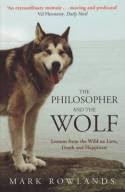
NB - as a consequence of this newspaper article, I'm going to buy a copy of The Philosopher and the Wolf by Mark Rowlands (Granta Books, November 2008). Rowlands, Professor of philosophy at Miami University, lived with a companion wolf called Brenin for eleven years. He believes that a deeper understanding of what it is to be human and the different kinds of intelligence both posses can emerge from "somewhere between the wolf and the philosopher".

Tuesday, 5 May 2009

The keeper of the family buttons

The first thing that I noticed about Jackie was her necklace. It was spun from strands of fine beige yarn, three or four or more criss-crossing threads each strung with buttons and worn close to the neck choker style. Every button was a different colour from its neighbour – pale pinky pinks to sky vapour blues, soft sage greens to earth cool ochres – each round, and perhaps the size of a penny piece. Smaller than coat buttons, certainly, but larger than pearly shirt fastenings; maybe the size for the waistband of a pair of trousers or a skirt, or a child’s dress.

When I’d first met Jackie last week, she’d told me she was 51 in conversation but I think could easily pass for ten years younger. A handsome woman is how my Gran would have described her: tall, shoulder length blonde hair, bold soft smiling features and the slim strong muscular stature of someone who has been involved in sports all her life.

We sat down with our cups of coffee at a quiet table in the refectory and I admired her button necklace.
“Oh, I love buttons,” she said, “Always have. My girls tease me about it at home. Nearly all of my clothes have buttons on them somewhere.”
“I bet that you inherited your Gran’s button box.”
Jackie’s mouth opened with surprise. “How did you know that? Yes, I did inherit her button box. I loved playing with it when I was a little girl. Still do. But how did you know?”

Well I didn’t know it for sure, but took a guess. I think that most women of my age or more - and maybe some who are younger too - will have memories of Granny’s button box. Of rainy Saturday afternoons spent hunting for elusive matching pairs. Or stringing like with like on spindly tangled sewing cotton. Or of being given the serious task of choosing the closest match for Granddad’s fraying work shirt cuffs. Of putting on the lid and shaking the tin like a giant castanet. Of counting, sorting, plucking out fluff, removing old knots of yesterday’s yarn. Of two holes, three holes, four holes, toggles, hoops and loops, wooden, bone, plastic, metal, horn, thread balls, cloth topped and satin covered. Of picking them up in child-sized handfuls and letting the buttons cascade through the fingers like a pirate’s precious golden bounty.

Someone in every generation has to be the keeper of the family buttons. It’s just the way things are.

Wednesday, 29 April 2009

We've come a long way, baby

I found Spring this morning, sitting in the formal garden at the Mansion House smoking cigarettes and drinking hot chocolate. No coat, just the sun on my face and a butterfly for company; a Tortoiseshell I think, drawn not to me but to the prolific proud lilac tulips with perfect petals offered up to the sky.

The butterfly's metamorphosis from egg to grub to chrysalis to adult is a treacherous journey travelled with no known compass to help navigate the obstacles of inquisitive beaks, unpredicted frosts, attentive groundskeepers and a thousand and one other perils. But he - or she - had made it, had survived the dangers, had emerged the other side, stretched out her wings and leapt into the air. Her mid-morning snack of nectar was well deserved.

Our own transformation is no less dramatic. From pin head sized egg to squabblesome toddler, from skulking teenager to strapping five or six footer. But what of the more personal metamorphosis we sometimes undergo, the subtle shifts in being that we experience as adults?

This time last year, my good friend Liz was about to celebrate her 40th birthday. Liz is an attractive, witty and generous woman, great company and a wonderful companion. We'd supported each other through the traumas of our coincidentally simultaneous break-ups with our long-term partners. Ridden the rollercoasters of raw emotion in a fortuitously synchronised fashion such that when one of us was careering to the bottom of the dip, the other was at the top of the slope, ready to haul and cajole and hand-hold the other back up again.

Looking over my shoulder twelve months on, I can see that when we set out to celebrate that milestone birthday we'd already survived the worst but had, in the process, retreated into our own chrysalises. If our metaphorical wings were perhaps not still broken they were not quite fully mended either. We had an inkling of this at the time, of course, but perhaps not as clearly as we have now when we reflect on it.

It is notoriously difficult after the event to recapture the true feelings that one has at the time, and it is quite rightly no longer a topic on which Liz and I dwell. So it was with quite a shock that I came across something that I wrote almost exactly a year ago to the day. I'm reproducing it here not because I think it's in any way good as a piece of writing - which it's not - but because it captures so precisely the raw nature of the feelings I had then - and in doing so enables me to appreciate how far along the journey of that personal metamorphosis I've come since.

The all day drinkers

The all day drinkers sit on benches
and squall with each other
heads and flushed faces below the casting lines of
the fishermen who lace their creels
with boxes of maggots and horizon stuck eyes

The old boys leaning on knotty sticks
with knotted brows and heads full of war glories
glance at the stay-at-home mums pushing
sticky-faced toddlers in four wheeled flotillas
as the wind whips their voices away on the current
to the ears of the school-dodging teens
sucking cigarettes and flinging cans at the gulls

The waves crash and foam
dragging shingle and flotsam from the depths of the ocean
a thousand messages
in empty bottles bleached by the sun.
I drop my stone heavy heart into the water
whisper goodbye to the wind
in hope it will reach your ears
one day

Happy birthday for Saturday, Liz. We've come a long way, baby.

Tuesday, 28 April 2009

A case of mistaken identity?

Gerry stood at the front of the lecture room and tapped the laminated wall chart with his index finger.
"Now, where exactly do you think the mind is located?" he asked. "Can anybody tell me?"
We peered at the diagram, a room full of psychology students, mostly teenaged, mostly with backcombed hair, mostly dressed in army surplus shirts, most of which had tiny German or Danish* flags sewn on them. There was no gender in evidence in the life-sized picture, nor any skin or hair, but plenty of muscles, veins, tendons, organs and a delicate web of scarlet capillaries set inside a human shaped outline. We peered a bit more.
"Er, in the brain?" a tentative voice piped from the back of the room.
"Ah," said Gerry, "yes, that's what we think, don't we? But we don't actually know for sure. There is no 'mind' organ that we've found, not as such, not yet" he continued, "so it could just as easily be found here. Or here." he said, vigorously tapping a foot and a forearm. "We just don't really know."

I've thought about this many times on and off during the twenty or so years since this lecture, and I've certainly met my fair share of folks whose minds indeed seem to be located in bodily areas quite far removed from the brain. But even if my foot is occasionally to be found in my mouth, I'm fairly sure my mind is usually in my brain.

(In fact, I can tell you where exactly. If you imagine my brain as a boiled egg standing on its round end and sliced in half from top to bottom and then in half again from side to side, it's in the top quarter above the nose. The bit that also contains eyeballs. That's where the me-ness of me lives, in a little section at the top of my head like the periscope shaft on a submarine. How about you?)

The only trouble that I've found with my mind's occupation of this lofty penthouse suite is that it sometimes neglects to take into account that it is forced to lug around a person-sized body with it wherever it goes. And that the form it is accompanied with on all appointments is recognisable to others beyond just a set of sometimes blue sometimes greenish-tinted eyes and a splodge of travelling grey matter. Thus requiring my mind to remind my hands to attempt to brush my hair and to apply mascara, shoes and appropriate clothing to the outlying districts.

In the last week, two people that I've met for the first time have remarked to me that I bear a striking resemblance to their cousin, in one case, and a good friend in the other. I didn't think at the time to ask if the similarity was in appearance, gesture, manner, stature, voice, age, colouring, temperament, type or whatever else it is that makes us perceive same-nesses, although I'm assuming that my unknown others are both female. Maybe I've got a doppelganger or two long-lost twins out there somewhere. Or maybe my mind has been lending out my body whilst I'm not looking. I'd probably never notice if it had.


*Even in the two decades since, I've never managed to work out why that was; one can only suppose that the soldiers of those two nations were more careful with their garments than their quartermasters had predicted.