Showing posts with label time. Show all posts

Wednesday, 24 June 2009

The pit of Apocalypto

I was perhaps a slightly reluctant cinema goer when I went along to see Mel Gibson's 2006 epic, Apocalypto. The trailers and the general pre-release hype around the film - set in Central America during the declining period of the Mayan civilisation - didn't really grab me and its subject matter - a tribesman who must escape imprisonment and human sacrifice after the capture of his village - didn't appeal either. And it is fair to say that, over all, I found the film rather too long and rather too 'boyish' for my tastes.
*** Plot spoiler alert***
if you haven't seen Apocalypto, don't read
any further
But several years on from my one and only viewing, some of its scenes and themes remain with me in spite of my misgivings. As our hero Jaguar Paw (Rudy Youngblood) is led away from the sacked and burning remains of his tribe's home, we know that he has hidden his heavily pregnant wife, Seven (Dalia Hernandez), and young son, Turtles Run, in the empty shaft of a deep sink hole. As the captives are herded to their unknown fate, one of their number spots the trailing vine that Jaguar Paw has left for his wife to enable her to climb out of the pit. Suspicious, he severs it and cuts off her only means of escape.

So whilst the main (and lengthy) action of the film now switches to the tribesmen and the gory horrors they endure at the hands of their captors, my female attention is wholly with Seven and her predicament at the bottom of the shaft; I am far less concerned with the fate of Jaguar Paw and his comrades, even though it is they that occupy screen for most of the rest of the film.

I cannot know whether a male viewer of Apocalypto would have the same preoccupation with the destiny of Seven as me or if the (undoubtedly stirring) derring-do of our band of conquered heroes, locked in mortal combat with their foes, takes precedent. I suspect the latter, because for all its sixteenth century setting, it is as fast a paced non-stop action-thriller as, say, The Bourne Identity.

If that is the case, then the film has perhaps 'not worked' for female audience members: what, in the male-eyed view, is very much a sub-plot delivering a useful slice of motivation (the fate of Seven) is, for women, the main focus. For me, no matter how many poisoned arrows are slung or heads gruesomely removed from shoulders on the top of the temple, I am still at the bottom of that sink hole with the pregnant woman.

Several years on and I still from time to time close my eyes and try to imagine how I would escape such a predicament. There I am, stuck at the bottom of a hole not of my own making or choosing. How can I claw my way out of it to the sun?

Of course, in the film, Jaguar Paw eventually escapes his captors and arrives to rescue Seven and Turtles Run (and the new baby which has been born in the meanwhile) in just the nick of time. But real life is rarely like that. Whether the pit we are in is one we have inadvertently dug ourselves or have accidentally stumbled into whilst our attention was occupied elsewhere, ninety nine times out of a hundred it will be only ourselves that we have to rely on to haul us back out again. So how do we do it?

One step at a time, one foot after another, one word following the next, and with our eyes fixed unwaveringly on the blazing light just up ahead at the end of the tunnel.

Sunday, 21 June 2009

Flying solo

A couple of weeks ago, Guardian columnist Charlie Brooker wrote a piece about pets. Or rather, the deliberate choice he's made of not having a pet. His decision was based not on a dislike of animals, nor on the costs of looking after them, nor on the concerns about allergies that some people have, nor even on worries about leaving an animal alone at home during the working day. No, Charlie's reasons for not having a pet were more philosophical: because animals have short life spans and they die too soon.

It's an interesting viewpoint and one that I understand. Like most pet owners, I sometimes have to pull myself up short at dwelling too much or too often on the morbid thought that it's more likely than not that my own companion animal will die before I do. Charlie acknowledged this opposite number in his article too: that pet owners feel that the joy an animal brings into one's life far outweighs the grief at its passing. I've always had animals and I'd concur with that wholeheartedly.

It's something that Mark Rowlands touches on in his book The Philosopher and the Wolf. In essence, that we humans are alone (as far as we know) among all other living things on earth in that we have an awareness and foresight of our own mortality. This is the price we pay for our human kind of intelligence, the devil's bargain if you like, like Dr Faustus. At some point in evolution, our species traded its delicate bloom of immortal ignorance for the abilities that we posses and that make us what we are: language, invention, adaptability, abstract thought and so on. But the price we pay, if not with our actual Faustian souls, is a high one. We live out our lives against the backdrop of the ticking of the clock, the beat of the metronome, the pulse of our hearts in the sure and certain knowledge that one day there will only be a deafening silence. We don't know when that one day is precisely, but we do know, with every day that passes, that it's one day closer.

The other animals, unburdened with the knowledge of their own demise, are free to just live and be and take each day as they find it. We are rarely content to just be. Instead, we rush and push and strive like a swimmer against the current, looking to acquire, to develop, to achieve, to be better than we are in whatever way our personal paths and circumstances dictate, be it wealth or status or possessions or even spiritual enlightenment. This behaviour is in and of our nature and is perhaps not wholly because we have an awareness that our time is limited, but I'm sure that is a (sometimes subconscious) contributing factor. Or another way of putting it, maybe, is that all of us living things are time travellers, but it's only we humans that know it.

It was finding my injured seagull on the beach last night that put this back at the forefront of my mind. I managed to feed him a few shrimps and water using a spoon, and by this morning he was much perkier than he had been when I'd found him - as judged by the rate at which he tried to peck and bite me anyway. But he still couldn't stand or spread his wings and I was concerned, after speaking to the vet, that he might be in pain and that by keeping him alive I might be causing him suffering - I have no idea how to tell if a bird is in pain when it has no obvious wounds. I had, I knew, interfered in a well-intentioned but nevertheless perhaps inappropriate and clumsy human way to change the course of natural events.

So in the end I made the very difficult decision of taking him to the vet. Wildlife is notoriously difficult to rehabilitate, and I am fairly sure that the journey in the car with me will have been his last. But, terribly sad though I was to do this, I did at least have the slightly reassuring knowledge that of the two of us travelling through time in my little car today, I was the only one aware of it.

Ignorance is like a delicate fruit: touch it and the bloom is gone - Oscar Wilde

Charlie Brooker's article: http://www.guardian.co.uk/commentisfree/2009/jun/15/charlie-brooker-pets-death

Sunday, 31 May 2009

Sunday lunch at the Neptune Cafe

"It's Whit Sunday, you know" my mother said, pausing to look at me meaningfully over the top of her glasses before dropping her eyes to examine the black leatherette menu once more. Quite why she bothers to read the menu is unclear; it never changes and she always orders the same thing anyway. Quite why she also bothered to remind me it was Whit Sunday I'm not sure either. It's a long time since I went to Sunday School.

We were sitting opposite each other in Bill's Neptune Cafe in the High Street. It's a Sunday lunchtime ritual we've fallen into some time over the last year or so, meeting up after she's been to church to chat and enjoy some food served on white oval plates at tables covered with colourful checked plastic cloths. The chairs are spindly with red rubber stoppers on the end of each thin metal leg, their backs and seats upholstered in beige vinyl. A huge old brass gas lamp, with white gauze mantle just waiting to be lit, hangs from the ceiling among the fluorescent lights. The walls are decorated in cream wallpaper with small pink diamonds, the outline of the woodwork of door and window frames fuzzy and blurred by archaeological layers of raspberry gloss paint. Each table is laid with laminated place mats showing photocopied scenes of the Island in days gone by. If one of the smartly dressed Sunday-suited families pictured eternally strolling along the promenade taking the sea air were to step out of their photograph and walk into Bill's, they'd feel right at home.

The Neptune Cafe is one of a tiny handful of traditional seaside cafes that's left in the country. No fancy cappuccino machine here, no rotisserie chicken hopelessly circling, no pre-packed Italian biscuits, no triangular ready-to-go sandwich packs, no bucket-sized paper cups, no artfully mis-matched sofa groupings, no pot pourri'd bathroom with tinny piped music, no over-heated prices. Just a small, narrow time-travelling cafe serving home made dinners and puddings with custard.

Tracey brings us our mugs of tea (one with one sugar, one without) and asks my mother if she'd like her usual. Of course she does, with chips too please, she adds just in case Tracey might have forgotten this essential ingredient. She tucks the small notebook into the pocket of her navy blue tabbard and retreats to the kitchen, weaving through checked tartan shopping trolleys as she passes tables full of pensioners.

Reassured that our food's on its way (cheese and mushroom omlette with salad for me, roast lamb and vegetables - with chips - for mum) we fall into our habitual exchange of news. B's worried about her son because he can't find a job; she gave L a lift to church this morning; K took the sermon - you know, that wonderful reading about the dry bones; she's been clearing out the garage; C took away that old water tank and some rubbish; will the old pots of paint and motor car oil still be ok to use; do I still want to go up to Ikea for her birthday; Roo was on the phone last night chatting about her exams. And then our food arrives and we stop talking for a while.

When we're done, Tracey takes our empty plates and our pudding orders and brings us two more piping hot mugs of strong tea. Our bowls, when they arrive, are brimming with bright yellow custard. Eventually, our spoons rest in the bottom of the empty white dishes and we drain the last of our tea. I go to the counter to pay Tracey, tell her we'll see her next week, and step out into the dazzling breezy bright sunlight of a seaside Whit Sunday afternoon.

Whitsun (or Pentecost) is celebrated seven weeks - or 49 days - after Easter Sunday. It's also related to the Jewish festival of Shavuot, which commemorates the giving of the ten commandments at Mount Sinai. But it's not just a religious celebration. According to Le Morte d'Arthur by Thomas Malory, legend has it that King Arthur always gathered all of his knights at the Round Table for a feast on this day.

I think that the old King could have done worse than to have brought his men to the Neptune Cafe.

Saturday, 30 May 2009

Gambling on the books

Being well aware that one day I will wake up dead, I try hard not to build up too much of a backlog of things I want to do but haven’t done yet. It’s not that I’ve got anything against the dead, you understand; simply that even our broad equality laws seem to stop short of governing the actions of the deceased. Thus one might not, for instance, expect to receive such a warm welcome at a race track if accompanied by pall bearers and dressed in a coffin. It might frighten the horses for a start.

So perilous finances and the law notwithstanding, I attempt within the threadbare means at my disposal to take the opportunity to do stuff that takes my fancy when the chance arises. I also try hard not to continue to do the stuff that makes me unhappy, restless or fed up. Admittedly, this latter trait may lead to accusations of being faddy or having the attention span of a gnat. But I digress.

High on my short personal list of things to do whilst I can still remember my name is to go and play poker in a casino. Where that casino might be or who I’d be playing with doesn’t really matter. But the game must be poker and played, according to the picture in my mind, in a proper smoke-filled casino like in the films. So a location where both gambling and indoor smoking are allowed would seem a good place to start. Whether or not I’m wearing a glamorous red evening dress and am accompanied by a handsome chap in a black suit and bow tie is a moot point; not absolutely essential but I wouldn’t complain either.

I can, I should explain, play poker adequately if not brilliantly. I taught myself how a few years ago spurred on by several boozy hours playing around the dining table one Christmas, and played on-line for a while in one of my faddish phases. Through reading about the game in particular (I’d highly recommend Anthony Holden’s Big Deal) and the history of gambling in general (try Gambling by Mike Atherton), though, I’ve also learned quite a lot about the nature of gamblers. Whilst gamblers come from many backgrounds and from all social classes, the one thing that most of the successful ones have in common is that they each have an identifiable leak.

In gambling parlance, a leak means a weakness, a small chink in the armour, the irresistible pull to fritter away winnings earned through games of skill (like poker) on games of chance (like roulette). But I think this concept of a leak applies to a much wider cross section of the world than just professional poker players. It applies, perhaps, to the hardworking family man who simply must have the latest mobile phone, i-Pod, huge plasma TV set or other piece of high-tech kit. It applies to the otherwise conservative career woman who stockpiles pairs of new shoes and secretes clandestine bags of designer clothes in the back of her wardrobe.

My leak is buying books. That I’ve only recently realised this just goes to demonstrate the truth of how our own leaks are invisible to us whilst forehead-slappingly obvious to everyone else. Admittedly, buying books is not as glamorous a leak as playing roulette. But like roulette, there is a chance that every book you read could be a winner; I shrug off the disappointing volumes and turn immediately to the next in the same way that the losing punter slips his chips from black to red for the next spin of the wheel.

So in grateful thanks that I did not wake up dead this morning, I again turned my attention to reading my way through the shelf full of new books that I’ve bought over the last couple of weeks. I even sat outside in the sunshine whilst I did so. And if my trip to that smoke filled casino is still some way off, at least I hope I’m lowering my own odds about getting there one day.

Russian dolls

It has been a strange old week this one, as full of the foreboding thunder heads of introspection on the inside as the rain and the sun have battled it out for the upper hand on the outside. A week when my internal monologue has been quite at odds with my external conviviality. A week when the gnarled hand of my inner hermit threatens to reach out and pull the hood of disengagement over my eyes at the same time as I’m laughing.

That this contradiction is part of my nature I know only too well. Maybe it’s part of all people’s natures to simultaneously wish to be at the centre of things and a thousand miles away. To be with others and yet to be alone in the company of creatures that don’t speak in words. To exist only in the way that the elements exist: timeless, free-floating, flowing and rippling like a warm summer breeze through endless uninterrupted acres of corn.

It seems to be hard-wired into our human circuitry to search for certainty, to look for our security and our freedom through the presence of boundaries. We define ourselves and our sense of belonging, from the minor to the major, like life-sized Russian dolls stacked one inside the other: me, my mind, my ego, my body, my home, my family, my street, my town, my county, my country, and so on until we reach the outer shell, my world. We like these anchors and we feel lost without them, misplaced and homeless like a stray dog.

We like too to think of our position in the bigger jigsaw and seek out our own boundaries in relation to other people, both those we know – friends, family, colleagues – and those we don’t but who nevertheless have a bearing on us; politicians, say, or people we admire for their talents or achievements. As life itself provides us with only two actual certainties - birth and death - we spend our days in active pursuit of a range of others to take our minds off the dread of the unknowable and the unpredictable. And so we weave a complex pattern of commitments, relationships, promises, beliefs and obligations – deadlines, if you like, to take our minds off our own dead line.

But it is in the nature of the only two certainties we have as humans that we have our proper connection with the world. All living things, from amoebae and plankton to queens and presidents, share this common bond, this golden thread that unites us and everything. How ironic that we are the only species that knows this and yet try our best to deny what everything else on the planet takes for granted. How peculiar that we attempt to capture and contain and measure the time that passes when it passes just the same if we ignore it. How very human.


So yes, a strange old week, spent not feeling sad or melancholy but simply pondering.

Wednesday, 27 May 2009

Doodle day

There is something in the dynamic of sitting at a meeting table that induces in me a kind of fugue state, like a bear making his final snoozy pre-hibernation preparations but wearing a suit and a necklace rather than a fur jacket. Where the bear is lucky is that he can roll with his instinct by curling up in a ball and nodding off. If I were to slip from my chair and lie down on the floor underneath the table with my eyes shut, I suspect even the most self-absorbed colleagues might detect my lack of interest.

And so I have devised over the years a small raft of personal meeting survival suits; they're a bit like whole-body life jackets, only invisible rather than orange and with no inflatable pipe to blow into.

Refuge number one is, of course, doodling. Doodles are often thought to be representations of the subconscious mind and, like dreams, involve a kind of picture language. Also like dreams, attempts are often made to place an interpretation on both the content and the placing of the drawing and even the pressure with which it is drawn. My doodles usually start on the left and travel to the right, which apparently means they're related to the workings of the subconscious. Doodles that start on the right and move the other way are more based on logic. There's reams of stuff too about what different doodles mean; research has even shown that doodling significantly helps a person's memory.

Amusingly, though, when thinking about it in the work context, the eighteenth century verb to doodle meant 'to swindle or make a fool of'; the modern meaning emerged in the 1930s either from that or from the earlier verb to dawdle (which since the seventeenth century has had the meaning of wasting time or being lazy).

Colleague: You lazy, time-wasting doodler you; you're making a fool out of me.
Me: No, I'm improving my memory and unlocking the doors to my subconscious.

However, there are times at which doodling can make one feel a little self-conscious - in as much as they give an obvious signal to the rest of the world that drawing intricate swirls, triangles, curls, boxes, anvils and such is far more interesting than listening to what's going on. Which it is, of course, but one has to be more subtle sometimes. When subtlety is called for, my best weapon is to appear to be taking copious notes of the proceedings. Only someone reading it through afterwards would appreciate that I'd been writing something very different indeed. (In fact, my blog post earlier this month about protesters and my walk around central London was written entirely during an afternoon session of 'note taking'.)

If I feel there's the remotest chance that someone might randomly ask me a question, then I'll occasionally resort to writing down some of the interesting (for which read work jargon) phrases that colleagues come out with. A good example of which today was the five minute debate on whether the word flip should be substituted for by move in the records of the previous meeting. Flip, presumably, just seemed too, er, flippant.

If the meeting drags on longer, then I often have to resort to emergency distress flare manoeuvres. Anything but subtle, these can combine any and all of making a cup of tea, dunking biscuits, leaving the room to go to the loo, and, in extremis, manufacturing a non-existent appointment that I simply must leave the meeting for to get to in time.

All of which pursuits are substitutes for either actually falling asleep or telling the chairman that what they're saying is boring, pointless or a waste of time. Or in fact simply politely declining the meeting invitation in the first place. Hmmm... Now there's a revolutionary option...


Picture: This doodle, by the tenor Simon Keenlyside, was auctioned for the 2007 National Doodle Day in aid of Epilepsy Action and the Neurofibromatosis Association.

Monday, 11 May 2009

Celebrities and other aliens

I've no idea if newspaper folk actually ever say things like Stop Press! or Hold the front page! outside the covers of fiction and films*, but if they do so, they certainly will be tonight. For one of the most devastating news stories of the year has just broken.

No, it's not the story that MPs of all party colours have been fiddling their expenses (buying manure at the tax payers' expense anyone? Doth not irony already have a name...). Nor that the Prime Minister has appeared on YouTube gurning like a 1950s Granddad at a holiday camp's funny faces competition. Nor that bankers have taken reckless gambles with other people's money (an old news story by now, surely?). Nor even that the Government was so out of touch with public opinion that it didn't realise how outraged British people would be at the suggestion that Gurkha soldiers - who had fought and risked their lives for this country - should be denied residence here and was thus voted down by both the Opposition and its own MPs in the House of Commons.

No, none of those things, but something much, much worse. Glamour model Katie Price (aka Jordan) and her pop star husband of five years, Peter Andre, have split up. A true symbol of our times, the couple met on the set of a celebrity reality TV show in 2004 and married the following year. They lived out their courtship and married lives in a blur of stories in publications ranging from the red topped tabloids to the pages of the glossies, from TV-centric gossip mags to their own reality TV shows. Every row, every breast augmentation, every pregnancy, every tattoo, house move, pastime, 'autobiography', clothing line, pop single or interview has been intricately documented in the full-beam headlights of public view.

Now, it's easy to have a little private unkind laugh at the expense of those who choose to live their lives so grotesquely in public, and I'm sure there will be many who feel that the marriage of these two people was itself a publicity-related construct. That may or may not be the case and I'm not really bothered either way.

What I am curious about, though, is how celebrity relationships are quite different from those that regular folk like you (guessing here) and me have. Or 'civilians' as Elizabeth Hurley famously put it.

You see, I reckon in the world of celebrity that everything just moves one heck of a lot faster. The getting together, courtship, house hunting, marriage, pregnancy announcements, joyful expressions of parental fulfillment, rumours of infidelity, battles with addictions to drugs / drink / cosmetic surgery, trial separations, divorce - well, the whole gamut just takes place quicker. The cycle cycles faster. The metronome ticks in double time.

If I were a gambling person, I'd bet that the first pictures of Katie or Peter with a new significant other in tow will appear in just a few weeks from now. Yet here am I, almost two years on from splitting up with my ex and only just about ready to countenance even thinking about dating again. If I was a celebrity, I'd probably not only have dated again, but married too and be heading up to my next high-profile divorce.

There was an article in the newspaper last week about animals and the way we regard them, not written so much from an animal welfare point of view but a philosophical and ethical one. The central point of the discussion looked at the differences between humans and animals without straying into the territory of anthropomorphism or taking the currently modish viewpoint that there are no differences at all. Or as the philosopher Jeremy Bentham put it so succinctly, "The question is not can they talk. Nor can they reason. But can they suffer?"

So my philosophical question is this then: what is the relationship time difference between celebrities and the rest of us civilians?


*Fram - can you enlighten me please?


"We should care because animals and humans are different", The Guardian, 8th May 2009: http://www.guardian.co.uk/commentisfree/belief/2009/may/08/animal-welfare-ethics


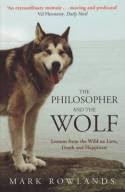
NB - as a consequence of this newspaper article, I'm going to buy a copy of The Philosopher and the Wolf by Mark Rowlands (Granta Books, November 2008). Rowlands, Professor of philosophy at Miami University, lived with a companion wolf called Brenin for eleven years. He believes that a deeper understanding of what it is to be human and the different kinds of intelligence both posses can emerge from "somewhere between the wolf and the philosopher".

Tuesday, 7 April 2009

London's smoking

Another day, another train, this time to Euston by way of London Victoria where I step outside to have a smoke. As I light up, I notice a dreadlocked and bearded man stooping down and collecting cigarette butts from the ground. He picks them up individually, examines them – perhaps for their degree of squashed-ness or amount of remaining tobacco – and puts them in his pocket. Another form of recycling of a kind, maybe made easier since the introduction of the public smoking ban nearly two years ago.

My first experience of the smoking ban in action was not here in London but in New York. By the time I visited in November 2005, Mayor Michael Bloomberg’s ban had been in place for two and a half years. The New Yorkers had adapted to it, had added sophisticated codes of conduct in bars, for instance, where the placing of a cardboard drink mat on top of a half full glass was a notation which meant ‘I’ve gone outside for a smoke – back soon to finish my drink’. Sometimes this led to the farcical situation of a cavernous empty bar full of hatted half drunk drinks and a clientele entirely huddled - shivering, puffing and beer-less - under a microscopic canopy out on the pavement. I guess the bar tenders learned to talk to themselves.

I’ve plenty of time so I catch the number 73 bus, a delightful ride that takes in Hyde Park, Marble Arch and the full length of Oxford Street, covered on this blustery day by a thin throng of shoppers and a fine down of white blossom from the slender trees that line each side. I get off the bus near Euston and walk the few hundred yards to the station itself.

A man with a tattooed face and a black bomber jacket snoozes in his wheelchair on the concourse outside. Around him men and women in suits and skirts flow and converse with overly loud hand gestures and exaggerated annunciation, or talk into mobile phone wires clipped to their lapels. A few feral pigeons strut and squabble over crumbs near his feet. I stand in the lea of a doorway smoking and watching the man with the tattoos. His head is rolled back onto the girdle of his shoulders and he is wearing only one shoe, his other foot strapped up in some kind of brace. He is sleeping soundly beneath the faintly illuminated Pret a Manger sign, eyes tight shut.

I cross the jammed road to Friends House where the meeting is being held and am directed to the correct room by an older man behind a golden brown curved desk. This, the HQ of the Quaker movement in the UK, is also a convenient and central place to hire a room in London. It’s cheap too, and houses a café and a bookshop. When I come out for a smoke a couple of hours later at coffee break, the man with the tattooed face is manoeuvring his wheelchair into the small gardens and looking up at the sky.

I retrace my route to Victoria station by tube. The rush hour is brewing and there are no free seats on the underground so I cling to a handrail provided for the purpose and roll from side to side and foot to foot with the motion of the train. It’s a bit like being on a boat but without the view or the sea air; perhaps more like being stuck in the hold or the engine room for the duration. I’m standing near a family group of 7 or 8 people spanning three generations from grandfather to 6 year old. One of a pair of pre-teenage brothers accidentally brushes my bosom with his hand as he goes to grab the handrail without looking. He blushes furiously and I chuckle as his mother – about my age – smilingly apologises for his embarrassing near miss. His brother, of course, teases him mercilessly about his blushes and his clumsiness until they get off the tube at Green Park.


NB - I allowed myself a small congratulatory pat on the back for putting into practice today work-related lessons learnt the hard way from years of mistakes. Namely, that in my tunnel-visioned previous incarnation of a few years ago I’d have driven through heavy traffic into the office first for an hour of pointless hard graft before then dashing for the train and arriving at the meeting – inevitably late – in a flushed and clammy mess.

Lessons learned were more specifically as follows:

1) Life is short and work an ephemeral side show to the main feature

2) The nature of my job means that sometimes I’m being paid to go to meetings. When that’s the case, then that’s my task for the day.

And so I got up at leisure, bathed, faffed, and strolled comfortably to the train for a 10:26 departure. I arrived the best part of an hour before the meeting started at 1:30 too
. No sweat.

Tuesday, 24 March 2009

Goodbye to all that

Some of the guidelines our parents issue us when we’re little don’t translate well to the adult world of work.

‘Don’t talk to strangers’, repeated sternly and mantra-like from the lips of our feverishly worried mother as she buttons up our straight-jacket itchy duffle coat and wipes our face with a damp and slightly smelly hankie as we prepare to embark on the perilous journey to the corner shop for a bag of penny chews, for example. It makes perfect sense in her adult-to-child paranoia transaction because it is logical and it will keep us safe from harm; our mother has forgotten that all adults look alike to our child’s eyes and that a stranger isn’t strange once he or she has smiled and said hello. Except for old Mr Smith of course who can’t smile any more because something happened after the war and whom we can’t help but find a little bit sinister in ways we don’t yet have the vocabulary for, but who isn’t in any event a proper stranger – although he certainly is strange – because he runs the corner shop with his portly wife who wears only stained beige cardigans…

Roll the time dice forward by a few decades or so and we might in fact find that we earn a good chunk of our monthly pay cheque precisely by our ability to talk to strangers and to talk strangers into things. Indeed, some of us might even earn our keep by talking to very strange strangers in close quarters and without the protective armoury of tightly-fitting winter outer wear or spit-cleansed faces.

“Respect your elders” is another one. It is perfectly right, proper, fitting and appropriate that our childhood should be passed in a slightly heightened state of free-floating anxiety lest we have accidentally omitted to call the lady whom we know to be Lillian by her given adult-to-child name of Mrs Jones. The terror that can be induced in us by inadvertently finding out the first name of one of our teachers at primary school and daring to say it out loud when we’re busting for the loo and can’t prise her attention away from the picture window is probably listed somewhere as a war crime under the Geneva Convention.

Respecting one’s elders does work in the adult world too as a general rule, with the exception on some occasions of the workplace where the elders in question are behaving with all the logic of a hormone-crazed baboon set loose from a winter of solitary confinement into a compound of fecund and spring-ready fellow primates.

One saying, though, that I think holds good for both child and adult is to do with the weather. Specifically the observation that “March roars in like a lion and leaves like a lamb”. Imminent climate catastrophe not withstanding, this phrase is as true now as it was when I was little and counting the days until my Easter eggs arrived and I could stop giving up whatever it was that I’d given up for Lent encouraged by the peer pressure of Sunday School. (Probably chocolate at a rough guess)

I no longer give up chocolate for Lent (or go to Sunday School for that matter; being 40 and all I think I’d stand out a bit). But March as a month sure is changeable. The beach this morning was pure balaclava weather, forcing me to keep my lips tightly sealed to stop the freezing wind from setting off all of my dental nerves like a miniature in-mouth firework display of synaptic activity. Yet by the time I reached the office building, the sun was shining, the grass glowing with growth and the sky full of cawing rooks carrying singular twigs to their nests high in the bare tree tops.


It was not Easter either, but it was the end of my own personal Lent; for today was the final time that I shall set foot in that office building. My last remaining colleague and I met with our director and the chairman of our charity and went up to the café to have a cup of tea and a doughnut. We talked, we laughed, we got sugar over our fingers and around our lips and at last the pretence of the previous few months was over and we said our goodbyes. We embraced, we pecked each other on the cheek in that slightly clumsy British way and we wished each other well as we departed in our four directions.

In keeping with the nature of the month that draws soon to a close, I took one last look around our old office and slipped away quietly into history like a lamb.


Friday, 20 March 2009

Garden well

I was surprised at the weight of the ashes.

The funeral parlour had given them to me in an understated but nevertheless attractive cardboard purple bag with lilac swirls and matching silk cord handles. The canister itself was inside a further maroon plastic bag and, as I peeped in surreptitiously in the checkout queue at the Co-op, I was thankful for their discretion. After all, it's quite possible that some shoppers might have been put off by the thought of standing next to the cremated remains of my deceased great uncle as they paid for their packets of cheese and tea and milk and eggs.

By the time my late uncle and I arrived home the silk cord handles were digging into my palm and I was glad to put the bag containing his ashes down. The previous day, the funeral parlour had called my mother to ask her to come and pick Roy up. If she preferred not to, they said, no problem; he could be taken with the other uncollected remains and laid to rest in a communal grave. She in her turn had phoned me and now here we were, back in the little house by the seaside where Roy had moved with his own mother in 1940 and I had gratefully moved with Roo a month or so previously after the ex and I split up.

Uncles Roy's mother had died in 1966, a few months short of my own mother's wedding, and I knew that mum had always been very sad that her beloved Grandma wasn't able to be there in person to see her get married. Roy himself had continued to live in the house, alone, until he died in April 2004. Three and a half years after his death he was back in the house, but this time with me, the dog and a teenager for company.

I didn't really know what to do with the ashes, truth be told. I put them on the kitchen worktop, made a cup of tea and stood outside in the late summer sunshine pondering the question and having a smoke. Roy had loved this house, had lived here since he was twenty years old until time and illness caught up with him and carried him off at 84. A lifelong cricket devotee and one time top class umpire, he'd have smiled in his reticent way and declared that wasn't such a bad innings.

He'd have laughed with joy too at being back at the house again. He'd never wanted to leave it, always resisted the kindly-meant persuasion of health care professionals when they'd tried to convince him to relocate to a retirement flat or, later, a nursing home. Roy had been ill for a long time when he died, perhaps 14 or 15 years, but he always said no and they always went away frowning and puzzled at his refusal of their offer. They didn't know him well, didn't know that he, like the liking of olives or blue cheese, had never really acquired a taste for the company of others.

A few cups of tea and several cigarettes later I placed the urn of ashes in a little space on the floor beneath the boiler and to the left of the sink in the kitchen. And there they have remained, still in their handsome purple bag, for the last eighteen months. Until today.

I had decided some time back that, in keeping with Uncle Roy's wishes never to leave his little house by the seaside, I'd bury the urn and the ashes in the back garden. The house was built before running water on tap was a standard feature of the homes of working people and as such came complete with a well in the back garden. My mother, who spent some of her childhood living here, can just about remember when the well was still in use, although more as a novelty to amuse a child in the early 1950s than as a necessity.

At some point the well in the yard had been capped off. When I was renovating the house prior to moving in back in August of 2007, I'd uncovered the well. I'd always known it was there but had never actually seen it before. I'd removed and discarded the ill-fitting cover, leaving a round hole in the ground perhaps eighteen inches in diameter and the same in depth to the top of the concrete capping. Other than the dog losing his rubber bone and tennis ball in the hole on any number of occasions, the partly uncovered well had not caused any problems. And now it also provided a solution.

I'd put aside today for garden renovation and my first job was to set Uncle Roy to rest in a slightly more fitting place than under the sink next to the dog's bowl. I cleared debris and a few fallen bricks out of the well, levelled off the surface, and placed the urn inside. It was the first time too that I'd taken the urn of ashes right out of the funeral parlour bag. I was surprised to see it was maroon, made of plastic with a screw on lid, and with an ornate label on the front giving Roy's name and the date of his cremation - 7th April 2004. Almost five years to the day.

I carried buckets full of top soil from the end of the garden and filled the well right up until it was almost level with the rest of the yard. I raked it off smooth when I'd finished and sat down on the doorstep next to the well to have a cup of tea and a smoke. I'm going to buy a plant to go on top, perhaps a rose bush or a low-growing shrub or something of that kind. But I'm going to wait a week or so until the earth has settled in case I need to add more soil.

I don't think Uncle Roy will mind waiting for a bit; he's not going to leave his beloved little house again in any event.

Tuesday, 10 March 2009

Grandma is Gaga

A secret vice of mine is the occasional foray into reading about celebrity life. Who’s married to who, who’s divorcing who, who’s starring in this or that forthcoming film, who’s feuding with whom after being pictured wearing the same dress or holding hands with the same man, who’s checking into* rehab for this or that or other life-threatening or envy-inducing addiction.

Call it an antidote to my otherwise fairly impeccable left-on Guardian-reading credentials if you like. Or maybe I just like looking at pictures of Brad Pitt and Kevin Spacey. Either way, quite what the fascination with celebrities is I cannot tell you for sure, although I can make a few stab-in-the-dark guesses. Escapism for one. Don’t we all, just sometimes, dream of a life where we are set loose from the shackles of crust-earning and free to roam when and where (and with whomsoever) the fancy takes us? Attraction for another. Not all celebrities are beautiful and glamorous in the traditional sense of that word (step up there again, Mr divinely-appealing-but-not-actually-really-handsome-as-such Spacey) but many of them possess an indefinable yet palpable charisma to the extent that it leaps out of the page or screen and into our collective cortex. Sartorial sensationalism for a third. A non-stop carnival of frocks, shoes, skirts, shirts, suits, handbags and hats to envy or scorn is never wrong.

I do also appreciate that celebrities are there to entertain us in whatever shape or form is their chosen milieu. Whether that talent is demonstrated by the ability to conjure heart squeezing emotion from us by the portrayal of a finely wrought character on the big screen or by the flashing of gussets and silicone-enhanced assets falling out of night clubs is perhaps only a means whereby we keep a running quality control tally. But entertaining us through giving their children ridiculous names seems to bring fresh new meaning to the old expression “life as art”. Especially as they’re not all primarily known as comedians. Why celebrities think it’s a Good Idea to call their children things like Gorgonzola Albert Sugar Plum is anybody’s guess. (Or Gasp to his friends).

To be fair on this score, it’s not just celebrities that burden their offspring with ridiculous names. Playgrounds, offices and workplaces the world over are, I suspect, populated with more than their complement of Geek Boys, Big Noses, Einsteins, Dopeys and Lightenings, nicknames bestowed with a kind of love upon the deserving, disarming or plain incompetently adorable. Affectionate pet names originate and are nurtured in the home too, sometimes following the bearer into nursery, school and beyond.

My own daughter, Rhona, is primarily known to herself and others by her nickname Roo. The genesis of this tallies almost completely with her arrival upon the air-breathing realm when visitors to my maternity hospital bed brought the newborn and I a present of two home-made knitted stuffed toys – Kanger and Roo from Winnie the Pooh. Katy and Rhona, Kanger and Roo? It stuck, for her anyway if not me, and Roo she is to most of the world. As Roo learned to speak, her childish tongue found Mummy with no problem but couldn’t quite get to grips with pronouncing the name of her wonderful Grandma. It came out, quite literally and to the great amusement of us all, as Gaga.

And Gaga does Grandma remain, even if by some time-travelling sleight of hand the Roo herself will be twenty next month.


*Small semantics aside – besides aeroplanes and ferry terminals, what else do people “check into” apart from rehab?

Wednesday, 25 February 2009

Cold calling

The man sat with his back to the window painting a picture of the Dalai Lama from a photograph on his laptop screen. I stood outside the studio shop front, staring in, the eyes in the face in the portrait gazing back, slightly through and over my head to the other side of the road. The artist sat between us, insulated from the traffic and the cold by toughened glass and his concentration.

The wind zipped funnel like down the wide street, whipping my body heat away through my suit, and I thought longingly of the winter coat that I’d hung to dry last night over the Rayburn in the kitchen at the barn. The directions had suggested that the walk from London Bridge Station would take 5 minutes. Quarter of an hour in and my feet were tingling with cold numbness from the pavement through the soles of my court shoes. My fingers were a delicate shade of mottled whitish purple blue by the time I spotted building number 241.

In this part of London, the streets are not so much paved with gold as littered with flyers advertising language schools and credit card sized handouts giving details of how to make cheap phone calls home to loved ones left behind in exotically named places. Lanky male students in leather jackets and over-long jeans stand around in groups smoking, slouchingly engaging in animated conversations in languages I do not recognise.

I took shelter from the cold in a fortuitously placed Starbucks and regained feeling in my extremities over a bucket of Americano (milk, lots of sugar). The tall paper cup had a plastic lid on top with a hole in it. I’ve often seen sharp city types supping their drinks through these whilst walking briskly and with mesmerised determination as if summoned by the Morlochs from the Time Machine. I don’t trust them not to tip scalding coffee down my front; the lids are a bit dodgy too, so I took mine off and put it on the table.

The drinks in these places are supernaturally hot. It took a full 25 minutes to reach the dregs of ultra sugared coffee at the bottom, a unit of time I shall henceforth think of as a Starbuck. I haven’t worn a watch since I was 18, one consequence of which being that I’m pretty accurate at guessing. Admittedly this gets thrown out a bit when I’m in a different time zone, but at home here I’m usually there or thereabouts. This is good enough on most occasions but not when you’ve got a job interview, so I got my mobile out of my handbag for reassurance.

There had been a short young guy in a smart grey suit ahead of me in the coffee queue when I came in, and I recognised him when he returned ten minutes later because he’d ordered the same drink as me. Even from my table by the window I could hear him complaining in a whiny voice about how the assistant must have put the lid on his cup incorrectly and now it was all down his jacket. He paused for breath, and then continued saying, as if to seal the deal, that he had to give a presentation in a minute and now the coffee had ruined his suit. It’s a shame as it turned out that he hadn’t paused sooner, as the young woman towards whom he’d directed his tirade clearly hadn’t understood a word. She summoned her three colleagues over as he repeated his complaint. Finally comprehending, a statuesque blonde took the cup from his hand and replaced the plastic lid with a new one before giving it back to him. Which may or may not have been what Mr Suit expected.

In between Starbucks and number 241 stands an ornately porticoed handsomely proportioned building with white arched windows and a glossy iron set of railings. I stood looking up at it while smoking a last pre-interview cigarette. Empty, abandoned and disused, it was once a post office, the holes in the stone facade where the mail slots were now bolted over with metal sheets. It occurred to me (not for the first time) how cavalier we are sometimes with our old buildings, and I was sad to see this one closed and inaccessible to be used or enjoyed by anyone.

After the interview, I retraced my steps to the station. A young man with a knotty beard and rainbow striped jumper handed me an international calls discount card valid for countries where I know no-one. I dropped it in the rubbish bin outside a pub and went and caught my train.


I took this photo on London Bridge Station. The sign's made up of little light bulbs.

Sunday, 22 February 2009

A trivial wind

Sometimes it seems that the sole function of the brain is as a repository of trivia. Those little sliced-and-diced snippets that are individually interesting but that amount, en masse, to a personal landfill site in a head-shaped capsule.

The recollection of these factoids is like the nugget dispensed from one of those mesmerising penny-a-go sweet machines that dazzle small children (and we more suggestible adults) with their mechanical mystery and promise of good things to come. You can’t help but drop a coin into the impossibly fiddly slot before cranking the stiff metal handle two thirds of the way round amid the sound of ominous grinding of cogs and gears. But much like the recall of trivia, you’re never quite sure what’s going to roll out of the slot at the bottom and rather hope it’s going to be bubble gum and not a dead mouse.

Today’s allocation of useless fact was from my untidy brain filing cabinet drawer of geography (ice age section). Specifically, how the path of the River Thames came to be in its current (more-or-less west to east) orientation as a result of being re-located by a glacial ice sheet. Before that chilly intervention, it apparently ran north to south; I guess it sort of pivoted through 90 degrees like a clock hand changing its mind about moving into the next day and dropping back from midnight to nine pm.

All of which was, I felt, an unnecessarily detailed intrusion into my morning contemplation of the view from my bedroom window at the barn. To be slightly fair to my brain, I can see the Thames from here, off to my left beyond the hedgerows and the trees and the electricity pylons that march in single rank across the acres of fields that lie between here and the water. On an unusually clear sunny day, I can also see the River Medway to the right if I stand on tip toe and peer squinty eyed. A couple of miles further down, the two huge rivers collide, lingering for a while in an estuary before surging on and taking their place in the forbidding and dark North Sea.

The wind was blowing hard from the west and the Thames today as well. The ex and I struggled two or three times to get a fire going in the old Rayburn in the kitchen. The wind was having none of it, forcing the smoke back down the flue into the barn and filling the rooms with a fug of charred wood. The fumes were eye-wateringly acrid, forcing us to open up the doors and windows to vent the place and let in some breathable air. Luckily, it’s still mild today and the temperature inside remained bearable in spite of the lack of heating.

Rather like a glamorous woman who has overdone it with her scent (only far less alluring), the smell of wood smoke clings to one’s garments when this happens and infuses the fibres with its distinctive aroma. Most of the time I am completely oblivious to this. I was today. Until I got in the car with my ex’s nephew who crinkled up his nose and asked if we’d been having a bonfire. Which I suppose we had, in a way.

New shoots

My life-long companion insomnia visited me last night and I woke up early feeling rattled. So I took the dog for a long walk, at least as much for my benefit as his.

A beautiful morning, no-one around except the pigeons wheeling away from the bird scarers in the fields and four horses munching lazily on a pile of hay. The sky was brightest spring blue, the first waking shoots of the crops starting to push through the earth towards the light. The hazy optical illusion of the mud and the baby crops is as if the whole landscape was of brown taffeta shot through with brilliant green.

For many years, I realise now, I operated chiefly from the logical reasoning side of my brain. The process of pulling the pieces of my psyche back together in the wake of the break up with D has resulted in my brain re-wiring itself it seems. The result is that I am now primarily driven (and sometimes buffeted) by emotion rather than reason. If these emotional antennae are new to the world like the tender crop shoots, they are equally sensitive to climate.

My feeling is that something has happened; some subtle shift in dynamic has taken place. I don’t know what it is or why – perhaps it is the re-opening of my heart which I acknowledged in Egypt? In any event and whatever it is, it is, I think, the source of my rattled feeling. I also know that I just have to roll with it, let time reveal it when the moment is right. For someone who had always been governed by logic, always sought practical solutions, that’s a big ask.

I find myself driving to a quiet place, a location that held great significance for me in a long-ago relationship. I haven’t been here for many years but I find it unchanged.

A strange thing happens to me in places with strong emotional attachments. I always have the most compelling feeling that if I just looked quickly enough I’d catch a glimpse of the ‘me’ that occupied that space or place in the past. I’m not sure what I’d say to the younger version of myself if I had the chance. Keep believing in time travel and understand that the palette containing shades of grey is the most colourful and surprising in the spectrum, perhaps?

I sit in the car, eating jelly beans and smoking and looking at the magnificent view until the rattle subsides.

Friday, 20 February 2009

Friday faffing

Q: What do you call a lorry with wheels of treacle and a cargo of sloths driven by a somnambulant?

A: The vehicle that’s always in front of me when I’m late.


Which does make me ponder the question as to whether:

a) There’s a conspiracy among the timely to make the tardy even later than they expected to be, which is exercised by precision dispatch of lumbering behemoths onto the municipal highway to positions just ahead of the pants-seat wannabe time traveller

or

b) There are plenty of slow-moving vehicles around all the time and you just notice them more pointedly when you’re late

Being of a somewhat tardy disposition, I’ve wasted enough time - and smoked too many cigarettes - in this situation over the years to actually think about it. Naturally, conspiracy theory gets my vote. Otherwise I’d be forced into a personal purgatory of having to take more responsibility for my own actions and habits; primarily the conscious reduction of essential faffing time (with a side order of forethought).

The goody two shoes smug always-on-timers really pulled a coup de grace today though, for which I am forced to admit a small degree of admiration. No sooner had I escaped being stuck behind an almost backwards-moving Polish juggernaut than up popped a fork-lift truck to trap me once more. To be straight on the issue, it didn’t actually pop up out of the road surface like a highly detailed 3-D animated metallic character from an origami manual. But it did slip cat-like and cunning from an industrial park road before I could exercise avoidance manoeuvres, which is similar (if less creative) in reality.

When one is in this situation it is pointless getting worked up over it, for that way lies steering-wheel thumping, excessive engine revving and inappropriate horn / swear word usage. No. Fundamentally you have to accept that the real reason you’re late is because of your own incompetence and / or over-optimistic journey time estimation. In any event, time that has passed can never be recaptured no matter how many red lights you jump.

However, today the conspiracy spheres had aligned themselves in such a way as to allow me to witness a wonderful event. I was moving at about 0.5mph and idly gazing out of the passenger window of the car. Being pushed along the pavement towards me was a wheelbarrow with a three seater settee balanced on top. The steering of the barrow was in the hands of a most joyous-looking man who was chatting in highly animated conversation with his wife and three children. They were clearly delighted at their find, and rightly so; the pavement emporium is strewn with gifts of this sort if you have eyes for a bargain. Looking back at them as they passed by, I saw that there was also a large fluffy sheepskin rug atop the sofa.

When I eventually arrived at the pub where I was joining my colleagues for a pre-emptive goodbye-to-the-nearly-departed-from-the-organisation lunch, everybody else had already ordered their food. I flicked through the menu and then squinted up at the specials board before confirming my choice. There, chalked on the blackboard, was the offer of the most surprising menu item I’ve ever seen: Oven Baked Loin of God.

On reflection, it might have said cod. But I ordered chicken and chips to be on the safe side. I didn’t want to add yet another string to the bow of the journey saboteurs.

Sunday, 8 February 2009

Time travelling junk

The funny thing about time travel is that we all do it all of the time. Or until we're dead at any rate. It's the ultimate eco-friendly mode of transport: no machinery required (just one more-or-less functioning mind each); only a modest daily calorific allowance needed (wholly from renewable sources of energy); and all contained within a human-shaped capsule (with self-healing properties and infinite variation). Yep, pretty much perfect.

Except our uniquely designed personal time machines each have one big Achilles heel; we can only travel forwards. Assuming that we're not all about to be issued with a manufacturer's recall notice from the great garage in the, um, wherever, we learn to live with this fault. By age six, say, we start to accept that we have an annual ration of one birthday. At age seventeen, we cringingly appreciate that we cannot take back that declaration of enduring love made by text message. We know it's a waste of our thirties to wish we had done things differently. No, by means of whatever particular lessons it takes - whether through osmosis or simply by observation - we find ourselves knowing that our own personal time machine does not come with reverse fitted as standard.

Or at least most of us do. For within every generalisation lies an exception. My mum is one such.

Thirty years ago mum bought a house. The house has seen its share of comings and goings and undergone its own gradual shifts of layout, decor and furnishings in the three decades that have passed since. The one and only constant during that time - the datum point if you like for the scientifically-minded - is my mum. Or more accurately, my mum and her ever expanding strata of junk.

Now yes, I'm well aware that junk is often perceived as a pejorative term; and yes, that one (wo)man's trash is another (wo)man's treasure. Walk into my mum's house on any day at any time in any year and every surface in your eye line (as well as those below it) will be piled high with interesting things. In her accumulation of stuff, my mum is ruthlessly Marxist - everything truly is equal in her eyes. Thus broken lampshades, threadbare school uniforms and mouse-eaten Easter bonnets are treated just the same as her wedding dress, my late father's stamp collection or the small pile of rare first editions. Family photographs jostle for space with the Radio Times from last Christmas; her newly-bought clothes with those that fitted the infant me at the tail end of the 60s; handmade English slipware china made just for her by a potter friend with plastic union jack flags and bunting from the Queen's Golden Jubilee.

The trouble is, I think, is that to my mum it is not junk around her but a means of re-living the past and of breathing life into her memories. She does not see the same old heap of tat that I do when I walk into her bedroom; she sees the faces of my little sister and I as children; she smells the smells of her own mother cooking; she hears the laugh of her late husband. Thinking about it, it's maybe not so much that the things around her enable her to put her personal time machine into reverse as such (although I think she'd like them to); it's perhaps more that the objects enable the past to come with her into the present.

Mum is, needless to say, also exceptionally reluctant to throw anything away. It is as if the items contain a little of the essence of the person that owned them, rather like people were once afraid of having their photograph taken because they thought it would steal their soul away. Over the years, I've got used to how mum is. I appreciate too to a large extent it is also none of my business if she chooses to fill her house with all manner of ephemera, even if that means that no living soul has actually sighted her bed in the last six years. Except of course when she needs some help shifting it, as she did today in anticipation of the men coming to fit her new central heating tomorrow

I have to be honest and say that I was not looking forward to it. I knew the day would consist, in large part, of me saying "let's chuck this old thing out" and her being all wild eyed and defensive and snatching the item from my hands as if I was suggesting throwing a real baby out of the window. Repeat ad nauseam until both of us were sweaty and hot and irritated and bad tempered with each other.

However today, for the first time in a long time, I detected a different force at work. Yes, she put up a token gesture of reluctance when it came to me throwing into the recycling three large boxes of my old school exercise books, for example. But a token gesture is what I mean, not the anger that has been present on similar occasions before. So as a result of which, with valiant help in emptying the attic from my brother-in-law, we got enough cleared for the plumbers to get access where they need it in about half the time I had anticipated. I was even able to take a whole car load down to the municipal dump, an unprecedented move.

Afterwards, when we were at my sister's house waiting for dinner, I thought it was right to say to mum how impressed I was with how relatively easily she'd been able to 'let things go', that it made me think that she must have been actively disengaging from some of the stuff in advance. I think she was pleased that I'd noticed but didn't really say much by way of response. But it did make me wonder if it really has taken until now for her to accept that her personal time machine does not have a reverse gear. I guess only time will tell.

Sunday, 18 January 2009

Time in three parts

There’s something inherently metamorphic about time and our perception of it. We all know that time spent enjoying ourselves - Christmas say, or a week’s holiday, or an evening in the company of good friends – seems to be gobbled up and swallowed whole before we’ve had the chance to catch our breath. And yet when we are waiting for news, working when we’d rather be elsewhere, or perhaps feeling dislocated or lonely, our experience is quite the opposite; the minutes and seconds appear almost to peel away from the face of the clock and slough into drifts at our feet. That we know logically and intellectually that all hours are created equal makes absolutely no difference to our experience.

A third kind of time metamorphosis is waiting for those of us who frequently find ourselves awake when most others are sleeping. The hours that make the transition from night through to daytime are quite unlike those that precede or follow. Their flow is simultaneously fast and slow, at once encompassing and isolating, life-affirming and desolate, creative and yet frustratingly bleak. The frequency with which you stalk the corridors of night-time wakefulness will determine your familiarity with and response to this experience.

I’ve long since ceased resenting my insomnia and have come to appreciate that it is part of the bundle of traits and attributes that makes up my character. Not good, not bad, just neutral. In the spirit of all good self-help books, if you stop defining something as a problem then it stops being a problem.

And so it was that my first night back at the barn saw me making tea, reading, surfing the net and generally entertaining myself as those hours passed by. That the dog was similarly afflicted was a surprise and most out of character, him being a creature that tends to snooze most of the time. The clacking of his claws on the stairs and the floorboards made him a very unsubtle no-sleep walker. He also managed to get himself stuck three times – twice in the same room. What’s that about learning from experience...?

I’ve brought his bed over here today and hope that having somewhere to properly settle down tonight will do the trick. As for me, well, time will tell.